

Maddy summaryThis bill requires Congress to approve major federal regulations before they take effect. It would mandate that agencies submit detailed reports including cost-benefit analyses, economic impact assessments, and other information to Congress before implementing significant regulations. Major rules - defined as those with at least $100 million annual economic impact or significant effects on costs, competition, or employment - would need a joint resolution of approval from Congress within 70 session days. Nonmajor rules would follow a less stringent disapproval process. The bill aims to increase legislative oversight of the regulatory process, requiring Congress to formally review and approve rules that significantly impact the economy or public regulations.
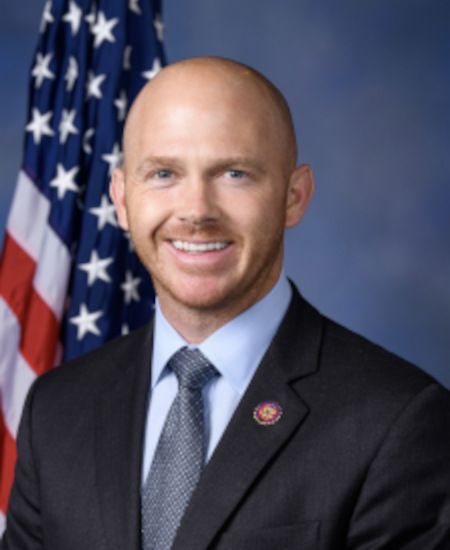
Rep. William R. Timmons IV
Sponsored bills
Maddy summaryHR 6188, enacted as Public Law 118-219 on January 2, 2025, designates the U.S. Postal Service facility at 420 Highway 17 North in Surfside Beach, South Carolina, as the "Nancy Yount Childs Post Office Building." This bill changes the official name of the building for all federal references, including maps, documents, and records. It does not alter postal services, operations, or funding, as it is a commemorative naming resolution honoring Nancy Yount Childs. The bill was passed by the House on June 3, 2024, and by the Senate on December 19, 2024.
Maddy summaryThe SHARE IT Act requires all federal agencies to share custom-developed source code (code created by government employees or contractors for government projects) within 210 days of enactment, storing it in public or private repositories. It mandates that agencies make metadata about this code publicly accessible and develop policies for code sharing and reuse, while allowing exemptions for classified code, national security systems, and privacy concerns. The law requires annual reporting on implementation progress and all exemptions granted, with the first report due one year after enactment. This legislation aims to improve government efficiency by enabling code reuse across agencies, reducing redundant development efforts.
Maddy summaryThis bill clarifies that certain non-fungible tokens (NFTs) used for personal, family, or household purposes - such as digital art, collectibles, virtual land, or loyalty points - are not considered "securities" under federal law. It specifically excludes these "covered NFTs" from securities regulations, meaning their sale or promotion isn’t treated as a securities transaction, provided they aren’t marketed primarily as investments or promise value increases. The bill also requires the Comptroller General to study NFT markets within one year, examining their size, risks, integration with traditional markets, and potential for illicit activity. This is a regulatory clarification, not a new policy, directly affecting NFT creators and sellers of personal-use digital assets.
Maddy summaryThis bill requires federal financial regulators to coordinate with state insurance regulators before collecting data from insurance companies, ensuring they first check if the data is already available through state agencies or public sources. It strengthens confidentiality protections by preventing the sharing of nonpublic data with federal regulators from waiving existing privacy rights under federal or state law. Insurance companies and state regulators are directly affected, as the law governs how data is shared between federal financial regulators and state agencies. The bill modifies existing rules to streamline data collection while maintaining privacy safeguards.
Maddy summaryThe FOCA Act of 2023 requires federal agencies to stop mandating or banning contractor agreements with labor organizations (like union contracts) in construction project bids and contracts. It directly affects federal contractors, subcontractors, and agencies managing construction projects funded by the government. The bill prohibits favoring or penalizing contractors based on their labor affiliation status, aiming to promote fair competition and reduce costs. It also mandates updates to federal contracting rules within 60 days of enactment to implement these changes.
Maddy summaryHR 7427 clarifies that states may use Temporary Assistance for Needy Families (TANF) funds to support pregnancy centers and other "alternatives to abortion" programs that provide life-affirming services like counseling, parenting resources, and material support to pregnant individuals. The bill explicitly defines these programs as those promoting childbirth over abortion through services such as prenatal care coordination, job training, infant supplies, and adoption referrals, while excluding entities that provide or facilitate abortions. It also prohibits federal discrimination against grantees or states that fund such programs, including preventing the government from imposing unfair requirements or cutting funding based on a provider's opposition to abortion. This bill directly affects pregnancy centers, adoption agencies, and maternity homes receiving TANF funding, ensuring their eligibility under existing federal law. The legislation responds to a 2023 federal proposal that threatened to restrict such funding.
Maddy summaryThis bill, titled "Freezing HAMAS Act" (though it concerns Iran sanctions, not Hamas), reinstates U.S. sanctions on Iran that were previously waived or suspended under agreements with Iran. It specifically targets sanctions from the 2012 Iran Freedom and Counter-Proliferation Act and the 2012 National Defense Authorization Act, including a September 2023 waiver related to fund transfers. The bill prohibits the U.S. government from releasing funds or assets to Iran or granting further waivers related to these sanctions. It directly affects U.S. government actions regarding Iran financial transactions and enforcement of existing sanctions.
Maddy summaryThis bill, HR 5796, prohibits the Department of Health and Human Services from implementing a proposed rule requiring minimum staffing levels in nursing homes. It creates an advisory panel of 15 members - including rural nursing home staff and experts - to study workforce shortages and report on access barriers for seniors, especially in rural areas. The panel must submit an initial report within 60 days, analyzing staffing challenges and recommending solutions to strengthen the nursing home workforce. These provisions directly aim to prevent nursing home closures (like the 129 that occurred in 2022) that threaten rural seniors’ access to care.
Maddy summaryThis bill requires Medicare to cover genetic counseling services provided by licensed genetic counselors at 85% of the physician payment rate. It defines "genetic counselor" as a state-licensed professional (or meeting federal criteria in non-licensing states) and mandates a new billing modifier for these services starting January 1, 2024. Medicare beneficiaries seeking genetic counseling would gain expanded access to these services under this coverage. The policy change applies to services furnished on or after the effective date, with implementation via interim rule.