

Maddy summaryHouse Resolution 643 removes Representative Delia Ramirez from the Committee on Homeland Security. The resolution cites her public statement about her Guatemalan identity in Mexico City as inconsistent with House Rule XXIII, which requires conduct reflecting creditably on the House. This is a procedural action affecting only Ramirez's committee assignment, with no policy changes or broader impact. It directly targets her committee membership based on the cited conduct.
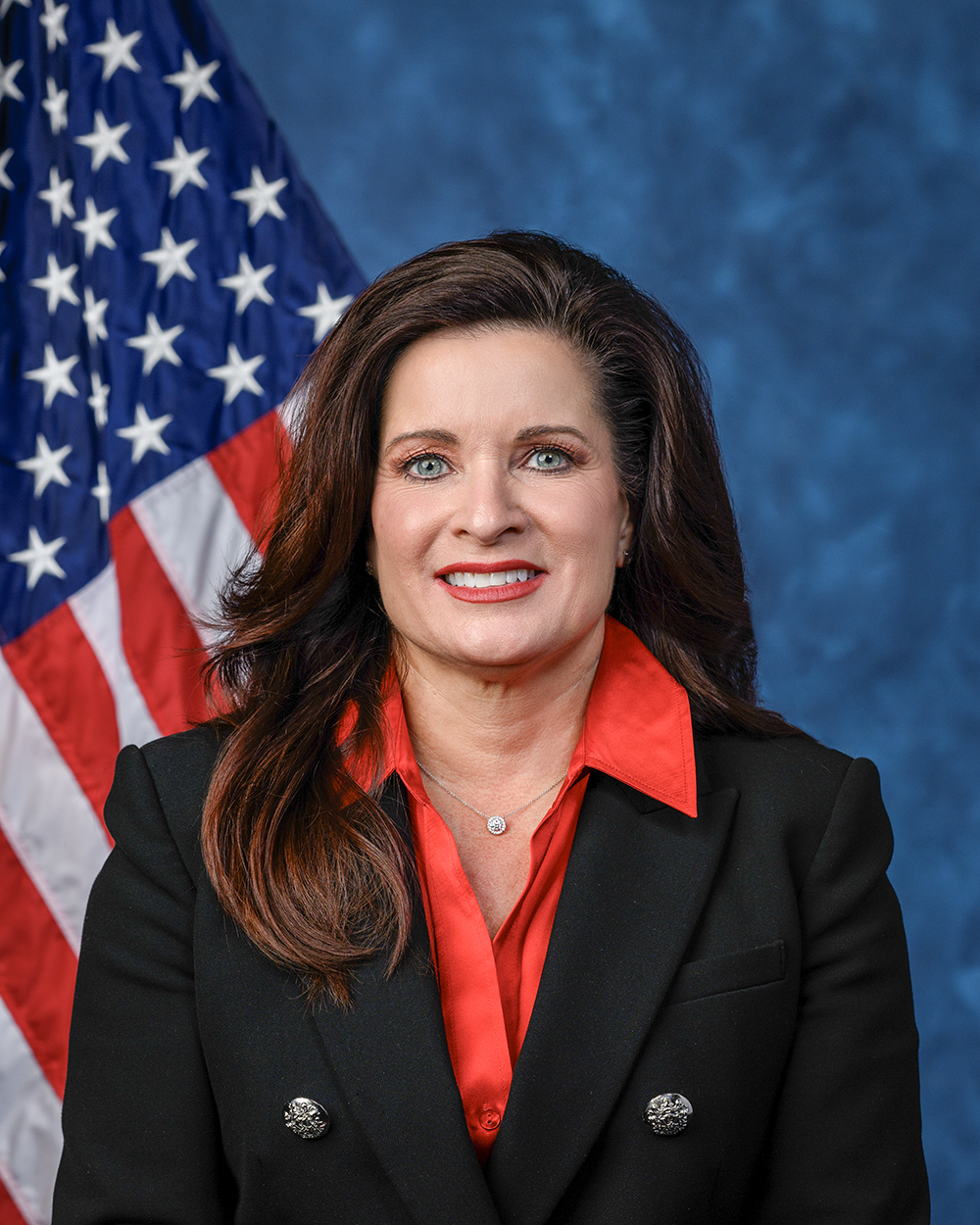
Rep. Sheri Biggs
Sponsored bills
Maddy summaryHR 4873 would make Executive Order 14319 - which prohibits the use of "woke AI" in federal government operations - legally binding as a law, rather than relying on presidential directive. This requires all federal agencies using artificial intelligence systems to comply with the order's restrictions as a mandatory legal requirement. The bill directly affects federal departments and agencies that develop or deploy AI tools, ensuring they adhere to the policy without needing repeated executive action. By codifying the order, the bill provides a permanent legal basis for the policy, removing reliance on future executive decisions.
Maddy summaryHR 4863, the Fairness for Khobar Act of 2025, provides lump sum catch-up payments to victims of the 1983 Beirut barracks bombing and 1996 Khobar Towers bombing who were previously denied compensation due to confusing Department of Justice guidance. The bill requires the Special Master to authorize these payments to individuals who relied on outdated guidance stating they could not apply for lump sum payments if already eligible for regular distributions. Victims can prove their reliance through documentation, sworn statements, or other methods approved by the Special Master. Payments will be made from a reserve fund or the main compensation fund, ensuring those who were wrongly excluded can now receive full compensation they were entitled to under the law.
Maddy summaryHR 4788 would amend a 1932 District of Columbia law to allow Members of Congress (Senators and Representatives) to carry concealed firearms in Washington, D.C., if they hold a valid concealed carry license from a state where they are permitted to carry, or are otherwise legally allowed to carry concealed in their home state. The bill requires these members to not be federally prohibited from possessing firearms, to carry a valid state-issued license or proof of residency rights, and to present photo identification. This exception applies only to Members of Congress and does not alter D.C.'s general concealed carry laws for other individuals. The provision would take effect upon the bill's enactment.
Maddy summaryThis bill modifies the U.S. census process to count only U.S. citizens for apportioning House seats and electoral votes, requiring census forms to include a citizenship checkbox. It mandates that voters present both government-issued photo ID and proof of U.S. citizenship (like a birth certificate or passport) to vote in person or by mail for federal offices, starting with the 2026 elections. State election officials must verify citizenship for provisional ballots to count them. The law affects all voters in federal elections and state election administrators, replacing current voter ID requirements with these new citizenship and photo ID standards.
Maddy summaryThis resolution (HRES 611) clarifies that treating life-threatening conditions like ectopic pregnancy is medically and legally distinct from elective abortion. It aims to prevent confusion among medical professionals by emphasizing that emergency care for ectopic pregnancy (which requires specific treatments like methotrexate or surgery) does not constitute abortion. The resolution calls on medical organizations and healthcare educators to accurately inform providers and the public about this distinction, ensuring timely treatment without unnecessary delays. As a non-binding resolution, it does not change laws but seeks to address post-*Dobbs* confusion in emergency care.
Maddy summaryThis bill reorganizes the State Department's International Narcotics and Law Enforcement Affairs office by requiring the Assistant Secretary to report to the Under Secretary for International Security Affairs. It mandates new responsibilities including coordinating with agencies like the FBI and DEA to combat international drug trafficking, setting a 10% cap on funding for foreign justice system programs, and requiring 20% of the bureau's annual budget to fund rewards programs targeting transnational criminal organizations. The bill directly affects how the State Department manages foreign anti-narcotics programs and allocates resources to partner countries and law enforcement agencies. It refines existing coordination mechanisms without creating new agencies or programs.
Maddy summaryHR 4706 prohibits Chinese government-linked entities (including Chinese corporations, CCP-affiliated organizations, and entities controlled by China) from acquiring, leasing, or owning U.S. agricultural land or residential real estate. The bill requires such entities to sell all existing U.S. agricultural land holdings within one year (with a 180-day letter of intent deadline) and residential real estate holdings within one year, imposing daily fines of $100 per acre for agricultural land violations and $1,000 per residential unit. It also voids noncompete agreements between these entities and their employees. The law applies to all 50 states and territories, with enforcement by the Agriculture and Commerce Departments, and includes a 2-year temporary residential purchase ban ending in 2026 (extendable by the President).
Veterans' Assuring Critical Care Expansions to Support Servicemembers Act of 2025 or the Veterans' ACCESS Act of 2025 This bill addresses the administration of the Veterans Community Care Program (VCCP) and other Department of Veterans Affairs (VA) health care matters. Among other provisions regarding the VCCP, the bill establishes in statute access standards that determine when a veteran is eligible to receive non-VA care through the VCCP, requires the VA to notify veterans regarding their eligibility for care within two business days after the VA is aware the veteran is seeking care, and extends the deadline for the submittal of claims under the VCCP by health care entities and providers. The VA must address its mental health treatment programs by establishing a standardized screening process to determine whether a veteran satisfies criteria for priority or routine admission to a mental health residential rehabilitation treatment program or a program for residential care for mental health and substance abuse disorders, tracking the performance of medical facilities and Veterans Integrated Service Networks in meeting the requirements for mental health treatment screenings and timely admission to treatment programs under such screenings, and establishing an appeal process for when a veteran is denied admission to a covered treatment program or is accepted into a program but not offered bed placement in a timely manner. Additionally, the VA must establish an online self-service module for veterans to request and manage appointments, track referrals, and appeal and track decisions related to requests for care.
Maddy summaryHR 4620 amends federal law to include rioting as a form of racketeering activity under Title 18, United States Code. This change would allow prosecutors to charge individuals who organize or participate in riots as part of a larger criminal enterprise under federal racketeering laws. The bill specifically targets coordinated riot activities linked to organized crime, not isolated or spontaneous protests.