

Maddy summaryThis bill establishes new health and identification requirements for importing live dogs into the U.S. Importers must provide veterinary certification proving dogs are healthy, vaccinated, treated for parasites, and permanently identified (e.g., microchipped), with documentation from accredited veterinarians. Dogs imported for transfer (sale, adoption, etc.) must be at least 6 months old and accompanied by a Secretary-issued permit. Limited exceptions exist for research, veterinary treatment (with quarantine), and Hawaii-specific puppy imports under state regulations, with regulations to be finalized within 18 months. The bill repeals a prior section of the Animal Welfare Act and strengthens enforcement through penalties for noncompliance.
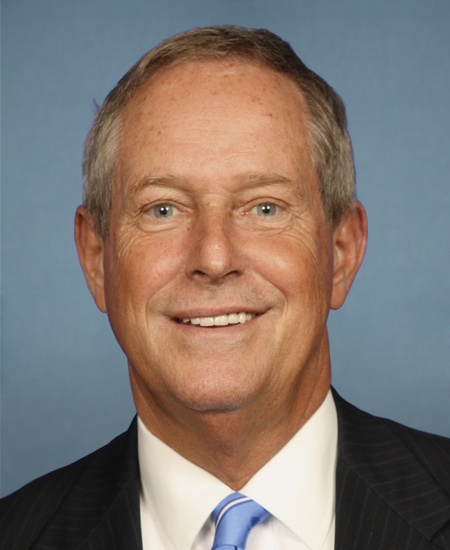
Rep. Joe Wilson
Sponsored bills
Maddy summaryH.J. Res. 26 is a congressional disapproval resolution blocking the District of Columbia Council's approval of its Revised Criminal Code Act of 2022 (D.C. Act 24-789). It directly affects the District of Columbia by preventing the new criminal code from taking effect, as Congress disapproved the Council's action under the Home Rule Act. The resolution formally rejects the Council's enactment of the code, which was transmitted to Congress on January 27, 2023. This procedural action stops the District from implementing the revised criminal code without further congressional action.
Maddy summaryThis bill allows states to adopt year-round daylight saving time (DST) through their own laws, removing the current federal requirement to revert to standard time in the fall. It amends federal law to let states choose whether to apply DST continuously (instead of switching back to standard time) for the entire state or within specific time zones. The bill also requires a GAO study on implementing year-round DST within two years of enactment. It does not mandate year-round DST but gives states the legal option to do so if they pass state legislation. This directly affects residents and state governments in any state that chooses to implement the change.
This resolution demands that Russia respect Ukraine's sovereignty and territorial integrity, as well as immediately withdraw its military forces from inside Ukraine. Affirming strong support for continued U.S. support to Ukraine, the resolution also calls on allies and partners in Europe to increase national defense spending, supports robust transparency and accountability mechanisms for U.S. assistance to Ukraine, and condemns Russian war crimes.
Maddy summaryThis bill authorizes a Congressional Gold Medal to honor the "Hello Girls" - female telephone operators who served in the Army Signal Corps during World War I. They provided critical battlefield communications in France (connecting 26 million calls), wore military uniforms, and faced combat risks, but were denied veteran benefits for 60 years due to being classified as civilian contractors. The medal recognizes their pioneering service, devotion, and the decades-long struggle to gain military recognition. The award follows similar recognition for other WWII women veterans and aims to correct the historical injustice they faced.
Mental Health in International Development and Humanitarian Settings Act or the MINDS Act This bill authorizes and requires certain actions by the U.S. Agency for International Development (USAID) to integrate mental health and psychosocial support (MHPSS) activities across U.S. development and humanitarian assistance programs. The bill authorizes USAID to designate an MHPSS coordinator. The coordinator's duties include (1) guiding, overseeing, and directing MHPSS programming and integration across U.S. development and humanitarian assistance programs; and (2) promoting best practices, coordination, and reporting in MHPSS across such programs. Focus populations for the coordinator include adult caretakers, children separated from a family unit, and displaced populations. In addition, the bill establishes a working group comprised of representatives from relevant USAID bureaus, the Department of State, and other federal agencies. The purpose of the working group is to ensure continuity and integration of MHPSS across U.S. development and humanitarian assistance programs. The provisions of the bill expire five years after enactment.
Servicemember Credit Monitoring Enhancement Act This bill makes available to uniformed service members free electronic credit monitoring that is currently available to active duty service members.
Maddy summaryThis resolution amends House rules to prohibit members, officers, and employees from serving on the board of directors of any organization connected to the Chinese Communist Party (CCP) or designated foreign adversaries. It specifically bans board service on entities receiving funding from or affiliated with the CCP’s United Front Work Department, other CCP elements, or entities labeled "foreign adversaries" by the State Department under a specific 2023 regulation. The rule change applies to all House staff and members in their official capacities, targeting potential conflicts of interest with foreign entities. It does not affect private board roles outside of official House duties.
Maddy summaryThis bill expands the use of 529 college savings accounts to cover career training and credentialing costs. It allows funds to pay for tuition, fees, books, and testing expenses related to recognized postsecondary credential programs (like vocational certifications) that meet specific standards under the Workforce Innovation and Opportunity Act. The change directly affects workers seeking industry-recognized credentials - such as nursing certifications or IT certifications - instead of traditional degrees. It treats these expenses the same as traditional college costs for 529 account withdrawals, making it easier to save for career-focused training. The provision applies to expenses paid after the bill's enactment date.
Maddy summaryThis bill amends U.S. financial sanctions law to require the Treasury Secretary to specifically consider whether foreign banks knowingly provide banking services (including personal accounts) to entities designated under the Taylor Force Act, which targets groups that murder U.S. citizens. It directs Treasury to designate as "of primary money laundering concern" foreign banks that facilitate terrorism payments, particularly those using U.S. correspondent accounts. The law adds two new factors for Treasury to evaluate: (1) whether a bank knowingly serves entities listed in the Taylor Force Act regulations, and (2) whether the bank’s accounts or transactions help fund acts of terrorism. This directly affects foreign financial institutions operating in the U.S. financial system that may inadvertently or intentionally support terrorist organizations.