

Maddy summaryHR 3792 extends U.S. security funding for Israel through 2028 (Section 3) and expands energy cooperation to include advanced nuclear technologies and carbon capture (Section 5). It requires annual reports on regional security partnerships involving Israel (Section 6) and ensures countries in the Abraham Accords can access U.S. development programs (Section 8). The bill also mandates reports on diplomatic efforts against ICC investigations targeting the U.S. and Israel (Section 10) and encourages people-to-people programs to strengthen the Abraham Accords (Sections 7, 9). These provisions directly affect Israel’s diplomatic engagement, security partnerships, and economic cooperation in the Middle East.
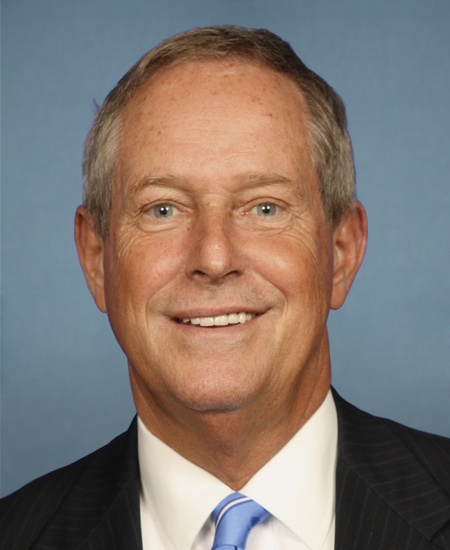
Rep. Joe Wilson
Sponsored bills
Maddy summaryHR 3773, the Stop Anti-Semitism on College Campuses Act, requires colleges and universities receiving federal funding to prohibit any event promoting antisemitism on campus. This includes not hosting, facilitating, funding, or supporting such events. The bill adopts the International Holocaust Remembrance Alliance's 2016 definition of antisemitism - including contemporary examples - as the standard for determining prohibited conduct. The law directly affects all institutions covered by the Higher Education Act of 1965.
This resolution finds that the August 9, 2020, election in Belarus was neither free nor fair and does not recognize Alyaksandr Lukashenka as the legitimate president of Belarus. The resolution condemns human rights violations committed by Belarusian authorities, calls for the immediate release of all political prisoners, and calls for new elections under the observation of the Organization for Security and Co-operation in Europe.
Maddy summaryThis bill requires U.S. government agencies to develop strategies to combat "transnational repression" - actions by foreign governments or their agents to intimidate, coerce, or harm diaspora and exile communities outside their home countries. It mandates the State Department to create an interagency strategy, amend annual country reports to include information on transnational repression tactics, and provide training for diplomatic and law enforcement personnel. The bill also establishes sanctions against foreign governments or individuals responsible for transnational repression, including blocking property and denying visas. These provisions directly affect diaspora communities facing foreign government harassment and U.S. agencies tasked with protecting them.
Maddy summaryThis bill requires that AM radio receivers be included as standard equipment in all new motor vehicles (such as cars and trucks) sold in the United States, with a rule to be issued by the Department of Transportation within one year. The rule must ensure AM radio is easily accessible on the dashboard and allows manufacturers to use digital AM radio technology instead of traditional AM. During the one-year period between the bill's enactment and the rule's effective date, manufacturers must clearly label vehicles without AM radio. The bill also directs a study to evaluate whether an alternative system could deliver emergency alerts as reliably as AM radio across the country, especially during crises.
Maddy summaryThe Recoup American Nuclear Global Leadership Act establishes a White House office to coordinate U.S. civil nuclear policy and create a 10-year strategy for increasing nuclear technology exports. It creates a Nuclear Exports Working Group to coordinate with federal agencies and develop export targets for U.S. nuclear reactors, equipment, and materials. The bill aims to strengthen U.S. nuclear energy exports to countries developing nuclear programs ("embarking civil nuclear nations") while promoting cooperation with U.S. nuclear energy companies. It includes provisions for cooperative financing relationships with allied nations to compete with Russia and China in the global nuclear market and for collaborative research on advanced nuclear reactors.
Maddy summaryThis bill directs the Department of Homeland Security to create a threat assessment on how terrorists and foreign actors use cyber harassment - including doxing - to threaten individuals. The assessment must detail tactics, notable incidents, and risk indicators for law enforcement, while coordinating with privacy offices. It requires DHS to share the report with Congress within 180 days and publish it online, with state/local law enforcement receiving it via fusion centers. The bill does not create new laws or penalties but focuses on information gathering about existing threats. (Procedural bill; summary limited to key action and scope.)
Maddy summaryHR 3435, the Charitable Act, creates a temporary tax deduction for charitable contributions for individual taxpayers who do not itemize deductions. It allows these taxpayers to deduct up to one-third of their standard deduction amount for charitable gifts in 2023 and 2024. The bill directly affects millions of filers who typically take the standard deduction instead of itemizing, making charitable giving more tax-advantageous for them during these two years. The provision expires after 2024 and does not change the standard deduction amount itself.
Maddy summaryHRES 81 is a non-binding resolution passed by the U.S. House of Representatives urging the President to support creating an international Special Tribunal to prosecute Russia’s leaders for the crime of aggression against Ukraine. It specifically references Russia’s 2022 full-scale invasion as a violation of UN Charter principles and General Assembly Resolution 3314, which defines aggression as unlawful military force against a sovereign state. The resolution calls for the President to take all available measures to advance this tribunal, emphasizing Ukraine’s sovereignty and the need to hold Russian officials accountable for war crimes. It does not create the tribunal itself but seeks U.S. diplomatic support for its establishment.
Maddy summaryHR 3205, the Project Precursor Act, authorizes $64 million to strengthen Mexican law enforcement's capacity to disrupt fentanyl supply chains through equipment, training, and forensic support for agencies targeting fentanyl trafficking. The bill requires the U.S. to prioritize Mexico in anti-fentanyl efforts and mandates using U.S. fentanyl-related death tolls as the primary metric to evaluate program success, rather than drug seizure statistics. It also includes provisions for a public diplomacy campaign to delegitimize cartels, a report on Chinese operations in Mexico related to fentanyl, and expanded sanctions against foreign banks, money transmitters, and transnational criminal organizations like the Sinaloa and Jalisco New Generation Cartels.