

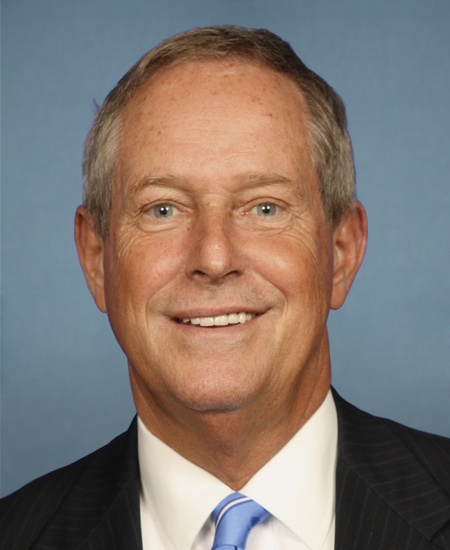
Photo of Joe Wilson
R United States House · District 2 · South Carolina On the 2026 ballot

Rep. Joe Wilson

Compare
Total votes
2,837
all sessions
Attendance
97%
94 missed
Lower than 83% of chamber peers
With party
96%
of cast votes
Near the chamber average
Bipartisan score
2%
crosses aisle rarely
Near the chamber average
Sponsored
1,106
bills & resolutions
Near the chamber average
Committees
9
assignments
1,106 bills and resolutions

Sponsored bills

Total
1,106
Primary
87
Co-sponsor
1,019
This page
1,106
matching current filters
Co-sponsor HR 385
In committee · United States House · Co-sponsor
Combating Global Corruption Act of 2025

Maddy summaryThe Combating Global Corruption Act of 2025 requires the State Department to annually rank all foreign countries into three tiers based on anti-corruption efforts: Tier 1 (full compliance with minimum standards), Tier 2 (making progress), and Tier 3 (minimal or no efforts). Countries ranked Tier 3 trigger potential sanctions under the Global Magnitsky Act against corrupt foreign officials and entities. The bill also mandates U.S. embassies in Tier 2 and Tier 3 countries to appoint anti-corruption liaisons to coordinate U.S. anti-corruption programs. This directly affects foreign governments' international standing and targets specific individuals for sanctions based on documented corruption.

In committee Jan 14, 2025 1 co-sponsor
Co-sponsor HRES 33
In committee · United States House · Co-sponsor
Supporting the goals and ideals of Korean American Day.

Maddy summaryThis resolution expresses the House's support for Korean American Day, commemorating January 13, 1903 - the arrival of the first large wave of Korean immigrants to the U.S. It urges all Americans to observe the day to recognize Korean Americans' contributions to U.S. society, including their economic, cultural, and military service. The resolution honors the 122nd anniversary of this historical arrival, acknowledging the resilience of early Korean immigrants and their descendants. As a symbolic gesture, it does not create new laws or affect any specific group directly.

In committee Jan 13, 2025 1 co-sponsor
Co-sponsor HR 369
In committee · United States House · Co-sponsor
States’ Education Reclamation Act of 2025

Maddy summaryHR 369, the States’ Education Reclamation Act of 2025, would abolish the U.S. Department of Education and transfer its programs - including job training, special education, and federal student loans - to other federal departments like Labor, Health and Human Services, and the Treasury. It would provide annual federal grants to states for K-12 and higher education, requiring states to use the funds to add to, not replace, their existing education budgets. States must conduct annual audits of fund usage, submit reports to the federal government, and face penalties for misuse, while maintaining compliance with federal anti-discrimination laws. The bill shifts federal education oversight to states, ending direct federal management of education programs.

In committee Jan 13, 2025 1 co-sponsor
Co-sponsor HR 347
In committee · United States House · Co-sponsor
Sea Turtle Rescue Assistance and Rehabilitation Act of 2025

Sea Turtle Rescue Assistance and Rehabilitation Act of 2025 This bill expands the John H. Prescott Marine Mammal Rescue and Response Grant Program to include separate grants to rescue sea turtles for the next seven years. The grants must be used for the recovery, care, or treatment of sick, injured, or entangled sea turtles; responses to rescue stranded sea turtles; the collection of data and samples from living or dead stranded sea turtles for scientific research or health assessments; facility operating costs that are directly related to activities to assist sea turtles; or  development of stranding network capacity where facilities do not exist or are sparse. In addition, the bill establishes the Sea Turtle Rescue, Rehabilitation, and Rapid Response Fund.

In committee Jan 13, 2025 1 co-sponsor
Co-sponsor HR 273
In committee · United States House · Co-sponsor
REMAIN in Mexico Act of 2025

Maddy summaryThis bill directs the Department of Homeland Security to implement the Migrant Protection Protocols (MPP) as outlined in a 2019 policy memo. It requires migrants seeking asylum at the U.S. border to remain in Mexico while their cases are processed, rather than being allowed to stay in the U.S. pending a hearing. The bill does not create new rules but mandates the reinstatement of a policy that was previously in effect from 2019 to 2021. This would directly affect asylum seekers arriving at the U.S.-Mexico border. The policy change would apply to all migrants covered by the existing MPP framework.

In committee Jan 9, 2025 1 co-sponsor
Co-sponsor HR 251
In committee · United States House · Co-sponsor
Legal Workforce Act

Legal Workforce Act This bill directs the Department of Homeland Security (DHS) to create an electronic employment eligibility confirmation system modeled after and to replace the E-Verify system, which allows employers and recruiters to verify the immigration status of individuals. The bill also mandates the use of such a system, where currently only some employers, such as those with federal contracts, are required to use E-Verify. The bill specifies documents that can establish an individual's identity and employment authorization. During the period starting when a job offer is made until three business days after hiring, the individual must attest to his or her employment authorization, and the employer or recruiter must attest that it has examined the individual's required documents. Employers shall reverify certain types of employees who were not previously verified using E-Verify. The Social Security Administration shall notify employees if their Social Security number has been used multiple times in an unusual manner. DHS shall establish programs for blocking and suspending misused numbers. Employers that are required to use the verification system shall not be liable for any employment-related action based on a good-faith reliance on the system. The bill establishes a phased-in participation deadline for different sizes and categories of employers, including agricultural employers. The bill increases civil penalties related to hiring individuals without work authorization. It also preempts state laws relating to hiring and employment eligibility verification, but states may use their authority of business licensing to penalize employers for failing to comply with the bill's provisions.

In committee Jan 9, 2025 1 co-sponsor
Co-sponsor HRES 16
In committee · United States House · Co-sponsor
Recognizing Russian actions in Ukraine as a genocide.

Maddy summaryThis resolution symbolically recognizes Russian actions in Ukraine as genocide, based on documented atrocities including mass killings, attacks on civilians and infrastructure, deliberate deprivation of necessities, and forced transfers of Ukrainians. It directly affects Ukraine as the targeted group and calls on the U.S. government to support Ukraine with allies and back international tribunals. The resolution condemns Russia for these acts, urges U.S. action to prevent further genocide, and supports holding Russian leaders accountable. As a symbolic resolution (not a law), it has no legal force but expresses congressional stance. It aligns with the Genocide Convention's definition of genocide through specific evidence cited in the text.

In committee Jan 6, 2025 1 co-sponsor
Co-sponsor HR 116
In committee · United States House · Co-sponsor
Stopping Border Surges Act

Stopping Border Surges Act This bill modifies immigration law provisions relating to unaccompanied alien minors and to asylum seekers. The bill requires the Department of Homeland Security (DHS) to repatriate certain unaccompanied, inadmissible alien children, generally those not at risk of being trafficking victims nor having a fear of persecution. Currently, only inadmissible unaccompanied aliens from neighboring countries are subject to repatriation, and DHS has discretion whether to repatriate. When the Department of Health and Human Services releases an unaccompanied child to an individual, it shall provide DHS with certain information about that individual, including Social Security number and immigration status. The bill requires a stricter standard to find a credible fear of persecution and imposes additional rules on credible fear interviews. If an alien is granted asylum because of fear of persecution in a country, the alien shall be deemed to have renounced asylum status by returning to that country, if there has been no change in the country's conditions. The bill also (1) expands the definition of what constitutes a frivolous asylum application, (2) imposes additional limitations on eligibility for asylum, (3) shortens the deadline for applying for asylum, and (4) extends the time period an alien seeking asylum must wait before receiving employment authorization. Any individual who knowingly and willfully makes materially false statements or uses fraudulent documents in asylum-related proceedings shall be fined or imprisoned up to 10 years, or both.

In committee Jan 3, 2025 1 co-sponsor
Co-sponsor HR 174
In committee · United States House · Co-sponsor
Consequences for Social Security Fraud Act

Maddy summaryHR 174 adds new grounds for inadmissibility and deportability related to specific fraud offenses. It targets non-citizens convicted of, or admitting to, Social Security fraud (using false account numbers/cards), identification document fraud, or fraud involving pandemic-era loans or grants (like those under the Small Business Act or American Rescue Plan). The bill amends immigration law to make such individuals ineligible for entry into the U.S. or subject to removal. It directly affects non-citizens who commit these defined offenses, not general fraud cases. The policy change is limited to these specific fraud categories tied to federal pandemic programs and Social Security/ID documents.

In committee Jan 3, 2025 1 co-sponsor
Co-sponsor HR 154
In committee · United States House · Co-sponsor
Election Day Act

Maddy summaryThis bill amends federal law to establish "Election Day" as an official federal holiday, adding it to the list of recognized holidays for federal employees. It directly affects federal workers by designating Election Day (the Tuesday following the first Monday in November) as a day when federal offices close. The key mechanism is a simple insertion into the existing list of federal holidays under Title 5 of the U.S. Code. This change does not alter voting procedures or create new voting requirements.

In committee Jan 3, 2025 1 co-sponsor
Showing 361 to 370 of 1,106 bills
Previous 1 … 36 37 38 … 111 Next