

Maddy summaryThe ACES Act of 2023 requires ByteDance (TikTok's Chinese parent company) to divest all U.S. assets related to TikTok - including user data collected in the United States - within 90 days of enactment, with possible 30-day extensions. It mandates weekly compliance reports to CFIUS, a final data destruction certification, and prohibits U.S. app stores or internet services from supporting TikTok operations after a 45-day grace period. The bill directly affects ByteDance and TikTok, forcing separation of U.S. operations from Chinese ownership to address national security concerns. CFIUS oversees verification, including facility inspections and audits, to ensure full compliance with the divestment requirements.
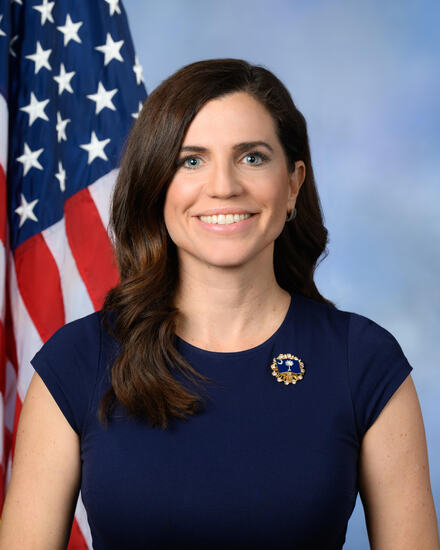
Rep. Nancy Mace
Sponsored bills
Maddy summaryHR 4826 requires the FTC and CDC to study how social media platforms collect data and affect teens under 18, including mental health impacts and usage patterns. The study must examine data collection practices, algorithm use, daily screen time, and potential harms, with a report to Congress due within one year of enactment. The bill defines "social media platform" as any service with at least 30 million monthly U.S. users, targeting major platforms for this research. This is a procedural study mandate, not a regulatory change, directly affecting large platforms but focusing on teen users.
Providing for Unhoused People with Pets Act of 2023 or the PUPP Act of 2023 This bill permits the Department of Agriculture to award grants for interim and permanent housing that accommodates individuals (or families) who are homeless and have pets. Entities eligible for the grant include local governments, nonprofits, and entities that house or shelter homeless individuals. Additionally, grant recipients must make available supportive services and basic veterinary care.
Maddy summaryThis bill prohibits federal involvement in commercial greyhound racing, live lure training, and open field coursing by banning interstate activities related to these practices. It makes it unlawful to conduct betting on greyhound races (including remote gambling), use live animals as bait, or transport animals for these purposes. The law specifically targets the declining greyhound racing industry (now operating at only two tracks in West Virginia), banning federal facilitation of betting, live bait use, and interstate transport of animals for racing or training. It does not affect horse racing or state laws already prohibiting these activities in most states.
Animal Welfare Enforcement Improvement Act This bill revises the licensing process of the Department of Agriculture (USDA) for animal dealers and exhibitors to expand USDA's oversight and enforcement of animal welfare requirements. Dealers and exhibitors must apply to USDA for licenses or renewal licenses each year. In order to obtain the licenses or renewals, dealers and exhibitors must meet certain standards for the humane treatment of animals and pass inspections as specified by this bill. USDA may not issue or renew such licenses if the dealers or exhibitors have violated laws relating to animals or if the issuance of the licenses would facilitate the circumvention of state or local laws that prohibit the private ownership of certain animals. Further, USDA must suspend the licenses of dealers or exhibitors whose violations present a risk to animal welfare. USDA must revoke the licenses if the violations persist or if the licensees commit multiple violations. Dealers and exhibitors with suspended or revoked licenses may not be (1) granted another license, (2) granted another license through another person or entity, or (3) employed by another licensee to work with animals during the period of the suspension or revocation.
This resolution condemns Iran for the 1988 massacre of political prisoners. It also urges the Biden Administration and U.S. allies to publicly condemn the massacre and to pressure Iran to provide information to the families of the victims.
Cut the Climate Czar's Carbon Act This bill prohibits the use of federal funds for the salary of the Special Presidential Envoy for Climate or an employee working on behalf of the special envoy. The bill also specifies that no federal funds may be used for travel by the special envoy or any such employee unless the special envoy or employee personally pays for carbon offsets (i.e., offsetting emissions reductions) for such travel.
Maddy summaryThe SOS Act of 2023 increases annual funding for school resource officers from $1,047,119,000 (for 2006-2009) to $1,097,119,000 for fiscal years 2024-2033. It also requires that at least $50 million of this funding be allocated through grants to local governments or law enforcement agencies specifically for school safety programs. This bill directly affects schools and local law enforcement by changing federal funding levels and mandating a dedicated portion for school-based safety initiatives. The key change is the increased funding amount and the new requirement for $50 million in targeted grants for school safety applications.
Preserving Safety Net Integrity Act of 2023 This bill enacts with the force and effect of law the final rule of the Department of Homeland Security titled Inadmissibility on Public Charge Grounds and published on August 14, 2019. The bill also nullifies the final rule issued by DHS titled Public Charge Ground of Inadmissibility and published on September 9, 2022. The 2019 final rule made it more likely that a non-U.S. national ( alien under federal law) would be denied admission or lawful permanent resident status because that individual is likely to become a public charge (i.e., receive certain public benefits). The 2022 final rule nullified the 2019 final rule.
Maddy summaryHR 4971, the Paycheck Protection Act, prohibits federal agencies and the U.S. Postal Service from deducting union dues, fees, or political contributions from employees' paychecks. This directly affects all federal employees and postal workers, ensuring their wages are not automatically reduced for these purposes. The bill amends existing law (Title 5, U.S. Code, Section 7115 and Title 39, U.S. Code, Section 1205) to explicitly state that such deductions are not permitted. The key provision is a clear ban on payroll deductions for labor organization-related payments, protecting employees' take-home pay from these specific withholdings.