

Maddy summaryThis bill restricts federal funding for jurisdictions that limit cooperation with federal immigration enforcement. It defines a "sanctuary jurisdiction" as any state or local government that prohibits sharing immigration status information or complying with federal detainer requests (except for crime victims/witnesses). Starting after enactment, such jurisdictions lose eligibility for federal funds intended to provide food, shelter, healthcare, legal services, or transportation to undocumented immigrants. The law directly affects cities and states with specific immigration policies, not the immigrants themselves.
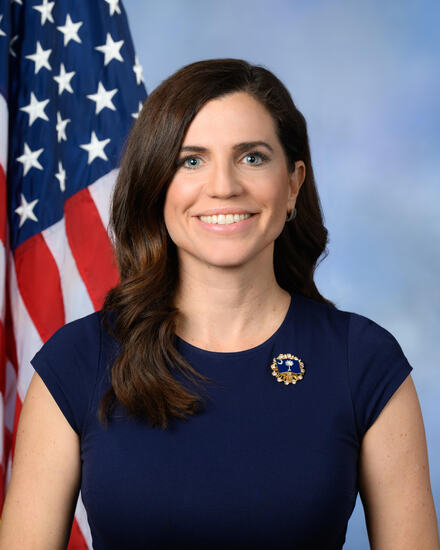
Rep. Nancy Mace
Sponsored bills
Maddy summaryThis bill prohibits U.S. economic aid to foreign governments that restrict speech protected under the U.S. Constitution. Specifically, it blocks funding if a foreign government (or its officials/contractors) abridges or censors such speech, or pressures platforms (including social media and media organizations) to censor protected speech. The Secretary of State must publish determinations of violations in the Federal Register. It directly affects foreign governments meeting these criteria, not U.S. citizens or domestic policies. The law focuses on restricting U.S. aid based on specific speech-related actions by foreign entities.
Maddy summaryHR 9699, the Pay Our Troops Act, ensures military personnel and key support staff continue receiving pay during government funding gaps in fiscal year 2025. It appropriates funds to cover pay and allowances for active-duty troops, Department of Defense civilians, and qualifying contractors supporting military operations, if regular appropriations aren't enacted. The funding remains in effect until the earliest of: a new appropriations law, a funding resolution without such funding, or January 1, 2026. This bill does not change pay rates or create new policies - it guarantees existing pay continuity during budget transitions.
Maddy summaryThis bill amends U.S. immigration law to add new grounds for inadmissibility and deportability related to sex offenses and domestic violence. It makes non-citizens inadmissible if convicted of, or admitting to, sex offenses (as defined in the Adam Walsh Act) or domestic violence crimes (as defined under the Violent Crime Control Act). It also expands deportability to include these offenses, specifying that domestic violence crimes are deportable regardless of whether the jurisdiction received federal grant funding. The changes apply to non-citizens with prior convictions or admissions for these specific offenses, modifying their immigration status under existing law.
Maddy summaryThis bill directs the Joint Committee on the Library to procure a statue of Benjamin Franklin and place it in the U.S. Capitol. The committee must secure the statue within two years of the bill's enactment and install it in a public-accessible location by January 1, 2026, for viewing during Capitol Visitor Center guided tours. It is a procedural measure with no policy changes or direct impact on constituents or legislation.
Maddy summaryThe PRIMATES Act of 2024 prohibits the National Institutes of Health (NIH) from conducting or funding research that causes significant pain or distress to nonhuman primates, defined as studies classified in USDA pain categories D or E. It requires the NIH to publish an annual report detailing all nonhuman primate research projects - including costs, pain categories, and efforts to phase out such research - and mandates a Government Accountability Office (GAO) study to evaluate NIH's progress in reducing nonhuman primate use compared to other federal agencies. The bill directly affects NIH-funded research involving nonhuman primates and imposes new transparency requirements on taxpayer-funded studies.
Maddy summaryHR 1425, the "No WHO Pandemic Preparedness Treaty Without Senate Approval Act," requires the U.S. Senate to approve any World Health Organization (WHO) pandemic preparedness treaty through a two-thirds vote. The bill deems any convention, agreement, or international instrument on pandemic prevention drafted by the WHO’s International Negotiating Body (INB) as a treaty subject to Senate ratification, rather than allowing it to take effect as an executive agreement. This directly affects U.S. foreign policy implementation regarding WHO agreements, ensuring Congress has a formal role in approving such binding international commitments. The bill stems from congressional concerns about WHO’s pandemic response and public skepticism toward the organization, as outlined in its findings.
Maddy summaryHR 705, the Veterans 2nd Amendment Protection Act, prohibits the Department of Veterans Affairs (VA) from automatically sending veterans' personal information to the national background check system solely because a fiduciary (like a guardian) manages their benefits. It specifically blocks the VA from sharing this data with the Justice Department without a court order finding the veteran a danger to themselves or others. This directly affects veterans who have a fiduciary appointed due to incapacity but are not deemed dangerous, preventing automatic barriers to firearm purchases based only on their fiduciary status. The bill amends 38 U.S.C. § 5501B to require judicial authorization before such data can be transmitted.
Maddy summaryHRES 1447 is a non-binding resolution expressing support for designating the week of September 22-28, 2024, as "Gold Star Families Remembrance Week." It directly honors families who lost loved ones while serving in the U.S. military (referred to as "Gold Star Families") and families of veterans. The resolution encourages Americans to observe the week by performing community service and celebrating the sacrifices of fallen service members, without creating new laws or obligations. It aligns with existing recognition of Gold Star Mother’s Day (the last Sunday in September) but expands the focus to all affected families.
Maddy summaryHR 9561, the Pay Our Border Patrol and Customs Agents Act of 2025, ensures that U.S. Border Patrol Agents and Customs and Border Protection officers working during a government shutdown receive their salaries. It appropriates funds from the Treasury (not regular appropriations) to cover their pay during any lapse in discretionary funding in fiscal year 2025. This bill directly affects these specific federal employees who are required to work during shutdowns but would otherwise face pay delays. It is a procedural measure focused solely on payment mechanisms, not on changing work requirements or policy.