

Maddy summaryThis resolution (HRES 149) is a symbolic congressional statement condemning Russia's actions in Ukraine, specifically the forcible transfer and abduction of Ukrainian children. It directly addresses the Russian government, citing evidence including Ukrainian reports of over 2,300 children kidnapped and Russia's policy granting citizenship to children born in occupied territories after February 24, 2022. The resolution formally declares these actions violate the Genocide Convention (Article II(e)) and claims Russia is attempting to erase Ukrainian identity by targeting children. As a non-binding resolution, it holds no legal force but expresses the House's official stance against these practices.
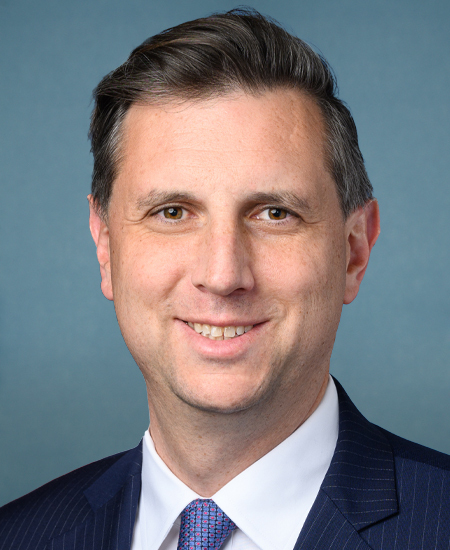
Rep. Seth Magaziner
Sponsored bills
Maddy summaryThis bill, the Judicial Integrity Act, updates federal conflict of interest rules to explicitly include federal judges and Supreme Court justices under the same standards that apply to other government officials. It requires these judges to avoid financial interests that could compromise their impartiality, such as investments in cases they oversee. The bill also creates a new process allowing the Judicial Conference of the United States to issue regulations exempting minor financial interests (like small stock holdings) from disclosure rules, after public notice and comment. This change aims to clarify judicial conduct standards while providing a structured way to handle trivial financial ties.
Maddy summaryHR 7634, the Plastic Pellet Free Waters Act, prohibits plastic pellets and pre-production plastic materials from being discharged into water through wastewater, spills, or runoff from specific facilities. It directly affects plastic polymer production facilities, plastic molding and forming facilities, and any point source (like packaging or transport operations) handling plastic pellets. The bill requires the EPA to issue a final rule within 60 days of enactment banning these discharges and updating all relevant wastewater, stormwater, and performance standards in permits and regulations. This creates a legal requirement for facilities to prevent plastic pellet pollution in waterways, targeting a major source of ocean plastic pollution.
Maddy summaryThis concurrent resolution (HCONRES 97) recognizes the gender wage gap, noting that women working full-time earn 84 cents for every dollar earned by men. It highlights racial disparities (e.g., Latinas earn 57 cents, Black women 69 cents) and the economic impact of the gap, including $965 billion in annual lost wages for women. As a symbolic resolution, it does not create new laws or policies but formally acknowledges the issue and reaffirms Congress’s commitment to addressing wage inequality.
Maddy summaryHRES 1074 is a symbolic House resolution reaffirming congressional support for a two-state solution to the Israel-Palestine conflict. It explicitly states the House supports Israel's right to exist as a Jewish, democratic state and recognizes Palestinians' right to sovereignty through a separate state. The resolution identifies a two-state solution as the best path to lasting peace and condemns efforts opposing this approach. As a non-binding resolution, it does not create new law or policy but formally expresses the House's position on this issue. It was introduced by multiple House members on March 12, 2024.
Maddy summaryThis resolution recognizes the 65th anniversary of the March 10, 1959, Tibetan uprising and condemns the Chinese government's human rights violations related to a hydropower dam project in Derge, Tibet. The resolution specifically highlights that the dam would displace approximately 2,000 Tibetans and destroy six historical monasteries with religious artifacts, including 13th-century murals. It also condemns the February 2024 detention of over 1,000 Tibetans who protested the dam project. The resolution calls on the Biden administration to demand China halt the dam construction, release detained protesters, and respect Tibetan cultural rights and development input as required by U.S. law.
Maddy summaryThe CHILD Act of 2024 increases the maximum annual tax benefit for dependent care expenses from $5,000 to $10,000 (and doubles the spousal limit from $2,500 to $5,000) under Section 129 of the Internal Revenue Code. It also adds automatic annual cost-of-living adjustments to these limits, calculated using the standard inflation formula, rounded to the nearest $50. This directly affects working parents who claim dependent care expenses on their federal taxes, expanding their tax savings for childcare costs. The changes apply to calendar years beginning after December 31, 2023, and remove an outdated provision (subparagraph D) from the existing tax code.
Maddy summaryHRES 1032 is a symbolic resolution designating the week of February 26-March 1, 2024, as "Public Schools Week" in the U.S. House of Representatives. It expresses congressional support for public education, highlighting its role in preparing students and communities. The resolution has no legal effect or funding provisions - it solely serves as a formal expression of backing for public schools. It directly affects no individuals or entities but aims to raise awareness about public education. This is a non-binding gesture, not a policy change.
Maddy summaryThis resolution proposes creating a Permanent Select Committee on Aging in the U.S. House of Representatives. The committee would study issues affecting older Americans - such as income security, healthcare, housing, and long-term care - without having the power to pass laws. It would review existing government and private programs, develop coordination strategies for aging-related services, and assess recommendations from the President or the White House Conference on Aging. The committee’s work would inform future policy discussions but would not directly change legislation.
Maddy summaryHR 7307, the Health Care Workforce Innovation Act of 2024, establishes a new federal grant program to expand training for allied health professionals - such as medical assistants, community health workers, pharmacy technicians, and dental hygienists - in underserved communities and rural areas. Eligible applicants include Federally-qualified health centers and rural health clinics, which can use grants (up to $2.5 million per award for at least 3 years) to develop community-driven training partnerships with schools, vocational programs, and healthcare facilities. Funds support specific activities like apprenticeships, culturally competent training, and building career pathways for individuals from disadvantaged backgrounds, while prohibiting construction costs or replacing existing workforce funding. The program authorizes $100 million annually from 2025-2029 to address healthcare workforce shortages in areas lacking access to care.