

Maddy summaryHRES 1332 is a symbolic resolution recognizing June as LGBTQIA+ Pride Month. It encourages the celebration of Pride Month to honor the historical struggles and achievements of LGBTQIA+ people in the United States, while acknowledging the ongoing challenges they face. This resolution does not create new laws or policies, but serves as a formal recognition of LGBTQIA+ rights as human rights and highlights their integral role in American history. The resolution was introduced by multiple members of Congress and passed by the House of Representatives.
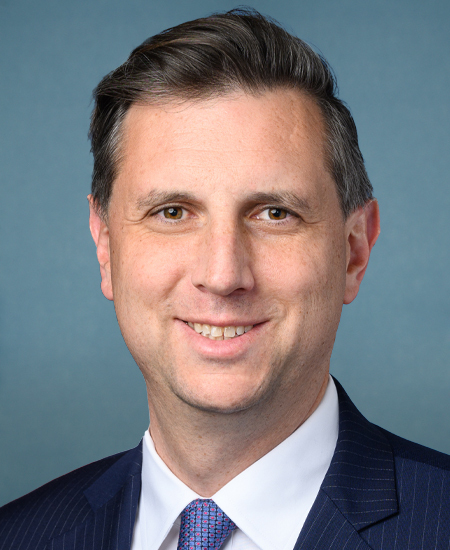
Rep. Seth Magaziner
Sponsored bills
Maddy summaryHRES 1327 is a symbolic congressional resolution condemning Azerbaijan for actions it claims constitute ethnic cleansing against Armenians in Nagorno-Karabakh. It specifically calls for the U.S. government to impose targeted sanctions on Azerbaijani officials, halt military aid to Azerbaijan under Section 907 of the FREEDOM Support Act, provide humanitarian aid to Armenian refugees, and strengthen U.S.-Armenia security cooperation. The resolution affirms displaced Armenians' right to return to Nagorno-Karabakh with security protections. It directly affects Azerbaijan's government officials, Armenian refugees in Armenia, and U.S. foreign policy implementation. As a non-binding resolution, it does not create new law but urges specific policy actions.
Maddy summaryThe SAFES Act creates a federal tax credit for individuals who purchase gun safes, allowing them to deduct 90% of the cost, up to $500 per person or $1,000 for joint returns. For purchases made before 2030, any qualifying gun safe qualifies; after 2029, only safes meeting standards set by the Secretary of Health and Human Services (HHS) will be eligible, based on an HHS report required within five years of enactment. The bill prohibits requiring taxpayers to disclose firearm ownership details to claim the credit. This policy directly affects individual firearm owners seeking to reduce tax liability through safe storage purchases.
Maddy summaryThis bill bans developers and deployers of AI algorithms from using them to deceive voters about election procedures (like voting locations or registration rules) or intimidate people from voting. It requires clear disclaimers - such as "AI Disclaimer: This output was generated by artificial intelligence" - on AI-generated election content, including fake candidate videos or altered voting information. The law sets safety standards for election-related AI, requiring developers to ensure algorithms are "safe and effective" before use. The Federal Trade Commission enforces these rules, with violations potentially leading to fines or up to one year in prison.
Maddy summaryThis bill requires background checks to block gun sales to people under court orders restricting firearm access before trial. It amends federal gun law to explicitly prohibit firearm purchases, possession, or receipt by individuals subject to such pretrial court orders. The law updates background check systems (like NICS) to include these orders, ensuring courts can prevent gun access during pending criminal cases. It directly affects individuals detained before trial who face court-mandated firearm restrictions.
Maddy summaryThis bill creates a federal framework for "extreme risk protection orders" (ERPOs) that temporarily remove firearms from individuals who pose a risk of harming themselves or others. Family members or law enforcement officers can petition a federal court for a temporary order (up to 14 days) based on probable cause, followed by a hearing within 72 hours to determine if a longer-term order (up to 180 days) is warranted. The bill requires clear and convincing evidence of risk at the hearing and mandates respondents to surrender firearms to law enforcement within 48 hours. It also includes provisions for reporting, training law enforcement on ERPOs, and a federal grant program to support state ERPO implementation, without preempting state laws.
Maddy summaryHR 8830, the High Court Gift Ban Act, sets strict limits on gifts federal judges may accept. It prohibits judges from receiving gifts valued over $50 from a single source in a year, unless the total from that source stays under $100 annually. Key exceptions include gifts paid for by the judge, gifts from relatives, honorary degrees from educational institutions, and public opportunities available to all federal employees. The bill also outlines enforcement mechanisms, requiring the Judicial Conference to refer violations to the Attorney General for civil or criminal penalties. This directly affects all federal judges, including Supreme Court justices and lower court judges, by restricting gifts from sources that may have business before them.
Maddy summaryThe Pell Grant Preservation and Expansion Act of 2024 would double Federal Pell Grants, increasing the maximum award to $10,000 for the 2025-2026 academic year with annual inflation adjustments, and make Pell Grants a fully mandatory program rather than requiring annual appropriations. It would expand eligibility for students with negative student aid indexes (those with the lowest expected family contributions), provide Pell Grant eligibility for "Dreamer" students protected under DACA, and restore eligibility for students who previously lost it due to academic progress issues. The bill would also increase the total semesters of Pell Grant eligibility from 12 to 18. These changes would directly affect millions of undergraduate students, particularly students of color who currently rely on Pell Grants, with 3 in 5 African American students and half of Latino students depending on these grants. The bill would take effect for the 2025-2026 academic year.
Maddy summaryThe PROSPER Act of 2024 authorizes the Attorney General to establish a youth gun violence prevention program, allocating $25 million annually from 2025 through 2030 for grants under existing juvenile justice programs. This funding directly supports community-based initiatives focused on preventing gun violence among young people, particularly in high-risk areas. The bill specifies that $100 million total will be available each year for juvenile justice grants, with $25 million dedicated specifically to this youth-focused violence prevention effort. It does not create new federal agencies or mandate state actions, instead directing existing federal resources toward targeted prevention programs.
Maddy summaryHR 8775, the Contingency Plan for Critical Infrastructure Act, requires the Cybersecurity and Infrastructure Security Agency (CISA) and Federal Emergency Management Agency (FEMA) to assess how critical infrastructure owners and operators can switch to manual operations during cyber incidents. Within 180 days of enactment, they must evaluate current plans, costs, and challenges of manual operation, and provide policy recommendations to maintain infrastructure services. FEMA must also update its cyber incident planning guidelines to include best practices for essential personnel to operate systems manually when digital systems fail. This bill directly affects critical infrastructure sectors (like energy, water, and transportation) by mandating concrete planning steps for cyber resilience. The law focuses on preparing for cyber disruptions without altering existing infrastructure requirements.