

Maddy summaryHR 10116 requires the Secretary of the Interior to submit a report to Congress within one year of enactment, detailing how the National Park Service interprets and applies its rehabilitation standards for the Federal Historic Preservation Tax Incentives program. The report must include 10 years of application processing data (like approval times and denials), analysis of barriers to affordable housing development, and recommendations for improving the program’s compatibility with housing needs and historic preservation. It specifically asks the Service to address challenges in converting buildings to housing, adding accessibility features, and updating guidance to remove obstacles for applicants. This procedural bill focuses on transparency and program refinement, not changing the tax incentives themselves.
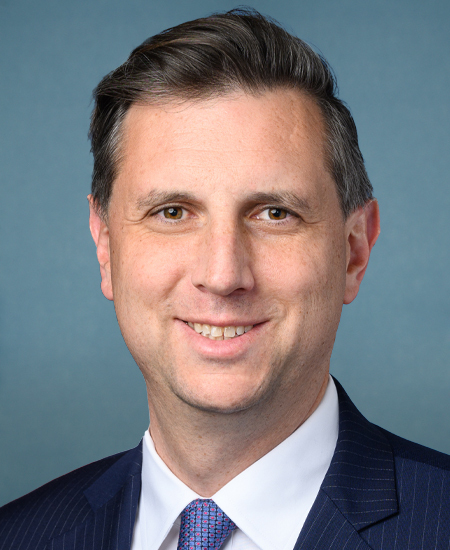
Rep. Seth Magaziner
Sponsored bills
Maddy summaryHRES 1566 is a symbolic House resolution honoring all U.S. veterans on Veterans Day 2024. It recognizes the service and sacrifice of the estimated 15.8 million veterans living in the U.S. as of 2023, including those who served in conflicts from World War II to post-9/11. The resolution calls on the American public to observe Veterans Day to acknowledge veterans' role in preserving national freedom. As a non-binding resolution, it has no direct policy impact but formally expresses congressional recognition of veterans' contributions.
Maddy summaryThis bill modifies how disability benefits are treated for homeless disabled veterans seeking housing assistance. It excludes certain disability payments (under Chapter 11 or 15 of Title 38, U.S. Code) from income calculations when determining eligibility for HUD-assisted housing programs, including the supported housing program under Section 8(o)(19) and housing on Department property. Specifically, it ensures these benefits are not counted toward income for housing eligibility, though they still count for "adjusted income" definitions. The bill directly affects disabled veterans applying for HUD housing assistance who receive these specific disability benefits. It makes a concrete change to income calculation rules without altering benefit amounts or creating new funding.
Maddy summaryHRES 1555 is a symbolic House resolution condemning the spread of false claims and malicious rumors about disaster response efforts, which have led to credible threats against FEMA personnel and disrupted aid for survivors. It specifically references incidents after Hurricanes Helene and Milton, including a pause in North Carolina door-to-door assistance due to safety threats and antisemitic targeting of officials. The resolution formally condemns those spreading disinformation for political gain and commits Congress to supporting FEMA’s efforts to combat misinformation and promote accurate recovery information. As a non-binding resolution, it does not create new laws but expresses congressional support for protecting disaster response workers and ensuring survivors receive timely aid.
Maddy summaryThe VA Employee Fairness Act of 2024 modifies collective bargaining rules for employees of the Veterans Health Administration (VHA). It removes existing subsections (b), (c), and (d) from the law governing VHA employee bargaining and renumbers the remaining provision. This change streamlines the collective bargaining framework but does not alter the Secretary of Veterans Affairs' existing authorities over incentive pay and expedited hiring. The bill directly affects VHA employees by changing how their collective bargaining rights are structured under federal law. The law remains neutral, focusing solely on procedural adjustments to the existing bargaining framework.
Maddy summaryHR 9982 creates a dedicated Office of Children’s Health Protection within the EPA to address environmental risks affecting children. The office, led by an EPA-appointed director, will assess health threats like pollution or chemicals that disproportionately impact infants, children, and adolescents, and coordinate federal efforts to reduce these risks through policy, research, and school health programs. It establishes a permanent advisory committee to guide the EPA and requires $7.8 million annually for the office plus $13.2 million for the committee through 2029. The bill directly affects children’s health by mandating EPA action on environmental hazards through specific programs, not by changing existing regulations or creating new taxes.
Maddy summaryHRES 1537 is a non-binding House resolution condemning Hamas' October 7, 2023, attacks on Israel, which killed over 1,200 people and took 251 hostages, including 7 Americans still held captive. It calls on Hamas to immediately surrender, cease attacks, and release all hostages unconditionally, while reaffirming Israel's right to self-defense. The resolution also urges international organizations to condemn Hamas' actions and address the global surge in antisemitism following the attacks. As a symbolic statement, it does not create new laws or alter policy but expresses congressional position. The bill specifically references the ongoing captivity of seven U.S. citizens: Edan Alexander, Itay Chen, Sagui Dekel-Chen, Gadi Haggai, Judith Weinstein Haggai, Omer Neutra, and Keith Siegel.
Maddy summaryHR 9864, the Keep Food Containers Safe from PFAS Act of 2024, prohibits the sale of food packaging containing intentionally added PFAS chemicals (like those used in non-stick coatings) in interstate commerce. It directly affects food manufacturers and packaging producers who currently use these chemicals. The bill amends federal food safety law to ban such packaging starting January 1, 2025, defining PFAS as man-made chemicals with at least one fully fluorinated carbon atom. This is a concrete policy change to remove specific chemicals from food contact materials.
Maddy summaryHR 9722, the CATCH Fentanyl Act, directs U.S. Customs and Border Protection (CBP) to test new technology at land border ports to improve detection of fentanyl, drugs, weapons, and smuggling. Over five years, CBP must run pilot projects evaluating at least five types of nonintrusive inspection technologies - such as AI-powered scanners and machine learning tools - to enhance detection accuracy, reduce inspection wait times, and integrate with existing systems. The bill requires CBP to analyze performance metrics like detection rates and false alarms, prioritize cost-effective solutions, and submit reports on privacy impacts and recommendations for broader implementation. The pilot program ends after five years, with no new funding authorized for the initiative.
Maddy summaryHR 8119, the PEARL Act, establishes a 3-year pilot program at U.S. Customs and Border Protection (CBP) to adopt therapy dogs from local animal shelters for emotional support of CBP personnel. The bill requires the Secretary of Homeland Security to create the program within 60 days of enactment, train shelter dogs as therapy dogs, and reimburse CBP for related costs. It also authorizes $1,000,000 for CBP's existing Support Canine Program. The bill directly affects CBP officers and staff by introducing a new emotional wellness resource through therapy dog interactions.