

Real Economic Support That Acknowledges Unique Restaurant Assistance Needed To Survive Act of 2021 or the RESTAURANTS Act of 2021 This bill temporarily establishes and provides funding for the Restaurant Revitalization Fund, from which the Department of the Treasury shall make grants to eligible food and beverage purveyors to cover specified costs such as payroll, operational expenses, and paid sick leave. For the grant program's initial period, Treasury must (1) prioritize awarding grants to marginalized and underrepresented communities, and (2) only award grants to eligible food and beverage purveyors with annual revenues of less than $1.5 million in 2019. For tax purposes, grant amounts are excluded from the recipient's gross income. An entity that received a loan under the Paycheck Protection Program established to support small businesses in response to COVID-19 (i.e., coronavirus disease 2019) may not apply for or use a restaurant revitalization grant for the same expenses for which the entity received the paycheck protection loan. Further, a grant applicant may request an additional amount to cover the cost of providing 10 days of paid sick leave to its employees. Treasury must report a list of grant recipients with the amount each recipient received, as well as demographics and other specified information.
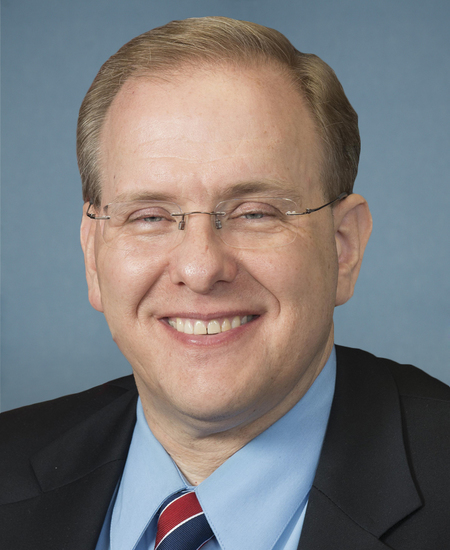
Rep. James R. Langevin
Sponsored bills
Family and Medical Insurance Leave Act or the FAMILY Act This bill entitles every employee to a family and medical leave insurance (FMLI) monthly benefit payment of two-thirds of the employee's regular pay, limited to a maximum of $4,000, for not more than 60 days of qualified caregiving. The bill establishes the Office of Paid Family and Medical Leave within the Social Security Administration to administer the FMLI program. An FMLI benefit payment must be coordinated with any periodic benefits received under a state or local temporary disability insurance or family leave program. The bill imposes a tax on employers, employees, and self-employed individuals to fund FMLI benefits. It also establishes the Federal Family and Medical Leave Insurance Trust Fund to hold tax revenues.
Scientific Integrity Act This bill revises provisions regarding the release of scientific research results by federal agencies. Each agency that funds, conducts, or oversees scientific research must (1) adopt and enforce a scientific integrity policy that includes requirements such as that scientific conclusions are not based on political considerations, and (2) submit such policy to the Office of Science and Technology Policy (OSTP) for approval. Each agency must make such policy available to the public and submit such policy to Congress. Agencies and the OSTP must periodically review the policies. The Government Accountability Office shall review implementation of the policies. Each agency shall (1) appoint a Scientific Integrity Officer, (2) establish a process for dispute resolution consistent with the scientific integrity policy, and (3) establish a specified training program for current and new employees.
Honoring Our WWII Merchant Mariners Act of 2021 This bill requires the Department of Veterans Affairs to distribute a payment of $25,000 to U.S. merchant marines who engaged in qualified service during World War II. To be eligible, an individual must apply for the benefit and must not have received benefits under the Servicemen's Readjustment Act of 1944. The bill sets forth what constitutes qualified service, including time frame of service and licensing requirements.
This resolution expresses support for National Hydrocephalus Awareness Month. (Hydrocephalus is a buildup of fluid in the brain.)
CARES Windfall for the Wealthiest Repeal Act This bill restores and makes permanent the limitation on excess businesses losses of noncorporate taxpayers. It also allows taxpayers a carryback of their net operating losses arising in 2019 and 2020.
USPS Fairness Act This bill repeals the requirement that the U.S. Postal Service annually prepay future retirement health benefits.
CHampioning Apprenticeships for New Careers and Employees in TECHnology Act or the CHANCE in TECH Act This bill requires the Department of Labor to enter into contracts with industry intermediaries to promote the development of and access to apprenticeships in the technology sector. The Department of Education (ED) may issue CHANCE in TECH Awards for 21st Century Schools to secondary schools or junior or community colleges that demonstrate high achievement in providing students necessary skills to compete in the 21st century workforce. In making an award, ED must consider the availability of science, technology, engineering, and mathematics (STEM), career and technical education, and computer technology courses at the schools.
Pre-Apprenticeship Wrap-around Support Services Fund Act of 2021 This bill authorizes the Department of Labor to award grants to eligible applicants to provide stipends to individuals enrolled in a pre-apprenticeship program. Grant recipients must prioritize the provision of stipends to individuals with a barrier to employment.
Advancing Connectivity during the Coronavirus to Ensure Support for Seniors Act or the ACCESS Act This bill provides funding to increase access to telehealth services and virtual visits in skilled and other nursing facilities during the COVID-19 (i.e., coronavirus disease 2019) emergency. The bill designates the funding as emergency spending, which is exempt from discretionary spending limits. Specifically, the bill provides additional funding for FY2021, to remain available through FY2022, to the Telehealth Resource Center Program to address barriers to telehealth faced by skilled and other nursing facilities. The Office for the Advancement of Telehealth within the Federal Office of Rural Health Policy in the Health Resources and Services Administration manages this program. In addition, the bill provides funding for FY2021, to remain available through one month after the emergency period ends, to the Department of Health and Human Services (HHS) for grants to nursing facilities to support virtual visits for residents during the COVID-19 emergency. HHS must develop relevant guidance for these grants within 15 days. HHS must also coordinate with the Federal Communications Commission to ensure grantees have access to telecommunications and broadband services.