

Therapeutic Fraud Prevention Act of 20 21 This bill prohibits commercial conversion therapy, which is a practice or treatment designed to change a person's sexual orientation or gender identity or otherwise change behaviors, thoughts, or expressions related to gender or sexual attraction. This prohibition does not apply to treatment that assists an individual undergoing a gender transition or facilitates identity exploration and development.
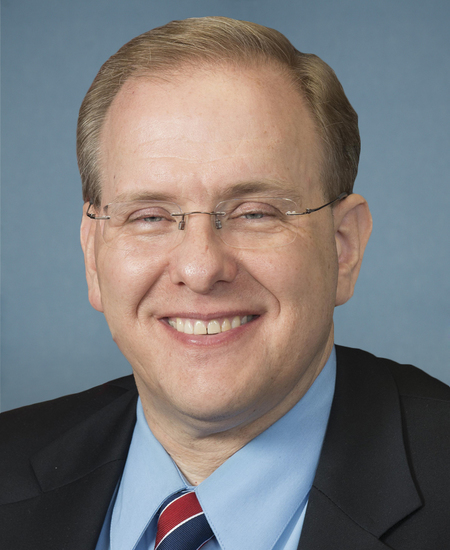
Rep. James R. Langevin
Sponsored bills
Promotion and Expansion of Private Employee Ownership Act of 2021 This bill expands tax incentives and federal assistance for employee stock ownership plans (ESOPs) that are sponsored by S corporations. The bill provides additional tax incentives for ESOPs by (1) extending to all domestic corporations, including S corporations, provisions allowing deferral of tax on gain from the sale of employer securities to an ESOP; and (2) allowing a tax deduction for 50% of the interest received by a bank on loans to S corporation-sponsored ESOPs for the purchase of employer securities. The Department of the Treasury must establish the S Corporation Employee Ownership Assistance Office to foster increased employee ownership of S corporations. The bill defines an ESOP business concern for purposes of the Small Business Act as a business concern that was eligible for a loan, preference, or other program under such Act before more than 49% of the business concern was acquired by an ESOP.
Vanessa Guillén Military Justice Improvement and Increasing Prevention Act This bill modifies the process and policy related to the disposition of charges and convening of courts-martial for certain sexual assault cases and other specified offenses under the Uniform Code of Military Justice (UCMJ). Among other elements, the bill provides that the determinations on the preferral, disposition, and referral of charges for specified offenses under the UCMJ must be made by a commissioned officer of the Armed Forces who is designated as a court-martial convening authority (in grade O-6 or higher) and who is available for detail as trial counsel, has significant trial experience, and is outside the chain of command of the member subject to the charges.
National Adoption and Foster Care Home Study Act This bill requires The Department of Health and Human Services to establish a methodology for researched-based home study and to award grants for demonstration projects for states to adopt such methodology in the evaluation of prospective foster and adoptive parents. Such methodology must incorporate specified data-collection tools including, among others, (1) uniform, closed-ended questions; (2) a rating system to report findings; (3) a guidance document for practitioners; and (4) ongoing training for home-study personnel.
Zero-Emission Nuclear Power Production Credit Act of 2021 This bill allows a new business-related tax credit through 2030 for the production of electricity from zero-emission nuclear power. It also allows taxpayers to elect direct payments of such credit and requires a recapture of credit amounts for contractors who fail to pay their employees the prevailing wage rate. The bill requires the Government Accountability Office to report on the effectiveness of the credit in ensuring grid reliability and on ratepayer savings. Contractors must ensure that at least 15% of their workforce is composed of qualified apprentices unless there is a lack of availability of qualified apprentices in the applicable geographic area.
Puppy Protection Act of 2021 This bill requires the Department of Agriculture to expand standards that govern the humane handling, care, treatment, and transportation of animals to include new requirements for commercial dog dealers. Specifically, the standards must require dog dealers to provide to dogs adequate housing, exercise, and veterinary care; appropriate and nutritious food; continuous access to potable water; and meaningful socialization with humans and compatible dogs for at least 30 minutes each day. The standards must also include requirements for breeders to use safe breeding practices and make all reasonable efforts to find humane placement for retired breeding dogs.
Enhancing K-12 Cybersecurity Act This bill establishes resources and a program to address cybersecurity of elementary and secondary schools. First, the bill directs the Cybersecurity and Infrastructure Security Agency (CISA) to establish an information exchange to disseminate information, best practices, training, and resources to improve cybersecurity in elementary and secondary schools. In addition, CISA must establish a registry to track cyber incidents affecting information technology systems that are owned or managed by schools and educational agencies. Schools and educational agencies may voluntarily submit information to the registry. Finally, the bill requires CISA to establish a program to address cybersecurity threats to school information systems.
Work Without Worry Act This bill modifies eligibility for Social Security Disability Insurance (SSDI) benefits for individuals who have a disability that began before age 22. Under current law, these individuals may obtain SSDI benefits based on the work record of a retired, disabled, or deceased parent. However, an individual with earnings after age 22 that exceed a specified monetary limit (i.e., constitute substantial gainful activity) permanently loses eligibility for such benefits. This bill allows individuals to retain eligibility for such benefits regardless of the amount of earnings after age 22. Additionally, individuals who apply for SSDI benefits on a parent's record and also independently qualify for Social Security benefits on their own record will receive the larger of the two benefit amounts.
This resolution recognizes the historical significance to the nation of Juneteenth Independence Day (commemorating the end of slavery in the United States).
Pell Grant Preservation and Expansion Act of 2021 This bill makes various changes to the Federal Pell Grant program, including by expanding student eligibility for Pell Grants. The bill also revises student eligibility for federal student-aid programs. Specifically, the bill provides funding to increase the maximum Pell Grant award for each eligible student. Further, the bill requires the award amount to be adjusted for inflation. Next, the bill allows students who receive means-tested federal benefits (e.g., Medicaid) to automatically qualify for the maximum Pell Grant award plus an additional award amount. In addition, the bill moves the Iraq and Afghanistan Service Grant program into the Pell Grant program. Next, the bill raises from 12 to 18 the total number of semesters during which a student may receive a Pell Grant. The bill makes Dreamer students (i.e., students who have been granted Deferred Action for Childhood Arrivals status) who entered the United States before the age of 18 and who meet certain educational criteria eligible for federal financial aid. The bill also revises satisfactory academic progress requirements for federal student-aid programs, including by allowing a student who has not been enrolled in an institution of higher education for two years to regain eligibility for federal student aid.