Continued State Flexibility To Assist Older Foster Youth Act This bill temporarily extends certain flexibilities for states to assist older youth in foster care during the COVID-19 pandemic. This includes expanding through FY2022 eligibility for services until a child reaches age 27 and suspending until December 31, 2021, certain education and training requirements.
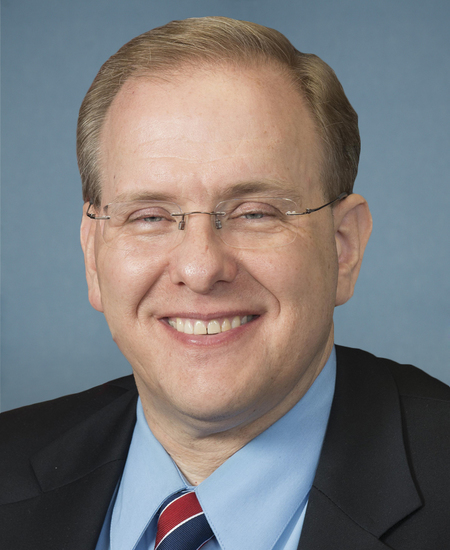
Rep. James R. Langevin
Sponsored bills
Social Security 2100: A Sacred Trust This bill makes changes to Social Security benefits, taxes, and other aspects of the program, including by raising the primary insurance amount, increasing the maximum taxable earnings that are subject to Social Security payroll taxes, and requiring Social Security account statements to be mailed unless the individual recipient opts for electronic delivery.
Original National Domestic Violence Awareness Month Resolution of 2021 This resolution supports the goals and ideals of National Domestic Violence Awareness Month. Further, it expresses the sense of the House of Representatives that Congress should continue to raise awareness of and support programs to end domestic violence.
Public Service Freedom to Negotiate Act of 20 21 This bill provides minimum collective bargaining rights and procedures for public employees and prohibits strikes by certain public safety workers. The Federal Labor Relations Authority (FLRA) shall determine for each state whether the laws of such state substantially provide for each of the minimum standard collective bargaining rights and procedures specified by this bill, including the right of public employees and supervisory employees to self-organize, form or join a labor organization, or collectively bargain. The FLRA must issue rules and take actions to establish and administer bargaining rights and procedures for those states that do not substantially provide for them. No employers, emergency services employees, or law enforcement officers may engage in a lockout, strike, or any other organized job action that is likely to result in a measurable disruption of the delivery of emergency or public safety services. Furthermore, no labor organization may be the cause of a violation of such prohibition.
State, Local, Tribal, and Territorial Fiscal Recovery, Infrastructure, and Disaster Relief Flexibility Act This bill allows states, tribes, territories, and localities to use certain COVID-19 relief funds for new categories of spending, including for natural disasters and infrastructure projects. It also makes changes to expenditure deadlines and other aspects of this funding. Specifically, recipients may use funds for emergency relief from natural disasters and associated negative economic impacts of natural disasters. In addition, recipients may use a portion of their COVID-19 relief funds for designated infrastructure projects, such as nationally significant freight and highway projects. Furthermore, the bill allows recipients to expend COVID-19 relief funds on these types of infrastructure projects until September 30, 2026. Under current law, recipients must expend the funds by December 31, 2024. Other changes in the bill include (1) modifying eligibility and allocation requirements for funding set aside for counties and Indian tribes that are near public lands, (2) allowing Indian tribes an additional year to expend their COVID-19 relief funds, and (3) establishing a process for government entities to decline COVID-19 relief funds and requiring any declined funds to be used to reduce the federal deficit.

Caring for Survivors Act of 2021 This bill increases the monthly rate of dependency and indemnity compensation payable to surviving spouses through the Department of Veterans Affairs. The bill also adjusts the amount payable to surviving spouses and children of veterans who were rated as totally disabled for a period of less than 10 years before their death.
Free Veterans from Fees Act This bill waives the application fee for any special use permit solely for a veterans special event at war memorials on land administered by the National Park Service in the District of Columbia and its environs.
Syrian Partner Protection Act This bill authorizes the Department of Homeland Security (DHS) to provide special immigrant status to qualified aliens who assisted U.S. efforts in Syria against the Islamic State. (A special immigrant is qualified to become a permanent resident.) A qualifying alien is a Syrian national (or stateless person who habitually resided in Syria) who (1) partnered with or worked for the United States in Syria in a sensitive and trusted capacity (such as an interpreter) on or after January 1, 2014, for at least one year, and (2) provided documented service to U.S. efforts against the Islamic State. The spouse or child of such an alien shall also qualify for special immigrant status. DHS may admit up to 4,000 principal aliens under this bill each fiscal year for the five fiscal years after this bill's enactment. Unused visas at the end of a fiscal year shall carry forward and be available the next year. Aliens admitted under this bill shall not be subject to other numerical limitations. If a qualifying alien applying for special immigrant status under this bill is in imminent danger, the Department of State shall provide protection to that alien. An alien who has received special immigrant status under this bill shall be eligible for benefits generally available to admitted refugees, such as resettlement assistance.
Law Enforcement Protection Act of 2021 This bill includes armor-piercing, concealable weapons in the definition of firearm under the National Firearms Act.
Camp Lejeune Justice Act of 2021 This bill allows certain individuals to sue and recover damages for harm from exposure to contaminated water at Camp Lejeune in North Carolina between August 1, 1953, and December 31, 1987. This action is available only to individuals who were exposed to contaminated water for at least 30 days. The bill prohibits the U.S. government from asserting specified immunity from litigation in response to such a lawsuit. The bill also prohibits an individual who brings such an action from bringing a separate tort action against the United States based on the same harm.