

Respect for Marriage Act This act provides statutory authority for same-sex and interracial marriages. Specifically, the act replaces provisions that define, for purposes of federal law, marriage as between a man and a woman and spouse as a person of the opposite sex with provisions that recognize any marriage between two individuals that is valid under state law. (The Supreme Court held that the current provisions were unconstitutional in United States v. Windsor in 2013.) The act also replaces provisions that do not require states to recognize same-sex marriages from other states with provisions that prohibit the denial of full faith and credit or any right or claim relating to out-of-state marriages on the basis of sex, race, ethnicity, or national origin. (The Supreme Court held that state laws barring same-sex marriages were unconstitutional in Obergefell v. Hodges in 2015; the Court held that state laws barring interracial marriages were unconstitutional in Loving v. Virginia in 1967.) The act allows the Department of Justice to bring a civil action and establishes a private right of action for violations. The act does not (1) affect religious liberties or conscience protections that are available under the Constitution or federal law, (2) require religious organizations to provide goods or services to formally recognize or celebrate a marriage, (3) affect any benefits or rights that do not arise from a marriage, or (4) recognize under federal law any marriage between more than two individuals.
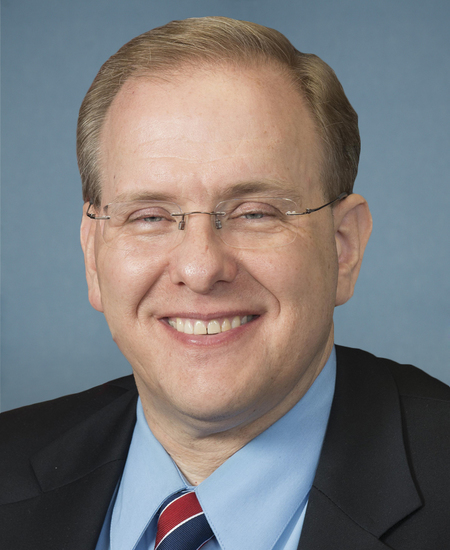
Rep. James R. Langevin
Sponsored bills
International Violence Against Women Act of 2022 This bill requires a U.S. global strategy to prevent and respond to violence against women and girls. The bill establishes in the Department of State an Office of Global Women's Issues, which shall be headed by an Ambassador-at-Large for Global Women's Issues. The Ambassador-at-Large shall (1) coordinate U.S. government efforts regarding gender equality and the advancement of women and girls in foreign policy, and (2) develop or update periodically a U.S. global strategy to prevent and respond to gender-based violence. The bill establishes in the U.S. Agency for International Development the position of Senior Coordinator for Gender Equality and Women's Empowerment who shall coordinate policies, programs, and funding regarding gender equality and women's empowerment.
First Responder Fair Return for Employees on Their Initial Retirement Earned Act or the First Responder Fair RETIRE Act This act allows disabled federal first responders (e.g., law enforcement officers, customs and border protection officers, and firefighters) to continue receiving federal retirement benefits in the same manner as though they had not been disabled. Under current law, federal first responders are subject to a mandatory retirement age of 57. To facilitate this earlier retirement, federal first responders are required to pay a greater percentage of their salary towards retirement. Additionally, their annuity amount is calculated at a higher rate than other federal employees. This act allows a federal first responder to remain in the accelerated retirement system if they are placed in another civil service position outside of that system after returning to work from a work-related injury or illness. Further, if such an employee is separated from service before they are entitled to receive an annuity, they may receive a refund of their accelerated contributions.
READ Act Reauthorization Act of 2022 This bill reauthorizes a law that requires the implementation of a strategy to promote quality basic education in partner countries by (1) expanding access to basic education for all children, particularly marginalized children and vulnerable groups; and (2) improving the quality of basic education and learning outcomes.
Maddy summaryHRES 1501 is a symbolic resolution expressing the House of Representatives' support for National Adoption Day (November 19, 2022) and National Adoption Month (November 2022). It encourages the public to raise awareness about children in foster care awaiting permanent families and promotes adoption as a way to provide safety and stability. The resolution does not create new laws or policies but formally recognizes efforts to connect children in foster care with adoptive families, referencing that over 75,000 children joined permanent families on National Adoption Day since 2000. It directly affects public awareness and national recognition of adoption needs, not specific individuals or programs.
Working to Help Ensure Equity for Lithium-ion-powered Chairs on Airplanes Act or the WHEELChairs on Airplanes Act This bill directs the Federal Aviation Administration (FAA) to conduct an annual survey on all carriers and foreign air carriers to compile the policies regarding lithium-ion battery-powered wheelchairs and mobility aids of each U.S. air carrier and foreign air carrier and determine whether any of the policies are more restrictive than FAA safety standards or inconsistent with FAA standards for adequate protection. The bill requires air carriers with inconsistent or more restrictive policies than the FAA and those that do not have a policy in effect to update their policies.
Lymphedema Treatment Act This bill provides for Medicare coverage of lymphedema compression treatment items. Specifically, the bill provides for coverage of standard and custom fitted gradient compression garments and other approved items that are prescribed by a physician or other specified health care professional to treat lymphedema.
Maddy summaryHRES 1462 is a symbolic resolution expressing support for designating November 2022 as "National Career Development Month." It does not create new laws or policies but urges the public to recognize career development services as valuable resources. The resolution highlights that career professionals help individuals align skills with job opportunities and emphasizes the importance of career counseling for workforce readiness. It specifically encourages workers, students, and employers to utilize career development services, though it does not mandate any actions or affect specific groups through binding legislation.
Prevent All Soring Tactics Act of 2022 or the PAST Act of 2022 This bill addresses the practice of soring horses. The soring of horses includes various actions taken on horses' limbs to produce higher gaits that may cause pain, distress, inflammation, or lameness. Specifically, the bill expands soring regulation and enforcement at horse shows, exhibitions, sales, and auctions, including by establishing a new system for inspecting horses for soring. In addition, the bill increases penalties for violations.
This concurrent resolution recognizes that people with disabilities experience barriers to access every day and pledges to make universal and inclusive design a guiding principle for all infrastructure bills and projects.