

Maddy summaryHR 7477, the CERTS Tax Exemption Act, ensures that grants provided under the Coronavirus Economic Relief for Transportation Services Act are tax-free for eligible transportation service providers. The bill directly affects companies and organizations providing transportation services that receive these specific federal grants. Key provisions state that grant amounts cannot be counted as taxable income, deductions related to grant-funded costs cannot be denied, and tax attributes (like basis increases) must be treated as tax-free for partnerships and S corporations. This change simplifies tax treatment for recipients by preventing unintended tax liabilities on relief funds.
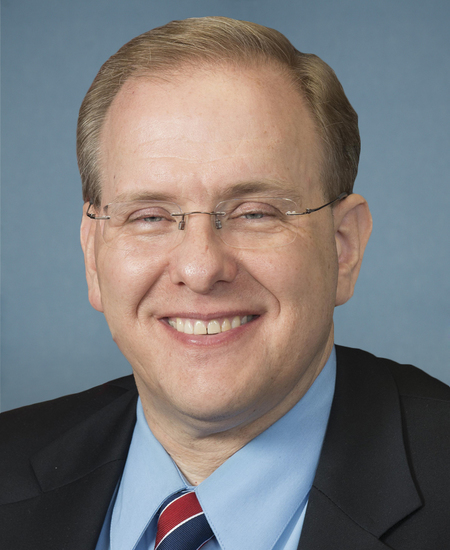
Rep. James R. Langevin
Sponsored bills
Reporting Efficiently to Proper Officials in Response to Terrorism Act of 2021 or the REPORT Act This bill requires specified federal agencies to report to Congress concerning any act of terrorism that occurs in the United States. Whenever an act of terrorism occurs, the Department of Homeland Security (DHS), the Department of Justice (DOJ), the Federal Bureau of Investigation (FBI), and, as appropriate, the National Counterterrorism Center (NCC), must submit to the appropriate congressional committees, as specified by this bill, an unclassified report not later than one year after the completion of the investigation by the primary agency conducting the investigation concerning the terrorist act. Such report shall (1) include a statement of the facts of the act of terrorism that are known at the time of such report; (2) identify any gaps in homeland or national security that could be addressed to prevent future acts of terrorism; and (3) include any recommendations for additional measures that could be taken to improve homeland or national security, such as changes in law enforcement practices or changes in law. If DHS, DOJ, and the FBI or, as appropriate, the NCC, determines any information required to be reported could jeopardize an ongoing investigation or prosecution, such entities (1) may withhold from reporting such information, and (2) shall notify the appropriate congressional committees of that determination.
Educators Expense Deduction Modernization Act of 2022 This bill increases the tax deduction for the expenses of eligible educators from $250 to $1,000, An eligible educator is, with respect to any taxable year, an individual who is a kindergarten through grade 12 teacher, instructor, counselor, principal, or aide in a school for at least 900 hours during a school year.
Ensuring Lasting Smiles Act This bill requires private health insurance plans to cover diagnosis and treatment of congenital anomalies and birth defects, such as reconstructive services and items. Coverage must include services and items that functionally improve, repair, or restore any body part that is medically necessary for normal bodily functions or appearance, as determined by the treating physician. Coverage limits and cost-sharing requirements for such services and items may not be more restrictive than those applicable to all medical and surgical benefits under the plan.
Securing a Strong Retirement Act of 2022 This bill makes various changes with respect to employer-sponsored retirement plans, including providing for the automatic enrollment of employees in certain plans and increasing the age at which participants are required to begin receiving mandatory distributions.
Strengthen Kids' Mental Health Now Act of 2022 This bill establishes several requirements to support the provision of behavioral health services under Medicaid and other programs, particularly for children. For example, the bill temporarily requires payment for pediatric mental, emotional, and behavioral health services under Medicaid to align with Medicare payments to providers. The bill provides for a 100% Federal Medical Assistance Percentage (i.e., federal matching rate) for any associated additional expenditures. The Centers for Medicare & Medicaid Services must issue guidance on how state Medicaid programs may expand the availability of telehealth services and mental, emotional, and behavioral health services. In addition, the Health Resources and Services Administration must award grants to support (1) pediatric behavioral health care integration in communities, (2) pediatric mental health and substance use disorder workforce training, and (3) the infrastructure of pediatric hospitals and rural health clinics with respect to behavioral health services.
Emmett Till Antilynching Act This bill makes lynching a federal hate crime offense. Specifically, the bill imposes criminal penalties—a fine, a prison term of up to 30 years, or both—on an individual who conspires to commit a hate crime offense that results in death or serious bodily injury or that includes kidnapping or an attempt to kidnap, aggravated sexual abuse or an attempt to commit aggravated sexual abuse, or an attempt to kill.
This resolution supports the goals and ideals of National Women's History Month and recognizes the women and organizations that continue to promote the teaching of women's history.
Forced Arbitration Injustice Repeal Act of 2022 or the FAIR Act of 2022 This bill prohibits a predispute arbitration agreement from being valid or enforceable if it requires arbitration of an employment, consumer, antitrust, or civil rights dispute.
This resolution recognizes the important role of local nutrition programs supported through the Older Americans Act of 1965 in addressing senior hunger, malnutrition, and isolation.