

Accelerating Access to Critical Therapies for ALS Act This bill establishes grant programs to address neurodegenerative diseases, such as amyotrophic lateral sclerosis (also known as ALS or Lou Gehrig's disease), and contains other related provisions. The Department of Health and Human Services (HHS) shall award grants to eligible entities for scientific research utilizing data from expanded access to investigational ALS treatments for individuals who are not otherwise eligible for clinical trials. The Food and Drug Administration (FDA) shall award grants to public and private entities to cover the costs of research and development of drugs that diagnose or treat ALS and other rare neurodegenerative diseases. HHS shall also establish the Public-Private Partnership for Neurodegenerative Diseases between the National Institutes of Health, the FDA, and at least one eligible entity (generally, an institution of higher education or a nonprofit organization). The partnership shall support the development and regulatory review of drugs that address ALS and other rare neurodegenerative diseases. The FDA shall publish on its website a five-year action plan for fostering the development of drugs that improve or extend the lives of people living with rare neurodegenerative diseases. The Government Accountability Office must report to Congress about the grants provided under this bill, including an analysis of the impact of such grants on research and development of treatments for ALS.
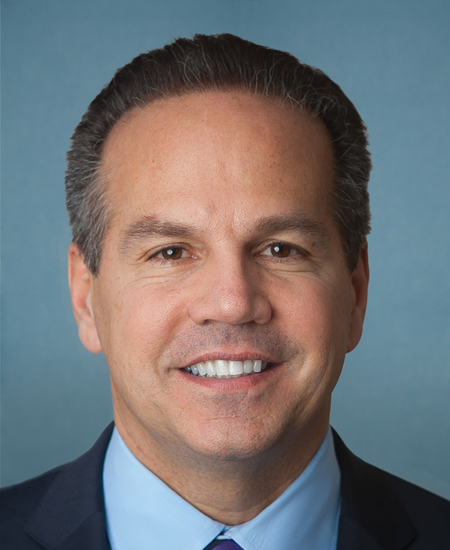
Rep. David N. Cicilline
Sponsored bills
Wildlife Conservation and Anti-Trafficking Act of 2021 This bill sets forth provisions relating to wildlife conservation, anti-trafficking and poaching, and illegal fishing. Specifically, the bill directs the Departments of Justice, the Interior, Commerce, State, and the Treasury to develop a plan of action for awards to whistleblowers of violations of laws applicable to wildlife trafficking; directs Interior to carry out the International Wildlife Conservation Program to, among other things, address global conservation threats and combat wildlife trafficking and poaching; provides funding for the conservation of certain endangered species; authorizes Interior, in consultation with the State Department, to station not less than one U.S. Fish and Wildlife Service officer in the primary diplomatic or consular post of the United States in a focus country or country of concern (i.e., countries engaging in wildlife trafficking); and directs Commerce to make amounts available for illegal, unreported, and unregulated fishing enforcement. The bill also modifies the federal criminal code to make wildlife trafficking and illegal fishing predicates with respect to the enforcement of certain criminal offenses, including racketeering and money laundering.
This resolution recognizes the anniversaries of the International Day of Peace, Human Solidarity Day, the International Day of Living Together in Peace, and other specified international days. The resolution also expresses that Congress commits to (1) encouraging the people of the United States to continue commemorating international days of peace, coexistence, and cooperation; and (2) supporting activities on such days that promote thoughtful, deliberative, and cooperative actions to achieve peace.
This bill posthumously provides for the award of a Congressional Gold Medal in commemoration of the 13 service members who died on August 26, 2021, while stationed at Hamid Karzai International Airport in Afghanistan.
This resolution recognizes the 73rd anniversary of the Universal Declaration of Human Rights, supports the designation of Human Rights Day, and encourages the observation of Human Rights Day and a continued commitment to upholding human rights around the globe.
Protecting Our Democracy Act This bill addresses issues involving (1) abuses of presidential power; (2) checks and balances, accountability, and transparency; and (3) election integrity and security. Specifically, regarding abuses of presidential power, the bill requires the Department of Justice (DOJ) and the President to submit to Congress specified materials relating to certain pardons, prohibits presidential self-pardons, suspends the statute of limitations for federal offenses committed by a sitting President or Vice President, prohibits the acceptance of foreign or domestic emoluments, and sets forth provisions regarding Office of Government Ethics and Office of Special Counsel jurisdiction and enforcement authority. To address checks and balances, accountability, and transparency, the bill authorizes specified actions to enforce congressional subpoenas, imposes limits on presidential declarations of emergencies, requires DOJ to maintain a log of specified communications between it and the White House, requires cause for removal of inspectors general, increases whistleblower protections, and requires a candidate for President or Vice President to provide copies of tax returns for the 10 most recent taxable years to the Federal Election Commission. To address election integrity and security, the bill requires federal campaign reporting of foreign contacts, makes various changes to requirements concerning foreign donations to political campaigns and candidates and foreign contributions to online electioneering communications, prohibits distribution of materially deceptive audio or visual media prior to an election (i.e., deepfakes), and establishes a program to support states and localities transition to ranked choice voting systems.
This resolution condemns Turkey's continued occupation of Cyprus and calls on Turkey to withdraw all of its troops from the island. It also calls on Turkey to adhere to NATO's democratic principles and mission.
Humane Cosmetics Act of 2021 This bill generally prohibits animal testing in the evaluation of cosmetic products, and it prohibits the sale or transport of cosmetics developed using animal testing, subject to civil penalties. These prohibitions begin one year after enactment. The bill specifies exceptions to these prohibitions, including if such animal testing (1) is conducted outside the United States to comply with a foreign regulatory authority; (2) is pursuant to a specified finding that there are no nonanimal alternatives to test the safety of a potentially dangerous cosmetic product or ingredient; (3) is of a product or ingredient for a drug or device subject to regulation by the Food and Drug Administration (FDA); or (4) is required for a noncosmetic purpose pursuant to a state, federal, or foreign regulatory authority. Further, no animal-testing evidence may be used to establish the safety of a cosmetic product or ingredient that is regulated by the FDA after the effective date of this bill, subject to limited exceptions.
Telehealth Extension Act of 2021 This bill expands and otherwise modifies coverage of telehealth services under Medicare. Specifically, the bill permanently (1) removes geographic restrictions on originating sites (i.e., the location of the beneficiary), (2) allows the home of the beneficiary to serve as the originating site for all services, and (3) allows federally qualified health centers and rural health clinics to serve as the distant site (i.e., the location of the health care practitioner). The bill also extends any Medicare telehealth flexibilities that were granted during the COVID-19 public health emergency until two years after the emergency ends and generally allows such flexibilities to be granted during any public health emergency. In addition, the bill (1) allows for Medicare payment of outpatient critical access hospital services consisting of telehealth behavioral therapy until two years after the COVID-19 public health emergency ends; and (2) after the emergency ends, conditions payment for certain high-cost laboratory tests and durable medical equipment that are ordered via telehealth on at least one in-person visit during the preceding six-month period.
Mental Health in International Development and Humanitarian Settings Act or the MINDS Act This bill directs the U.S. Agency for International Development (USAID) and the Department of State to integrate mental health and psychosocial support activities across all U.S. foreign assistance programs, with a particular focus on children and other vulnerable populations. To facilitate this integration, the bill makes organizational changes at the USAID. It authorizes the USAID to appoint a coordinator to oversee and direct mental health and psychosocial support activities. The coordinator must ensure that these activities focus on children, adult caretakers and families, displaced populations, and other vulnerable groups. In addition, the bill establishes a working group comprised of representatives from every USAID bureau and the Department of State to coordinate interagency efforts related to, promote best practices for, and ensure sustainability and continuity of mental health and psychosocial support activities. The USAID and the State Department must brief Congress about the amount of foreign assistance spending on mental health and psychosocial support activities and related matters.