This concurrent resolution commemorates the 50th anniversary of the enactment of the Federal Water Pollution Control Act Amendments of 1972, commonly known as the Clean Water Act.
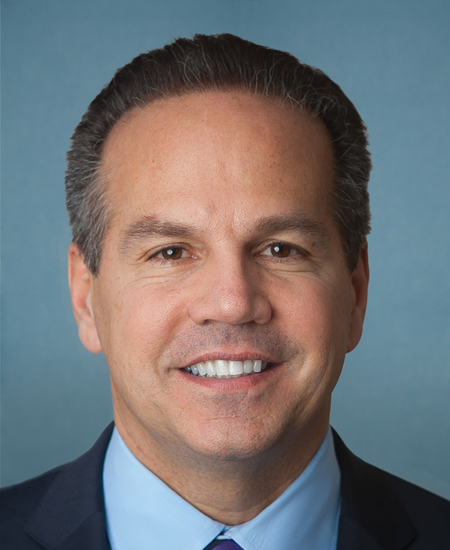
Rep. David N. Cicilline
Sponsored bills
John Lewis Civil Rights Fellowship Act of 2022 This bill establishes the John Lewis Civil Rights Fellowship Program within the J. William Fulbright Educational Exchange Program (commonly referred to as the Fulbright Program). The fellowship program shall honor the legacy of Representative John Lewis and advance U.S. foreign policy priorities by promoting studies, research, and international exchange in the subject of nonviolent civil rights movements around the world. The Fulbright Foreign Scholarship Board shall annually select qualified individuals to serve as fellows in the fellowship program. The Bureau of Educational and Cultural Affairs may determine the number of fellows for each year, with at least 25 fellows each year whenever feasible. Each fellow shall (1) work in an internship or research position with an approved organization in a country with an operational Fulbright U.S. Student Program, and (2) receive an award sufficient to cover the fellow's reasonable costs during the fellowship period and certain travel and lodging expenses related to the program.
Millennium Challenge Corporation Eligibility Expansion Act This bill modifies income-related eligibility requirements for assistance from the Millennium Challenge Corporation (MCC), a program that provides assistance through a competitive selection process to eligible developing countries based on various factors, including a country's level of economic freedom and effectiveness of government. Currently, to be a candidate to receive MCC assistance, a country must, among other requirements, must (1) fit the World Bank's income-based criteria for a low- or lower-middle-income country, or (2) be among the 75 lowest per capita income countries according to the World Bank. Under this bill, a candidate country must have a gross national income per capita no higher than the 125th poorest country as identified by the World Bank for the fiscal year.

Global Food Security Reauthorization Act of 2022 This bill reauthorizes through FY2028 activities to implement the Global Food Security Strategy, a whole-of-government strategy to promote global food security, resilience, and nutrition. The bill also modifies aspects of the strategy, such as requiring the strategy to seek to improve the efficiency and resilience of agricultural production. The bill also reauthorizes through FY2028 activities related to the Emergency Food Security Program, an international market-based assistance program.
Visit America Act This bill implements measures to support the U.S. travel and tourism industry and to address the declining percentage of international visitors to the United States. Specifically, the bill requires the Department of Commerce to develop a 10-year travel and tourism strategy with annual goals for the number of international visitors to the United States and for tourism commerce. The bill also establishes the role of Assistant Secretary of Commerce for Travel and Tourism, whose responsibilities shall include setting an annual goal for the number of international visitors to the United States and facilitating international business travel to the United States. Further, the assistant secretary must develop and implement a COVID-19 pandemic recovery strategy to assist the recovery of the U.S. travel and tourism industry. The bill also provides statutory authority for the United States Travel and Tourism Advisory Board, which shall aid the assistant secretary in developing and implementing the COVID-19 pandemic recovery strategy.
Merger Filing Fee Modernization Act of 202 2 This bill modifies and expands the schedule for graduated merger filing fees and requires that such fees be adjusted each year based on the Consumer Price Index. It also (1) requires parties to disclose in their premerger notification filings any subsidy received from a foreign entity of concern, (2) modifies the venue rules for multi-district antitrust litigation, and (3) establishes various reporting requirements.
Wage Theft Prevention and Wage Recovery Act of 2022 This bill requires employers to make initial and modified disclosures to employees of the terms of their employment, provide such employees with regular paystubs, and make a final payment to an employee for uncompensated work hours within 14 days of the employee's termination. Employers must also allow employees access to wage records. An employer must compensate an employee at the rate specified in an employment contract, including a collective bargaining agreement, that specifies a rate of pay higher than the minimum wage rate. The bill makes all of such unpaid wages recoverable through civil enforcement. The bill establishes new and increased civil and criminal penalties for violations of overtime or minimum wage requirements, including referral to the Department of Justice for criminal prosecution of employers who engage in wage theft, falsification of wage records, or retaliation against employees. The Wage and Hour Division of the Department of Labor must provide grants to specified organizations, including nonprofits and educational institutions, to support efforts to prevent and reduce violations of wage and hour laws.
This bill designates the facility of the United States Postal Service located at 3900 Crown Road Southwest in Atlanta, Georgia, as the John R. Lewis Post Office Building.
This resolution expresses support for the designation of a National Animal Rescue Day to create awareness for animal rescue programs throughout the year and address the challenge of pet overpopulation through continued spaying and neutering.
Heroes of the Warsaw Ghetto Congressional Gold Medal Act This bill provides for the award of a Congressional Gold Medal posthumously to commemorate the participants in the Warsaw Ghetto Uprising who led an armed resistance against Nazi occupiers.