

The Jackie Walorski Maternal and Child Home Visiting Reauthorization Act of 2022 This bill reauthorizes through FY2027, increases funding for, and modifies the Maternal, Infant, and Early Childhood Home Visiting Program. This program supports home visits for expectant and new parents who live in communities that are at-risk for poor maternal and child health outcomes. Changes to the program include setting out requirements for allocating program funds; increasing the percentage of funds reserved for tribal entities; establishing a publicly available dashboard that reports program outcomes; requiring activities to reduce unnecessary data collection, reporting, and other administrative requirements of the program; and allowing for virtual home visits (provided certain conditions are met). The bill also reduces funding for the Medicare Improvement Fund.
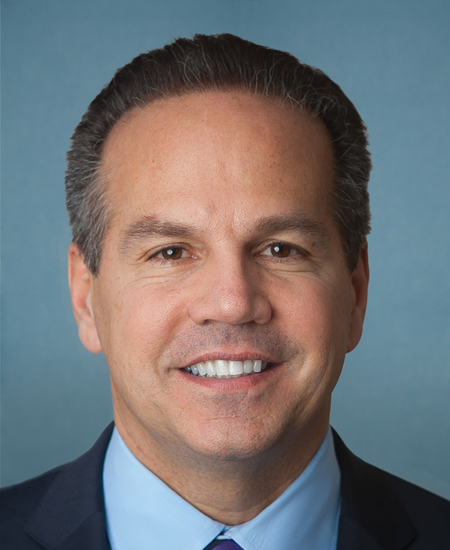
Rep. David N. Cicilline
Sponsored bills
Uyghur Policy Act of 2021 This bill addresses human rights issues concerning the Uyghurs and other minority groups in the Xinjiang Uyghur Autonomous Region in China. The bill authorizes the establishment of a Special Coordinator for Uyghur Issues position within the Department of State. The State Department's Bureau of Educational and Cultural Affairs may, subject to appropriations, make certain funds available to human rights advocates working on behalf of Uyghurs and members of other ethnic and religious minority groups persecuted in China. The funds, if made available, shall be used to facilitate the presence of such human rights advocates at public diplomacy forums to speak on issues related to the human rights and religious freedoms of minority groups persecuted in China. The State Department must ensure that Uyghur language training is available to Foreign Service officers. It must also ensure that a Uyghur-speaking member of the Foreign Service is assigned to U.S. diplomatic and consular missions in China.
This resolution encourages people around the world to work to achieve the goal of zero new HIV transmissions, zero discrimination, and zero AIDS-related deaths, in order to end the HIV epidemic in the United States and around the world by 2030. The resolution supports continued funding for prevention, care and treatment services, and research programs for communities impacted by HIV and people living with HIV in the United States and globally. The resolution supports continued leadership by the United States in domestic, bilateral, multilateral, and private sector efforts to fight HIV. Finally, the resolution urges other members of the international community to sustain and scale up their support for and financial contributions to efforts around the world to combat HIV.
This resolution condemns the use of starvation of civilians as a weapon of warfare. It also calls on the U.S. government to prioritize diplomatic efforts to call out and address instances where hunger and intentional deprivation of food is being utilized as a weapon of war, including efforts to ensure that security operations do not undermine livelihoods of local populations to minimize civilian harm.
This resolution condemns Iran's state-sponsored persecution of its Baha'i minority and its continued violation of the international covenants on human rights. Further, it calls on Iran to immediately release all imprisoned or detained Baha'is, and it urges the President and the Department of State to impose sanctions on Iranian officials and others who are responsible for serious human rights abuses, including abuses against Iran's Baha'i community.
Stop Corporate Capture Act This bill modifies the process for federal agency rulemaking. Specifically, it (1) requires interested parties who submit a study or research as part of a comment to a proposed rule to disclose the source of the funding for the study or research, (2) limits the use of the negotiated rulemaking process to government agencies, (3) provides statutory authority for the judicial principle that requires courts to defer to an agency's reasonable or permissible interpretation of a federal law when the law is silent or ambiguous (i.e., the Chevron doctrine), and (4) establishes an Office of the Public Advocate to support public participation in the rulemaking process.
Terry Technical Correction Act This bill broadens the scope of crack cocaine offenders who are eligible for a retroactive sentencing reduction under the First Step Act of 2018. The First Step Act made the Fair Sentencing Act of 2010 retroactive and authorized sentencing reductions for certain crack cocaine offenders convicted and sentenced before the Fair Sentencing Act became effective. Under current law, crack cocaine offenders whose conduct triggered a mandatory minimum sentence are eligible for a retroactive sentencing reduction under the First Step Act. However, in 2021, the Supreme Court held in Terry v. United States that low-level crack cocaine offenders whose conduct did not trigger a mandatory minimum sentence are not eligible for a retroactive sentencing reduction under the First Step Act. This bill extends eligibility for a retroactive sentencing reduction under the First Step Act to all crack cocaine offenders convicted and sentenced before the Fair Sentencing Act became effective, including low-level offenders whose conduct did not trigger a mandatory minimum sentence.
This resolution expresses support for the principles of Transgender Day of Remembrance by recognizing the epidemic of violence toward transgender people and memorializing the lives lost this year.
Coastal Communities Ocean Acidification Act of 2022 This bill directs the National Oceanic and Atmospheric Administration (NOAA) to collaborate with state, local, and tribal entities that are conducting or have completed community vulnerability assessments, research planning, climate action plans, or other similar activities related to ocean acidification and coastal acidification and their impacts of ocean acidification on coastal communities. NOAA must (1) support collaborative interagency relationships and information at the state, local , and tribal level; and (2) assist state, local, and tribal entities in improving existing systems and programs to better address ocean acidification and coastal acidification and identify whether such activities can be used as a model for other communities.
Lymphedema Treatment Act This bill provides for Medicare coverage of lymphedema compression treatment items. Specifically, the bill provides for coverage of standard and custom fitted gradient compression garments and other approved items that are prescribed by a physician or other specified health care professional to treat lymphedema.