Chiropractic Medicare Coverage Modernization Act of 2021 This bill expands Medicare coverage of chiropractic services to include all services provided by chiropractors, rather than only subluxation corrections through manual manipulation of the spine.
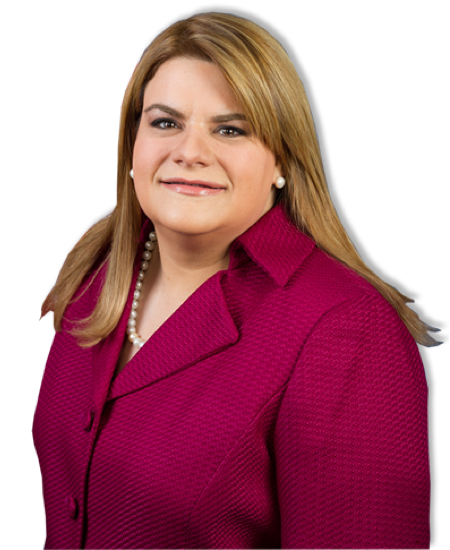
Rep. Jenniffer González-Colón
Sponsored bills
Medical Manufacturing, Economic Development, and Sustainability Act of 2021 or the MMEDS Act of 2021 This bill provides incentives for relocating medical manufacturing facilities in the United States and for manufacturing medical products (i.e., drugs and devices) in economically distressed zones. Specifically, the bill allows a income tax credit for 40% of the sum of wages paid in a medical manufacturing economically distressed zone, employee fringe benefit expenses, and depreciation and amortization allowances with respect to qualified medical manufacturing facility property, and a credit for economically distressed zone products and services acquired by domestic medical manufacturers. The bill increases the credit rate for minority businesses.
Secure and Fair Enforcement Banking Act of 2021 or the SAFE Banking Act of 2021 This bill generally prohibits a federal banking regulator from penalizing a depository institution for providing banking services to a legitimate cannabis-related business. Prohibited penalties include terminating or limiting the deposit insurance or share insurance of a depository institution solely because the institution provides financial services to a legitimate cannabis-related business and prohibiting or otherwise discouraging a depository institution from offering financial services to such a business. Additionally, proceeds from a transaction involving activities of a legitimate cannabis-related business are not considered proceeds from unlawful activity. Proceeds from unlawful activity are subject to anti-money laundering laws. Furthermore, a depository institution is not, under federal law, liable or subject to asset forfeiture for providing a loan or other financial services to a legitimate cannabis-related business. The bill also provides that a federal banking agency may not request or order a depository institution to terminate a customer account unless (1) the agency has a valid reason for doing so, and (2) that reason is not based solely on reputation risk. Valid reasons for terminating an account include threats to national security and involvement in terrorist financing, including state sponsorship of terrorism. Finally, the bill decreases the cap on the surplus funds of the Federal Reserve banks. (Amounts exceeding this cap are deposited in the general fund of the Treasury.)
Microloan Improvement Act of 2021 This bill revises the microloan program through which the Small Business Administration (SBA) provides, through designated intermediaries, certain financial assistance to small businesses. Specifically, the bill authorizes an intermediary to offer a line of credit to a small business, and it increases the average amount for loans from an intermediary to participating small businesses that makes the intermediary eligible for a reduced interest rate on SBA loans. The bill also places limits on the repayment term for a microloan, and it prohibits the SBA from imposing any additional limitation on the term for repayment of a microloan. Further, the SBA must (1) reserve 15% of new loan funds that are made available for disbursement as microloans to designated underutilized states and make the remaining 85% available for any state, (2) establish a process for an intermediary to provide the major credit reporting agencies with information about a borrower that is relevant to credit reporting, and (3) include information regarding equitable distribution of loan funds in its annual report.
Microloan Transparency and Accountability Act of 2021 This bill modifies reporting requirements related to the Small Business Administration's (SBA) disbursement of certain financial assistance. Specifically, the bill requires the SBA to report certain metrics related to the disbursement of microloans to small businesses, including (1) the number, amount, and percentage of such loans that went into default in the previous year; (2) the extent to which microloans are provided to small businesses in rural areas; and (3) the average size, rate of interest, and amount of fees charged for each microloan.
Careful Resumption Under Improved Safety Enhancements Act or the CRUISE Act This bill requires various activities to mitigate the impact of COVID-19 on the operation of cruise ships. Specifically, the bill establishes a working group comprised of specified federal departments and industry stakeholders to develop recommendations for resuming cruise ship operations. In addition, the Centers for Disease Control and Prevention (CDC) must issue (within 30 days) separate recommendations on mitigating the introduction, transmission, and spread of COVID-19 onboard cruise ships and to communities onshore. The CDC must consult with the working group on these recommendations. Furthermore, the Department of Health and Human Services must revoke by July 4, 2021, its order issued on November 4, 2020, which restricts the operation of cruise ships in U.S. waters.

This resolution expresses the sense of the House of Representatives that (1) clean water is a national priority, and (2) the 2020 final rule titled The Navigable Waters Protection Rule: Definition of "Waters of the United States" should not be withdrawn or vacated.
BUILDER Act of 2021 or the Building United States Infrastructure through Limited Delays and Efficient Reviews Act of 2021 This bill places limits on the environmental review of proposed major federal actions under the National Environmental Policy Act of 1969 (NEPA) and establishes deadlines and other requirements to expedite the environmental review of such actions. Specifically, the bill limits the scope of the environmental review of major federal actions significantly affecting the quality of the human environment as specified by the bill. The bill also specifies the thresholds that trigger when agencies must issue environmental assessments and environmental impact statements for proposed agency actions, outlines when agencies are not required to prepare environmental documents for such actions, and establishes deadlines to complete such documents. The bill also establishes a process for designating a lead federal agency as well as a joint lead agency, such as a state government, to supervise the environmental review under NEPA. A lead agency may allow a project sponsor to prepare environmental documents under specified circumstances. Additionally, the bill revises requirements concerning the judicial review of NEPA cases, including by establishing deadlines to file lawsuits under NEPA.
Assessing China's Presence and Influence in Latin America and the Caribbean Act of 2021 This bill requires the Department of State to report to Congress an assessment of China's efforts to expand its presence in Latin America and the Caribbean and how these efforts affect U.S. interests. The report shall include (1) a list identifying the countries that maintain the closest diplomatic, military, and economic relationships with China; (2) an analysis of which countries have received foreign assistance from China, including access to COVID-19 vaccines, and the conditions attached to that assistance; (3) a detailed description of sales or transfers of Chinese defense articles to countries in the region; and (4) an assessment of China's relationship with the Community of Latin American and Caribbean States.
Wage Equity Act of 2021 This bill addresses workplace wage discrimination based on sex. Specifically, it limits the acceptable reasons for wage disparities based on sex to legitimate business-related factors unrelated to sex. Italso protects from liability for such discrimination those employers who conduct a job and wage analysis audit to identify wage disparities and take reasonable steps to remedy any such disparities. Further, the bill prohibits employers from relying on, or requesting, the wage history of a prospective employee for hiring and wage determination purposes unless it is voluntarily provided by the prospective employee. Employers generally may not prohibit employees from inquiring about, or discussing, wage information concerning another employee or from requesting information from an employer about wage differentials. Finally, the bill permits the Department of Labor to establish a grant program for negotiation skills education for women and girls. It also requires the Government Accountability Office to study and report on the causes and effects of sex-based wage disparities.