

Supporting Education Recognition for Veterans during Emergencies Act or the SERVE Act This bill addresses opportunities for certain veterans with medical experience. The bill requires the Department of Veterans Affairs (VA) to update its web portals to allow the identification of veterans who had a medical occupation as a member of the Armed Forces. Specifically, the bill authorizes veterans to elect to provide their contact information and a history of their medical experience and trained competencies. The VA, the Department of Defense (DOD), and the Department of Labor must establish a program to share the veteran's provided information with specified entities (e.g., state credentialing bodies) for purposes of facilitating civilian medical credentialing and hiring of veterans seeking to respond to a national emergency, including a public health emergency. The VA must implement a program to train and certify veterans who served as basic health care technicians during their service to work as VA intermediate care technicians, specifically at VA medical center locations with staffing shortages. Additionally, the VA must prepare a communications campaign under the Transition Assistance Program to convey opportunities related to the intermediate care technician program to members of the Armed Forces who are separating from active duty. Finally, the bill requires the VA and DOD to notify veterans service organizations and members of the reserve components of the Armed Forces about the opportunities for veterans provided under this bill.
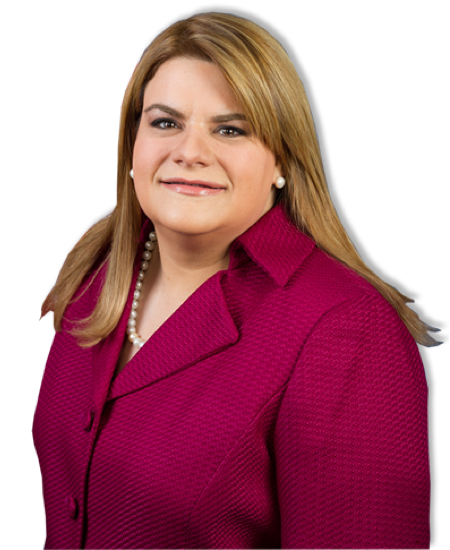
Rep. Jenniffer González-Colón
Sponsored bills
This resolution recognizes and expresses support for the efforts of democracy and human rights activists in Cuba.
This resolution recognizes and expresses support for the efforts of democracy and human rights activists in Cuba.
Department of Energy Science for the Future Act This bill supports specified research and development activities of the Department of Energy (DOE) Office of Science. The bill establishes various programs, including a basic energy sciences research and development program; a program of research and development for the application of advanced computing practices to foundational and emerging research problems in chemistry and materials science; a web-based platform to develop and provide access to a database of computed information on known and predicted materials properties and computational tools to accelerate breakthroughs in materials discovery and design; a biological systems science and climate and environmental science research and development program; research and development activities in biomolecular characterization and imaging science; earth and environmental systems science research; a coastal zone research initiative; an initiative focused on the development of engineered ecosystems; a program to implement a strategy for achieving computing systems with capabilities beyond exascale computing systems; a program of fundamental research and development of energy efficient computing and data center technologies relevant to advanced computing applications; a Quantum User Expansion for Science and Technology program or QUEST program; a collaborative research and development program of fusion energy technologies; a research program in elementary particle physics and advanced technology research and development to improve the understanding of the fundamental properties of the universe, including constituents of matter and energy and the nature of space and time; research activities on the nature of the primary contents of the universe, including the nature of dark energy and dark matter; a research program to discover and understand various forms of nuclear matter; a program across the DOE for the production of isotopes, including the development of techniques to produce isotopes, that the DOE determines are needed for research, medical, industrial, or related purposes; a midscale instrumentation program to enable the development and acquisition of novel, state-of-the-art instruments ranging in cost from $1 million to $20 million each that would significantly accelerate scientific breakthroughs at user facilities; and a high intensity laser research initiative. The DOE Office of Science shall continue to leverage U.S. participation in the Large Hadron Collider and prioritize expanding international partnerships and investments in the Long-Baseline Neutrino Facility and Deep Underground Neutrino Experiment. DOE shall support construction of a Facility for Rare Isotope Beams to advance the understanding of rare nuclear isotopes and the evolution of the cosmos. DOE shall expand opportunities to increase the number, diversity, equity, and inclusion of highly skilled science, technology, engineering, and mathematics (STEM) professionals working in DOE mission-relevant disciplines and broaden the recruitment pool to increase diversity, including expanded partnerships with Historically Black Colleges, Tribal Colleges, Minority Serving Institutions, emerging research institutions, and scientific societies. DOE shall establish within the DOE Office of Science, a cross-cutting research initiative to leverage the federal government's innovative analytical resources and tools, user facilities, and advanced computational and networking capabilities in order to prevent, prepare for, and respond to emerging infectious diseases, including COVID-19. DOE may not carry out gain-of-function research of concern.
National Science Foundation for the Future Act This bill reauthorizes the National Science Foundation (NSF) through FY2026 and authorizes programs and activities at the NSF. The bill establishes requirements for the NSF, including to enter into a contract with the National Academies of Science, Engineering, and Medicine to assess the status and opportunities for Pre-K through 12 science, technology, engineering, and mathematics, including computer science, (STEM) education research; award grants to establish no fewer than three multidisciplinary Centers for Transformative Education Research and Translation to support research and development of STEM education innovations; provide grants for research on programming that engages students in grades Pre-K through 8, including underrepresented and rural students, in STEM in order to prepare such students to pursue degrees or careers in STEM; award grants to support research and development activities to encourage greater collaboration and coordination between institutions of higher education and industry to enhance education, foster hands-on learning experiences, and improve alignment with workforce needs; award grants to establish a network of centers for science and technical education; award grants to advance research on the nature of learning and teaching at community colleges; award grants to establish traineeship programs for graduate students who pursue artificial intelligence-related research leading to a masters or doctorate degree; award grants to carry out research on the cyber workforce; establish a cybersecurity workforce data initiative; carry out a national initiative to facilitate the development of networks and partnerships to broaden participation in STEM studies and careers of groups historically underrepresented in such studies and careers; maintain a Research Security and Policy office to coordinate all research security policy issues across the NSF; award grants to support research to improve our understanding of the climate system and related human and environmental systems; support research to significantly advance our understanding of the food-energy-water system; award grants to advance knowledge of risk assessment and predictability to improve our ability to predict extreme events and natural hazards, including pandemics; and award grants to support basic research that will accelerate innovation to advance critical minerals mining strategies and technologies. The bill also establishes within the NSF a Directorate for Science and Engineering Solutions to advance research and development solutions to address societal and national challenges.
National Oceanic and Atmospheric Administration Sexual Harassment and Assault Prevention Improvements Act of 202 1 This bill addresses sexual harassment and sexual assault involving personnel of the National Oceanic and Atmospheric Administration (NOAA). The bill specifies that NOAA's sexual harassment prevention and response policy applies to personnel such as observers, at-sea monitors, and voting members and staff of regional fishery management councils. It also requires victim advocates at NOAA to be full-time employees whose sole job is advocacy for survivors rather than a volunteer collateral duty of an existing employee. Additionally, the bill expands reporting requirements on sexual harassment, sexual assault, and equal opportunity employment. The bill also provides for a restricted reporting structure that allows survivors of sexual assault to receive services without triggering an investigative process. The Office of Marine and Aviation Operations within NOAA must develop and implement a policy to report to the Coast Guard Suspension and Revocation National Center of Expertise the names of NOAA personnel who are under investigation for an offense detrimental to good discipline and safety at sea, such as sexual harassment or sexual assault or any other offense for which suspension or revocation of a merchant mariner credential is either mandatory or sought. Further, the bill removes the requirements that acts of assault, resistance, opposition, intimidation, sexual harassment, bribery, or interference with a fishery observer be forcible in nature and occur on a vessel to be unlawful.
This resolution supports the designation of a National Warrior Call Day to encourage Americans to talk with members of the Armed Forces and veterans to connect them with support.
Sgt. Ketchum Rural Veterans Mental Health Act of 2021 This bill requires the Department of Veterans Affairs (VA), during FY2022, to establish and maintain three new centers of the Rural Access Network for Growth Enhancement (RANGE) Program in areas with interest from personnel and a need for additional mental health care for rural veterans. The RANGE Program serves veterans in rural areas who are experiencing mental illness. The bill requires the Government Accountability Office to conduct a study and report on whether the VA has sufficient resources to serve rural veterans who need mental health care that is more intensive than traditional outpatient therapy.
Vieques Recovery and Redevelopment Act of 2021 This bill provides a framework to compensate certain residents of the island of Vieques, Puerto Rico, for the use of such island for military readiness. The bill sets forth provisions regarding award amounts for individuals and for claims by the municipality of Vieques. An individual claimant who has resided on the island of Vieques for not less than five years shall be awarded monetary compensation if the claimant contracted a chronic or life threatening case of cancer, hypertension, cirrhosis, kidney disease, diabetes, or heavy metal poisoning during or after the government used the island for military readiness. The bill limits total amounts awarded to $1 billion and bars claims not filed within 15 years of enactment.
Vieques Recovery and Redevelopment Act of 2021 This bill provides a framework to compensate certain residents of the island of Vieques, Puerto Rico, for the use of such island for military readiness. The bill sets forth provisions regarding award amounts for individuals and for claims by the municipality of Vieques. An individual claimant shall be awarded monetary compensation if the claimant contracted a chronic, life threatening, or physical or mental disease or illness, during or after the government used the island for military readiness.