

Strengthening America's Strategic National Stockpile Act of 2021 This bill makes changes to the administration and management of the Strategic National Stockpile. Among these changes, the bill authorizes through September 30, 2024, the Department of Health and Human Services (HHS) to transfer supplies from the stockpile to any federal departments or agencies under certain conditions. HHS must also ensure the contents of the stockpile remain in working order and may enter into maintenance service contracts to carry out this requirement. Furthermore, as part of its management of the stockpile, HHS must establish and maintain domestic reserves of certain supplies, including by entering into cooperative agreements or partnerships to access facilities and equipment to produce these supplies. The authority for such agreements and partnerships terminates on September 30, 2024. Additionally, the bill temporarily authorizes HHS to award grants to states for maintaining stockpiles of certain equipment and supplies for use during public health emergencies. HHS must also develop transparent processes for the use and distribution of supplies from the stockpile that address, for example, the prioritization of requests. Additionally, during the COVID-19 emergency, the Office of the Assistant Secretary for Preparedness and Response must report monthly on requests for supplies from states, tribes, and other jurisdictions. These reports must include the rationale for any partially fulfilled or denied requests. Lastly, the Government Accountability Office must study the feasibility of establishing user fees to offset costs for procuring single-source materials for, and distributing such materials from, the stockpile.
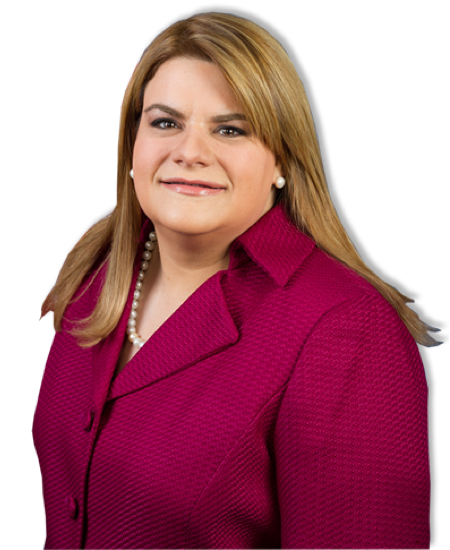
Rep. Jenniffer González-Colón
Sponsored bills
Bring Entrepreneurial Advancements To Consumers Here In North America Act This bill provides tax incentives for relocating manufacturing facilities in the United States. Specifically, it allows accelerated depreciation (20-year recovery period) for nonresidential real property acquired in connection with the relocation of manufacturing facilities in the United States. It also excludes from gross income, for income tax purposes, gain on the sale or exchange of such relocated facilities. Finally, the bill allows permanent 100% expensing of manufacturing property relocated in the United States.
Free Veterans from Fees Act This bill waives the application fee for any special use permit solely for a veterans special event at war memorials on land administered by the National Park Service in the District of Columbia and its environs.
This resolution rejects the Supreme Court's decisions in the Insular Cases (a series of cases regarding the application of constitutional rights in U.S. territories) and recognizes that constitutional and democratic principles apply throughout the states and territories of the United States.
Cuban Family Reunification Modernization Act of 2021 or the CFRM Act of 2021 This bill establishes a program to provide immigration parole to eligible Cuban nationals for family reunification purposes. (Parole is official permission to enter and temporarily remain in the United States.) To be eligible for parole under this bill, a Cuban national must be a beneficiary of a petition for a family-sponsored immigration visa. A sponsor may apply for parole for the beneficiary before the beneficiary receives an immigration visa. An eligible beneficiary must meet certain criteria, such as passing a medical examination and background check. An individual who has committed a gross violation of internationally recognized human rights shall not be eligible for parole under this bill. Parole provided under this bill shall be for two years. An individual who receives parole may apply for work authorization. The Department of Homeland Security (DHS) shall take reasonable measures to prioritize the parole applications where the beneficiary is (1) an individual with a terminal illness, or (2) a qualifying minor child (generally a child with a parent with a soon-to-expire immigration visa). DHS may operate an immigration processing facility at the U.S. Naval Station in Guantanamo Bay, Cuba, if the Department of Defense certifies that such a facility would not hinder the station's operations or pose a threat to national security.
This resolution expresses support for the recognition of U.S. Territories Day. The resolution further encourages educators to set aside time on this day to teach students about the U.S. territories, encourages specified actions by the President and the Senate, and requests the Smithsonian Institution to make certain educational materials publicly available for educators.
Improving Mental Health and Wellness in Schools Act This bill requires local educational agencies (LEAs) participating in the school lunch or breakfast programs to include in their local school wellness policies (1) goals for mental health promotion and education, and (2) nutrition guidelines for reducing childhood eating disorders. Such LEAs must also include registered dietitians and school-based mental health services providers in the development, implementation, and periodic review of such policies. The bill also requires the Department of Agriculture to provide information and technical assistance to school health professionals (including school-based mental health services providers) for use in establishing healthy school environments. Such technical assistance must promote mental health, encourage mental health assessments, and establish resilient school environments.
Puerto Rico Data Collection Equality Act This bill addresses the collection and publication of statistics relating to Puerto Rico. Specifically, the bill requires the Interagency Council on Statistical Policy to develop and implement a plan to collect and publish statistics regarding Puerto Rico in the same manner as federal agencies collect and report statistics for the states.
Puerto Rico Nutrition Assistance Fairness Act of 2021 This bill sets out a process to enable Puerto Rico to participate as a state in the Supplemental Nutrition Assistance Program (SNAP). Under current law, a state receives SNAP funding based on the number of participating households in the state whereas Puerto Rico receives a block grant to fund its nutrition assistance programs instead of participating in SNAP.
Fishery Resource Disasters Improvement Act This bill revises the Fisheries Resource Disaster Relief Program and repeals or revises certain reporting requirements. The bill revises the procedures and process for determining whether there has been a commercial fishery failure as a result of a fishery resource disaster because of natural, man-made, or undetermined causes. The Department of Commerce shall have the sole authority to determine the existence, extent, and beginning and end dates of a fishery resource disaster. Additionally, Commerce must include in its budget justification materials submitted to Congress in support of the budget of Commerce for each fiscal year, (as submitted with the President's budget) a separate statement of the amount requested to be appropriated for that fiscal year for outstanding unfunded fishery resource disasters. The bill repeals a program that provides disaster relief assistance to fishermen, charter fishing operators, and others affected by a catastrophic regional fishery disaster, known as the regional coastal disaster assistance, transition, and recovery program. With respect to reporting requirements, the bill requires (1) biennial rather than annual reports (under current law, annual reports) relating to the recovery of Klamath River Coho salmon, and (2) inclusion of additional information in the biennial reports on international compliance regarding the conservation of living marine resources. The bill also repeals the requirement for annual reporting to Congress on bycatch reduction agreements.