

Faster Payments to Veterans' Survivors Act of 2022 This act modifies policies and procedures related to the payment of benefits under certain life insurance programs administered by the Department of Veterans Affairs (VA). If a primary beneficiary has not made a claim for payment within one year (currently two years) after the death of the insured under the National Service Life Insurance (NSLI) program or the United States Government Life Insurance (USGLI) program, the VA is authorized to make payment to another designated beneficiary as if the primary beneficiary had predeceased the insured. If no designated beneficiary makes a claim within two years (currently four years) after the death of the insured, the VA is authorized to make a payment to a person the VA deems to be equitably entitled to such benefit. The act also modifies the beneficiary designation process under NSLI and USGLI. Specifically, if a person does not designate a beneficiary for insurance, or if the designated beneficiary predeceases the insured person, the VA must determine the beneficiary in a specified order of succession. Additionally, the act requires the VA to improve its processes and procedures with respect to identifying, locating, and paying hard-to-find beneficiaries of life insurance policies, including by improving its website search tools.
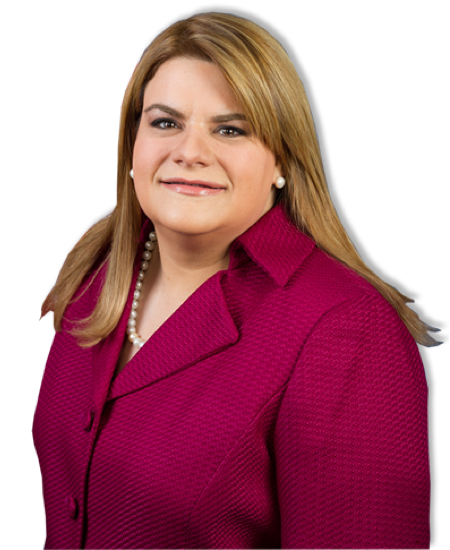
Rep. Jenniffer González-Colón
Sponsored bills
This act prescribes that a peer support specialist of the Department of Veterans Affairs (VA) must not be responsible for providing assistance to a veteran regarding a claim for compensation for a covered mental health condition (e.g., post-traumatic stress disorder) based on military sexual trauma (MST) experienced during active service. Such specialists must only provide counseling services, guidance, and support and must not participate in the adjudication of the claim. As part of the forms for claims for compensation for a covered mental health condition based on MST, the VA must include an option for a veteran to elect to be referred to a MST trauma coordinator at the VA facility closest to the veteran's residence. Additionally, the VA must (1) ensure that its peer support specialists receive annual training on providing peer support regarding MST, and (2) provide annual training on the processing of claims for compensation for covered mental health conditions based on MST to its MST coordinators and peer specialists.
Aviation Funding Stability Act of 20 21 This bill provides continuing appropriations to the Federal Aviation Administration (FAA) from the Airport and Airway Trust Fund if an appropriations bill for the FAA has not been enacted before a fiscal year begins or a joint resolution making continuing appropriations for the FAA is not in effect. The bill provides appropriations at the rate of operations that was provided for the prior fiscal year to continue programs, projects, and activities for which funds were provided in the preceding fiscal year.
Housing Survivors of Major Disasters Act of 2021 This bill makes certain individuals and households eligible for housing assistance in connection with a major disaster, including Hurricane Maria of 2017. To be eligible, an individual or household must be (1) residing on property located in the area for which the major disaster was declared but does not have documented ownership rights to and is not renting such property, or (2) residing or have resided in an area for which the major disaster was declared during the designated incident period. The Federal Emergency Management Agency (FEMA) must consider alternative forms of proof to determine the eligibility of an individual or household for assistance. FEMA shall create and distribute a declarative form statement that applicants for assistance can use to self-certify eligibility for assistance and shall make the statement available in specified languages at all active Disaster Recovery Centers and on its website and social media. FEMA may provide financial assistance for repairs to ensure that residences are habitable during longer-term recovery and for permanent housing construction if the President determines that such assistance is a cost effective alternative to other housing solutions. FEMA shall conduct an analysis comparing the costs, benefits, and effectiveness of assistance provided under the Disaster Housing Assistance Program, including any case management services provided, with other temporary housing options provided by FEMA.
Puerto Rico Status Act This bill provides for a plebiscite to be held on November 5, 2023, to resolve Puerto Rico's political status. Specifically, such plebiscite shall offer eligible voters a choice of independence, sovereignty in free association with the United States, or statehood. The Puerto Rico State Elections Commission shall carry out a nonpartisan voter education campaign through traditional paid media and make available at all voting locations voter education materials related to the plebiscites, and invite national and international election observers to ensure transparency and confidence in the electoral process. All voter educational materials and ballots used to carry out this bill shall be made available in English and Spanish. The bill sets forth transition and implementation provisions for each choice offered in the plebiscite.
FEMA Caseworker Accountability Act This bill directs the Government Accountability Office (GAO) to report to Congress on case management personnel turnover at the Federal Emergency Management Agency (FEMA). Specifically, the GAO must report on the turnover rate for FEMA case management personnel, the average and median length of employment for such personnel, the steps that FEMA is taking or plans to take to lower the turnover rate, the number of FEMA personnel detailed to work disaster recovery, and personnel rotations.
Small State and Rural Rescue Act This bill addresses requests for, and other matters pertaining to, disaster assistance provided through the Federal Emergency Management Agency (FEMA), with a focus on small states and rural communities. The bill expands the duties of FEMA's Small State and Rural Advocate to include assistance for states in the collection and presentation of material in the disaster or emergency declaration request relevant to demonstrate severe localized impacts within the state for a specific incident. Additionally, the Government Accountability Office must review FEMA's implementation of its final rule regarding factors considered when evaluating a governor's request for a major disaster declaration. In particular, the review must focus on requests for a major disaster declaration authorizing individual assistance.
Restoring Resilient Reefs Act of 2021 This bill addresses the conservation and sustainability of coral reef ecosystems. Among other things, the bill reauthorizes through FY2024 and revises the Coral Reef Conservation Program; directs the National Oceanic and Atmospheric Administration (NOAA) to provide block grants to states to support state coral reef management and restoration; requires NOAA to establish standards for the formation of partnerships among government and community members for the stewardship of coral reefs; provides statutory authority for the U.S. Coral Reef Task Force to lead, coordinate, and strengthen federal government actions to preserve, conserve, and restore coral reef ecosystems; requires the Department of the Interior to provide grants upon the declaration of a coral reef emergency to implement emergency plans; authorizes Interior to provide scientific expertise, technical assistance, and financial assistance for the conservation and restoration of coral reefs; and establishes a National Coral Reef Management Fellowship Program.
Community Disaster Resilience Zones Act of 2022 This bill requires the President to continue to maintain a natural hazard assessment program that develops and maintains publicly available products to show the risk of natural hazards across the United States. Such products shall show the risk of natural hazards and include ratings and data for loss exposure, social vulnerability, community resilience, and any other element determined by the President. The President shall (1) review the underlying methodology of any product that is a natural disaster hazard risk assessment, and (2) consider including additional data in any product that is a natural hazard risk assessment. Additionally, the President must conduct such reviews to evaluate and update the assessments at least every five years. Using the reviewed assessments, the President must periodically identify and designate community disaster resilience zones (CDRZs), which shall be (1) the 50 census tracts assigned the highest individual hazard risk ratings; and (2) in each state, not less than 1% of census tracts that are assigned a high individual risk rating, taking into consideration specified geographic balance. The President may provide financial, technical, or other assistance to an eligible entity (a state, Indian tribal government, or local government) that plans to perform a resilience or mitigation project within, or that primarily benefits, a CDRZ. The Federal Emergency Management Agency (FEMA) must develop criteria (taking into consideration the economic effects) to assess damage caused by a harmful algal bloom and report to Congress describing such criteria.
Coral Reef Sustainability Through Innovation Act of 2022 This bill authorizes the federal agencies on the U.S. Coral Reef Task Force, which includes the National Oceanic and Atmospheric Administration, to carry out prize competitions that promote coral reef research and conservation. The prize competitions must be designed to help the United States achieve its goal of developing new and effective ways to advance the understanding, monitoring, and sustainability of coral reef ecosystems. Priority is given to establish programs that address communities, environments, or industries that are in distress due to the decline or degradation of coral reef ecosystems.