

Maddy summaryThe Hurricane Tax Relief Act provides tax relief for individuals affected by Hurricanes Ian, Nicole, and Fiona in designated disaster areas. It allows affected taxpayers to deduct larger portions of personal property losses by increasing the standard deduction by their net disaster loss amount and adjusting the threshold for casualty loss deductions (raising the $500 floor to $1,000 for most cases). The bill also directs the Treasury to pay Puerto Rico an amount equivalent to tax benefits its residents would have received under U.S. federal tax rules, contingent on Puerto Rico having an approved plan to distribute funds directly to residents. This relief applies to losses incurred in the specified hurricane disaster areas on or after the dates of each storm's declaration.
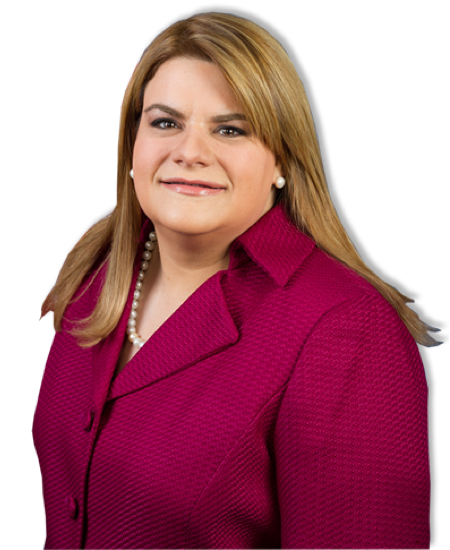
Rep. Jenniffer González-Colón
Sponsored bills
Maddy summaryThis bill expands the use of 529 college savings accounts to cover career training and credentialing costs. It allows funds to pay for tuition, fees, books, and testing expenses related to recognized postsecondary credential programs (like vocational certifications) that meet specific standards under the Workforce Innovation and Opportunity Act. The change directly affects workers seeking industry-recognized credentials - such as nursing certifications or IT certifications - instead of traditional degrees. It treats these expenses the same as traditional college costs for 529 account withdrawals, making it easier to save for career-focused training. The provision applies to expenses paid after the bill's enactment date.
Maddy summaryHR 1434, the "Stop Our Sexual Assault in the Military Act," requires active-duty members of the U.S. Armed Forces to receive monthly self-defense training focused on preventing sexual assault as part of their regular physical training. This training replaces one day of existing monthly physical training, without increasing the total required training days. The bill directly affects all active-duty military personnel by integrating this specific self-defense component into their standard monthly training schedule. It mandates this change through a new provision (Section 2018) added to Title 10 of the U.S. Code. The law focuses solely on implementing this training requirement, with no other substantive policy changes described.
Maddy summaryHR 1388 authorizes the minting of commemorative coins to honor the 1865 Sultana steamboat disaster, the deadliest maritime tragedy in U.S. history. It specifies three coin types ($5 gold, $1 silver, and half-dollar) with defined weights and compositions, to be sold at face value plus surcharges ($35, $10, and $5 per coin, respectively). All surcharges collected will fund the Sultana Historical Preservation Society for museum development, including exhibits, artifact preservation, and facility construction. The coins are legal tender but intended for collectors, with sales limited to a one-year period starting January 2023.
Maddy summaryThis bill requires student loan lenders to provide clear, plain-language disclosures to borrowers before loan disbursement and monthly throughout the loan term. Before disbursing a loan, lenders must give a written statement showing the loan's principal, interest rate, estimated repayment timeline, total projected cost (including fees), and how existing loans affect the borrower's total debt. Monthly statements must detail current balances, interest rates, payments made, interest accrued, and projections of future payments, including explanations of how interest capitalization increases long-term costs. These disclosures directly affect all borrowers of federal student loans and the lenders/servicers managing those loans, aiming to improve transparency about loan terms and costs.
Maddy summaryHR 1322 expands federal retirement benefits to include specific non-traditional law enforcement roles. It adds IRS employees focused on tax collection, U.S. Postal Inspection Service staff, Department of Veterans Affairs police officers, and U.S. Customs and Border Protection seized property specialists to the definition of "law enforcement officer" under federal retirement systems. Current employees in these newly covered positions must elect to pay deposits for past service to receive full retirement credit, while their agencies must contribute additional funds for that past service. The bill also temporarily prevents mandatory separation for current law enforcement officers for three years after enactment.
Maddy summaryThe Fix Moldy Housing Act (HR 1104) directs the EPA to study indoor mold risks and develop nonbinding national standards for assessment and remediation by 2027. It creates grant programs for state and tribal governments to establish mold-remediation licensing systems (Section 4) and fund mold cleanup in public buildings (like schools) and low-income private homes (Section 5), with $50 million annually allocated for 2025-2029. Grants prioritize low-income households and areas prone to mold (e.g., high-humidity regions), prohibit use for high-income housing, and cover temporary housing costs for severely impacted residents without insurance. The bill requires states to implement licensing programs as a condition of receiving funds and limits federal funding to 60% of eligible costs.
Maddy summaryThis bill requires drug manufacturers to include patient experience data in the U.S. Food and Drug Administration's risk-benefit assessments for new drug approvals. It amends the Federal Food, Drug, and Cosmetic Act to mandate that sponsors submit and describe how patient experience data was considered during the review process. The law directly affects pharmaceutical companies seeking new drug approvals and the FDA during its evaluation. The key provision adds specific language to the approval framework, making patient experience data a formal part of the assessment.
Maddy summaryThe Vieques Recovery and Redevelopment Act of 2023 provides monetary compensation to Vieques, Puerto Rico residents affected by health issues linked to 60+ years of U.S. military activity on the island. It awards $50,000 for one qualifying illness (like cancer or diabetes), $80,000 for two, or $110,000 for three or more, based on medical documentation. The bill also mandates funding for a new medical facility with a cancer center, renal dialysis, and basic diagnostic services (x-ray, ultrasounds), plus free health screenings and environmental research to reduce toxin exposure. This directly addresses health crises worsened by military contamination and Hurricane Maria's destruction of existing medical infrastructure.
Maddy summaryThis bill requires federal agencies to collect and publish Puerto Rico's economic and demographic data exactly as they do for U.S. states. It mandates specific actions, including full integration of Puerto Rico into Census surveys, GDP calculations, and national unemployment/inflation statistics, while ending special export reporting rules for shipments between the U.S. and Puerto Rico. Federal agencies must develop implementation plans and submit progress reports to Congress every two years, detailing timelines and costs. The law directly affects how Puerto Rico is measured in national statistics, impacting federal funding and policy decisions based on that data.