

Maddy summaryHR 3878 requires the Secretary of Energy, with federal agency and Puerto Rico government input, to submit a detailed report to Congress within 180 days of enactment. The report must analyze Puerto Rico's electric grid rebuilding progress, including priority projects, funding allocation and disbursement, federal efforts to speed up work, and accountability measures for grid rebuilding. It also mandates an analysis of the Financial Oversight Board's role, recommendations to reduce outages, and a plan to expedite rebuilding within three months of the report's submission. This bill directly affects federal agencies (Energy, FEMA, HUD), Puerto Rico's government, and the Puerto Rico Electric Power Authority by requiring transparency and coordination on grid recovery. The report will be submitted to specific congressional committees focused on energy, natural resources, and infrastructure.
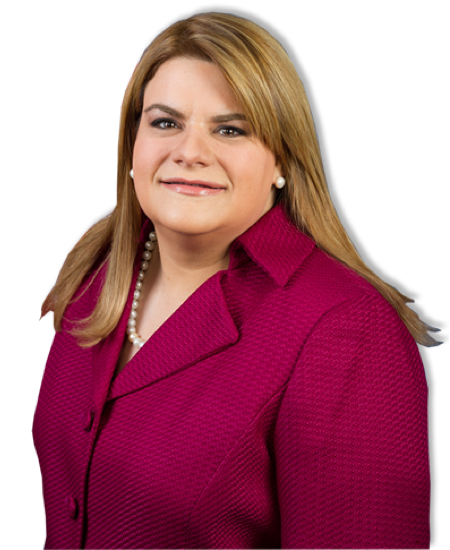
Rep. Jenniffer González-Colón
Sponsored bills
Ensuring Quality Access to Legal Defense Act of 2023 or the EQUAL Defense Act of 2023 This bill establishes and modifies certain programs that support the delivery of public defense services (i.e., legal services for criminal defendants who cannot afford counsel). Specifically, the bill directs the Department of Justice (DOJ) to award grants to state and local governments, tribal organizations, and public defender offices for public defense. A grant recipient must use the grant to establish a data collection process, develop workload limits, and satisfy specified compensation requirements (e.g., pay parity between public defenders and prosecutors). The bill also directs DOJ to award grants to nonprofits and government organizations to train public defenders, court-appointed attorneys, and contract attorneys. Additionally, a state that receives Edward Byrne Memorial Justice Assistance Grant program funds must annually submit to DOJ information related to the legal representation of defendants in criminal cases. Finally, it reauthorizes through FY2027 the student loan repayment program for prosecutors and public defenders and otherwise revises the program, including by increasing the maximum benefit amount.
Preventing Our Next Natural Disaster Act This bill modifies the pre-disaster mitigation grant program of the Federal Emergency Management Agency (FEMA). Specifically, the bill increases FEMA's set-aside for pre-disaster mitigation assistance from 6% to 15% of certain grant amounts; provides for a 2% set-aside for community planning and capacity building assistance; and authorizes FEMA to develop guidance regarding how to incorporate climate change into the National Risk Index, cost-benefit analyses, and improved codes, specifications, and standards to address natural hazards. FEMA must prioritize applicants for assistance with the highest hazard risk in coordination with FEMA's National Risk Index, environmental justice communities, and low-income communities (current law covers the latter though this bill modifies the number of individuals in such communities); provide community outreach; and establish a central federal database to consolidate funding data collected by all local, state, and federal agencies involved in post-disaster response and pre-disaster mitigation spending and categorize the data by type of project, funding source, and hazard types using a user-friendly database and interactive map.
Maddy summaryHR 3639, the After Hours Child Care Act, creates a new Child Care and Development Innovation Fund to improve access to child care for parents working nontraditional hours (such as evenings, nights, or weekends). The bill directly affects working parents with young children and eligible child care providers who serve these families. It authorizes competitive grants (ranging from $25,000 to $500,000) to providers or partnerships with businesses/community organizations to expand after-hours care programs, establish workplace child care, or improve existing facilities. Grantees must cover 25% of costs, and the Secretary of Health and Human Services must report biennially on program impact to Congress.
Maddy summaryThis bill requires that AM radio receivers be included as standard equipment in all new motor vehicles (such as cars and trucks) sold in the United States, with a rule to be issued by the Department of Transportation within one year. The rule must ensure AM radio is easily accessible on the dashboard and allows manufacturers to use digital AM radio technology instead of traditional AM. During the one-year period between the bill's enactment and the rule's effective date, manufacturers must clearly label vehicles without AM radio. The bill also directs a study to evaluate whether an alternative system could deliver emergency alerts as reliably as AM radio across the country, especially during crises.
Maddy summaryHCONRES 46, the "Fiscal State of the Nation Resolution," requires the House and Senate Budget Committees to hold an annual joint hearing within 45 days of the Treasury's submission of the federal government's audited financial statement. At this hearing, the Comptroller General will present an objective, nonpartisan analysis of the government's financial condition, including deficits, surpluses, and long-term fiscal projections, as required by the Government Accountability Office's standards. The hearing must be open to the public and allow all members of Congress to participate, regardless of committee membership. This resolution ensures Congress receives regular, factual reviews of federal finances without political bias.
Maddy summaryHR 3497, the Uranium Miners and Workers Act of 2023, expands eligibility for compensation under the Radiation Exposure Compensation Act (RECA) to include uranium miners, millers, ore transporters, and core drillers who worked in specified states between 1942 and 1978 and later developed certain cancers or kidney diseases. The bill redirects $475 million from unobligated coronavirus relief funds (from acts like the CARES Act and American Rescue Plan) to the RECA trust fund to pay claims. It also extends the RECA program's funding period by 4 years and adjusts the deadline for submitting claims to 4 years after the bill's enactment. This law directly affects former uranium industry workers who developed radiation-related illnesses.
Maddy summaryHR 3537 authorizes the minting of commemorative coins to mark the 100th anniversary of the U.S. Foreign Service, established by the 1924 Rogers Act. The bill specifies three coin types ($5 gold, $1 silver, and half-dollar clad) with limited mintage (50,000 gold, 400,000 silver, 750,000 half-dollars) to be issued in 2025, featuring designs honoring diplomatic history. A surcharge on each coin sale ($35 for gold, $10 for silver, $5 for half-dollars) will fund the Association for Diplomatic Studies and Training (ADST) to support its oral history program and diplomatic preservation efforts. The coins will be legal tender, sold at cost-plus-surcharge, with all revenue directed to ADST per the bill's provisions.
Maddy summaryHR 3550, the Safe Interactions Act of 2023, authorizes $100 million annually (2023-2026) to fund competitive grants for nonprofit disability organizations to train law enforcement officers on interacting with people with disabilities and older adults with cognitive impairments. The bill requires grantees to develop training programs that include at least 8 hours of initial training for new officers and 4 hours annually for existing officers, covering communication strategies, de-escalation techniques, disability awareness, and community resources. These programs must involve covered individuals (people with disabilities or older adults with cognitive issues) as instructors or advisors and be implemented through partnerships with law enforcement agencies. The training aims to reduce violent encounters between officers and covered individuals by improving officers’ understanding of disability-related needs and civil rights protections.
Maddy summaryThis bill (HR 3364, WIC Act of 2023) amends the WIC program to expand eligibility for children, infants, and postpartum women. It extends the age for children to remain in WIC until their sixth birthday (instead of fifth) or until starting full-day kindergarten, and increases eligibility for infants to age 2 (from age 1) and for breastfeeding/postpartum women to 2 years (from 1 year) after childbirth. States must certify participants under these new rules starting October 1, 2028, and must conduct health assessments for newly certified infants and children. States can request waivers from the Secretary if facing technological barriers, high costs, or other implementation challenges.