

Maddy summaryHRES 682 is a symbolic resolution designating the week beginning September 11, 2023, as "National Hispanic-Serving Institutions Week." It does not create new programs or funding but formally recognizes Hispanic-Serving Institutions (HSIs) for their role in educating Hispanic students and underserved communities. The resolution calls for the public to observe the week with ceremonies during Hispanic Heritage Month, highlighting HSIs' contributions to higher education access and economic mobility. This resolution affects no specific entities or policies, as it is purely commemorative.
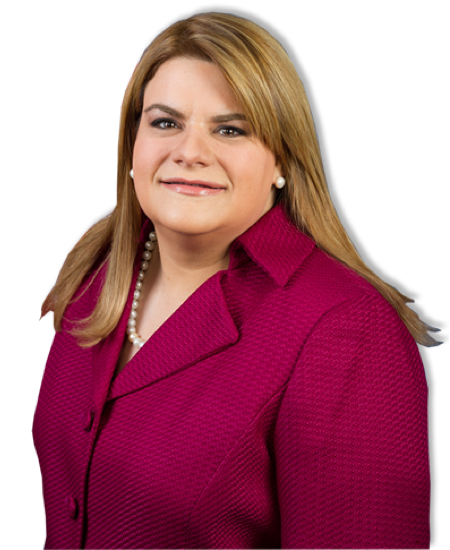
Rep. Jenniffer González-Colón
Sponsored bills
Maddy summaryHRES 492 is a congressional resolution condemning the Iranian government's systematic persecution of the Baha'i minority, which directly affects Baha'is in Iran facing arrests, property confiscation, and imprisonment. The resolution specifically calls for Iran to immediately release Baha'is detained for their faith, end state-sponsored hate propaganda against them, and reverse discriminatory policies denying equal access to education, employment, and religious freedom. It urges the U.S. President and Secretary of State to demand Iran’s compliance with international human rights treaties and to use existing sanctions authorities (under the 2010 and 2012 Iran sanctions laws) against officials responsible for these abuses. The resolution does not impose new legal requirements but serves as a formal U.S. government statement of condemnation and a call for diplomatic and sanctions action.
This bill requires the acquisition and installation of a statute in the Capitol or on the Capitol grounds to honor Roberto Clemente Walker, a humanitarian and athlete.
Equality in the Halls of Congress Act This bill authorizes the President to invite each U.S. territory to provide and furnish no more than two statues for placement in National Statuary Hall.
Women's Business Centers Improvement Act of 2023 This bill reauthorizes the Women's Business Center Program through FY2027, raises the cap on individual center grants, establishes an accreditation program for grant recipients, and revises the duties of the Office of Women's Business Ownership. Specifically, the bill modifies the Women's Business Center Program to enable the Small Business Administration (SBA) to provide initial and continuation grants to eligible entities to operate women's business centers for the benefit of women-owned small businesses. The SBA must also publish standards for a program to accredit entities that receive grants from the Women's Business Center Program, and such entities' receipt of continuation grants shall be contingent upon their obtaining accreditation.
Maddy summaryThis bill helps disaster survivors without formal property deeds prove ownership for FEMA aid by expanding acceptable evidence to include mortgage statements, property tax receipts, wills, death certificates, or other documentation showing occupancy or ownership ties. It allows FEMA to consider "constructive ownership" when proof is lacking, prohibits requiring notarized statements, and updates eligibility language from "uninhabitable" to "damaged" by disasters. The law applies to disaster assistance funds appropriated after enactment, directly affecting households seeking housing aid after major disasters. It streamlines access to aid for those with incomplete documentation, such as survivors inheriting property without formal transfers.
Maddy summaryHR 5307, the STOP Bullying Act, requires each state to establish a state-level anti-bullying task force to study and address bullying in K-12 schools. The task force must include specific members like teachers, students, LGBTQ advocates, school psychologists, and parents, and study school policies, educator training, and bullying-related incidents. States must submit a final report with recommendations for reducing bullying and best practices within one year, making these reports publicly available. The bill directly affects all public elementary and secondary schools nationwide, with specific focus on reducing bullying that disproportionately impacts LGBTQ students, as highlighted in the bill's findings.
Women in Agriculture Act This bill directs the Department of Agriculture (USDA) to establish the position of Women Farmers and Ranchers Liaison within USDA. Among other things, the liaison must advocate on behalf of women who are farmers and ranchers in interactions with USDA employees and promote the advancement of women in USDA leadership roles. The liaison may also enter into a contract or cooperative agreement to conduct various research, training, and other activities with respect to women who are farmers and ranchers. The liaison must submit an annual report to Congress on USDA grants, loans, loan guarantees, and cost-share programs for woman-owned agriculture operations. In addition, the bill expands the USDA high-priority research and extension areas to authorize grants for developing and making widely available agriculture equipment and machinery that is ergonomically designed for use by women. Further, USDA must give priority to certain loans or grants to address the availability, quality, or cost of childcare in an agricultural or rural community.
Maddy summaryThis bill requires the Bureau of Prisons to develop and implement a strategy for scanning all incoming mail at federal prisons to stop fentanyl and other synthetic drugs from entering facilities. It directs the Bureau to evaluate existing scanning technology within 180 days and submit a detailed plan to Congress within 90 days, including how to provide digital copies of mail to inmates within 24 hours and physical copies within 30 days (if safe). The strategy must achieve 100% mail scanning capacity at all federal prisons, prioritize high-security facilities, and include a budget proposal for fiscal years 2024-2026. This directly affects federal prisons, inmates, and Bureau employees by changing mail processing procedures to enhance safety and reduce staffing burdens from manual mail checks.
Maddy summaryHR 4949, the Don Young Veterans Advancing Conservation Act, establishes a Department of Commerce grant program to fund nonprofit organizations that train or employ veterans for underwater marine and coastal conservation work. The program, authorized for $1 million in fiscal year 2024 and increasing to $1.8 million by 2028, supports specific activities like coral restoration, invasive species removal, marine debris cleanup, and hurricane recovery. Nonprofits must be 501(c)(3) organizations and use funds to employ veterans in these conservation roles, with coordination required with the Department of the Interior. This directly affects veterans seeking meaningful employment and conservation-focused nonprofits receiving federal grants.