Maddy summaryThe BASIC Act (HR 362) requires the Congressional Budget Office (CBO) and the Joint Committee on Taxation (JCT) to include the costs of servicing the national debt in their budget estimates, where practicable. This means when analyzing proposed legislation, these agencies must account for interest payments on the federal debt resulting from new spending or tax changes. The bill amends the 1974 Congressional Budget and Impoundment Control Act by adding a new section mandating this inclusion. The primary effect is on the CBO and JCT, which will adjust their budget scoring methods to reflect debt servicing costs.
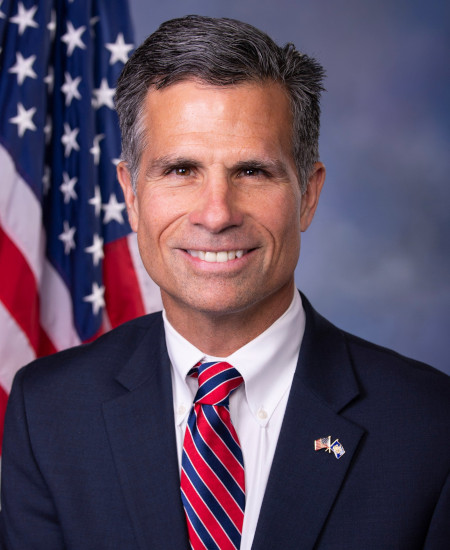
Rep. Daniel Meuser
Sponsored bills
Maddy summaryThis bill creates new federal crimes for killing or assaulting law enforcement officers, judges, and certain public safety officers (including firefighters) while they are on duty or for past duties, with penalties including minimum 10-year sentences for killing and varying assault penalties based on severity. It adds a new factor that would make the federal death penalty more likely for killing such officers, limits federal legal challenges for convictions related to these killings, and expands law enforcement officers' rights to carry firearms in certain circumstances. The bill also provides funding for grants to improve community-law enforcement relationships through transparency, accountability, and officer wellness programs. It directly affects law enforcement officers, judges, and public safety personnel across the country, establishing new federal protections and procedures for violence against these personnel.
This resolution reaffirms support for the Belfast/Good Friday agreement on the 25th anniversary of its signing. The resolution also calls for full implementation of the agreement and commends those who have worked to further peace and reconciliation in Northern Ireland in accordance with the principles of the agreement.
Improving the Federal Response to Organized Retail Crime Act of 2023 This bill requires various federal agencies to develop a strategy to improve coordination with state and local law enforcement entities to address organized retail crime. Specifically, the bill requires the Department of Justice, the Department of Homeland Security, the U.S. Postal Service, and other relevant agencies to improve federal information sharing about organized retail crime networks; assist state and local law enforcement in compiling materials and evidence necessary to prosecute organized retail crime; and increase cooperation and information sharing between federal agencies, the retail industry, and retail crime task forces. The bill also requires the Government Accountability Office to report on coordination between the private sector and law enforcement to deter and investigate organized retail crime.
Qualified Immunity Act of 2023 This bill provides statutory authority for qualified immunity for law enforcement officers in civil cases involving constitutional violations. Current law provides a statutory civil cause of action against state and local government actors (e.g., law enforcement officers) for violations of constitutional rights, also known as Section 1983 lawsuits. The Supreme Court has also found an implied cause of action against federal law enforcement officers in certain situations (e.g., Fourth Amendment violations), also known as Bivens lawsuits. However, under the judicial doctrine of qualified immunity, government officials performing discretionary duties are generally shielded from civil liability, unless their actions violate clearly established rights of which a reasonable person would have known. The bill provides statutory authority for these principles with respect to law enforcement officers. Specifically, under the bill, law enforcement officers are entitled to qualified immunity if (1) at the time of the alleged violation, the constitutional right at issue was not clearly established or the state of the law was not sufficiently clear for every reasonable officer to know that the conduct was unconstitutional; or (2) a court has held that the specific conduct at issue is constitutional. The bill applies to federal, state, and local law enforcement officers. It also specifies that law enforcement agencies and local governments may not be held liable if their officers are entitled to qualified immunity.

Maddy summaryHR 263, the STOVE Act, prohibits federal agencies from creating or implementing rules that ban or restrict gas-powered stoves, cooktops, ranges, or ovens in the United States. It blocks agencies like the EPA or DOE from proposing or finalizing regulations that would limit the sale or use of these appliances. The bill directly affects federal rulemaking processes related to home energy appliances, preventing new restrictions from being enacted. This is a policy change that stops federal action on appliance bans, not a change to existing appliance use.
Maddy summaryHJRES 8 proposes a constitutional amendment to permanently set the Supreme Court's size at nine justices. The bill would require any future changes to the Court's composition to follow this specific number, locking in the current structure. It does not alter the existing Court size (which has been nine since 1869) but aims to prevent future adjustments through legislative action. The amendment must be ratified by three-fourths of state legislatures within seven years to take effect. This is a procedural proposal focused on constitutional structure, not a direct policy affecting citizens or programs.
Maddy summaryHRES 8 is a formal resolution introduced by the U.S. House of Representatives in January 2023 to impeach Secretary of Homeland Security Alejandro Mayorkas. The resolution alleges three specific violations: (1) failing to maintain border security, citing record migrant encounters and fentanyl seizures under his leadership; (2) providing false testimony to Congress about border security; and (3) spreading false claims about Border Patrol agents whipping migrants during a 2021 incident. It claims these actions violated his constitutional duties and federal law. As an impeachment resolution, it does not enact policy but seeks to refer the case to the Senate for trial.
WHO Withdrawal Act This bill requires the President to immediately withdraw the United States from the World Health Organization (WHO) and prohibits using any federal funds to provide for U.S. participation in the WHO. The bill also repeals the 1948 act authorizing the United States to join the WHO.
Maddy summaryThis bill establishes nationwide recognition for valid concealed carry permits. It allows permit holders from any state to carry concealed handguns in states that either issue such permits or don't ban concealed carry, provided they carry a photo ID and their valid permit. Key provisions include making presentation of a valid permit and ID prima facie evidence of compliance, shifting the burden of proof to prosecutors if challenged, and requiring courts to award attorney fees to successful defendants. It does not override state laws prohibiting concealed carry on private property or government lands, nor does it affect restrictions on federal lands like national parks.