

Maddy summaryThe Uyghur Policy Act of 2023 establishes a U.S. Special Coordinator for Uyghur Issues within the State Department to coordinate policy and advocate for the protection of Uyghur cultural, religious, and linguistic identity in Xinjiang. It authorizes $250,000 annually for Uyghur human rights advocates to speak at public diplomacy events in Muslim-majority countries and mandates Uyghur language training for U.S. diplomats. The bill also directs the U.S. government to support United Nations monitoring of Xinjiang human rights issues and oppose efforts to block discussions of Xinjiang at the UN. These provisions focus on diplomatic advocacy and information-sharing, not direct sanctions or enforcement actions against China.
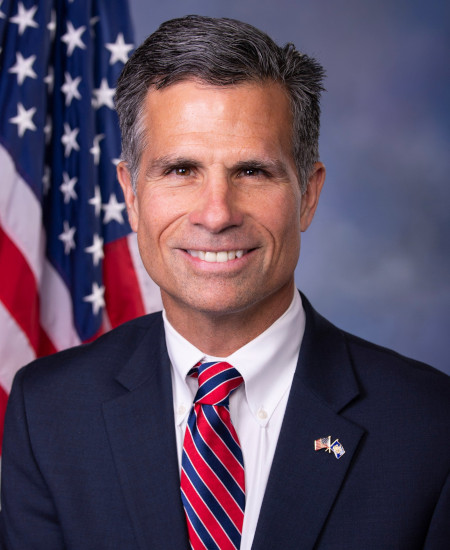
Rep. Daniel Meuser
Sponsored bills
Maddy summaryHR 7129, the "Put America on Commission Act of 2024," creates an Office of Whistleblower Awards within the Small Business Administration (SBA) to incentivize reporting of fraud in pandemic relief loans. It directly affects whistleblowers who provide original information about financial misconduct by SBA loan recipients and the recipients themselves who face penalties. The bill establishes a Whistleblower Award Fund, paying 10% (U.S. entities) or 15% (foreign entities) of recovered funds from convictions or settlements related to "COVID loan actions" (defined as fraud cases under CARES Act provisions). It includes anti-retaliation protections for whistleblowers and requires annual reports to Congress on award distributions. The program sunset provisions end its authority once all related cases are resolved.
Maddy summaryThis bill requires the Small Business Administration (SBA) to conduct a study and report on challenges faced by for-profit child care providers operating across multiple states. The report must assess provider needs, describe current SBA support, identify gaps in that support, and recommend legislative changes. The SBA must also designate a full-time employee as a dedicated point of contact for these providers to improve resource delivery. The bill uses existing SBA funding and does not authorize new appropriations, focusing solely on gathering data and improving existing services for for-profit child care businesses.
Maddy summaryThe Community TEAMS Act of 2024 creates a new federal grant program to support medical student training in rural and medically underserved communities. It provides funding for 1-5 years to partnerships between medical schools and community health providers (such as rural clinics, Federally Qualified Health Centers, or facilities in underserved areas) to expand outpatient clinical rotations. The goal is to help train physicians who will practice long-term in high-need communities by increasing access to community-based training. Grant applicants must include detailed project plans, sustainability strategies, and evaluation methods in their proposals.
Maddy summaryThis bill restricts how credit reporting companies share homebuyers' credit reports during mortgage applications. It prevents companies from sending these reports to third parties (like marketers) just because a lender requested them for a mortgage. Only specific entities can receive the reports: the mortgage lender who originated the loan, the company servicing the loan, or the bank holding the homebuyer's account. This directly protects homebuyers' privacy by limiting unauthorized sharing of their financial data.
Maddy summaryHJRES 107 is a congressional resolution seeking to block a Federal Communications Commission (FCC) rule published on January 22, 2024 (89 Fed. Reg. 4128). The resolution aims to disapprove the FCC's rule implementing digital discrimination protections under the Infrastructure Investment and Jobs Act, which would have required internet providers to prevent discriminatory practices. If passed, this resolution would nullify the FCC rule, preventing it from taking effect under the Congressional Review Act (Chapter 8 of Title 5, U.S. Code). The bill directly affects the FCC's regulatory authority over digital discrimination enforcement in broadband services.
Maddy summaryHR 7171, the Distribution Transformer Efficiency and Supply Chain Reliability Act of 2024, prevents the Department of Energy from finalizing rules requiring liquid-immersed or dry-type distribution transformers to meet efficiency standards stricter than "trial standard level 2" (as outlined in a 2023 proposed rule). The bill also mandates that any finalized rule implementing "trial standard level 1" or "level 2" efficiency standards cannot take effect for at least 10 years after the rule's finalization date. This directly affects transformer manufacturers and utilities by delaying stricter efficiency requirements and providing extended compliance timelines. The bill aims to stabilize the supply chain for these critical grid components by limiting near-term regulatory changes.
Maddy summaryHR 7092, the "Protecting Private Job Creators Act," exempts fixed-income securities from SEC Rule 15c2-11. This rule change specifically applies to securities like bonds, notes, debentures, and asset-backed securities used by businesses to raise capital. The bill codifies the SEC’s 2023 exemption of fixed-income securities sold under Rule 144A from Rule 15c2-11 requirements, which the SEC had previously applied without formal rulemaking. It directly affects businesses relying on fixed-income markets to access capital, ensuring they are not subject to the rule’s quotation disclosure requirements.
Maddy summaryThe Nurse Faculty Shortage Reduction Act of 2024 creates a new federal grant program to address nursing faculty shortages. It authorizes $28.5 million annually (2024-2028) to help nursing schools supplement faculty salaries, covering the gap between clinical nurse pay and teaching salaries. Schools must submit detailed salary data and plans to sustain higher pay after the 3-year grant period. The program prioritizes schools in high-need areas, serving vulnerable populations, or recruiting underrepresented faculty, with a report required to Congress after 3 years.
Maddy summaryHRES 974 is a non-binding House resolution supporting the designation of January 21-27, 2024, as "National School Choice Week." It encourages parents to learn about K-12 education options - including public schools, charter schools, private schools, and homeschooling - and promotes public awareness of educational choice. The resolution does not create new laws or policies but formally expresses the House's backing for this annual observance. It directly affects parents and students by highlighting available education pathways and urging communities to host events celebrating school choice. The resolution was introduced by multiple House members and referred to the Education Committee.