

Maddy summaryHRES 1201 is a symbolic House resolution supporting the designation of May 9, 2024, as "National Scam Survivor Day." It does not create new laws or funding but aims to raise awareness about scams affecting Americans, citing 2023 data showing over 2.6 million fraud reports and $10+ billion in losses. The resolution encourages public awareness, improved access to scam prevention resources, and collaboration among government, private, and nonprofit groups to support survivors and combat scams. It specifically highlights vulnerabilities among veterans, seniors, and young adults targeted by evolving scam tactics like AI-generated fraud.
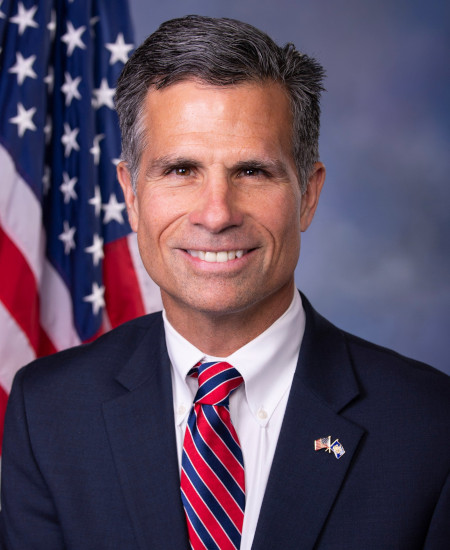
Rep. Daniel Meuser
Sponsored bills
Maddy summaryHR 8336 amends the Transition Assistance Program (TAP) to create a dedicated counseling pathway specifically for members of the reserve components of the Armed Forces. The bill adds language to Section 1142(c)(1) of Title 10, requiring military departments to include this reserve-focused pathway within TAP services. This change directly affects reserve service members transitioning from military to civilian life by providing tailored counseling resources. The bill modifies an existing program structure without creating new benefits or funding.
Maddy summaryThis bill amends federal law to simplify interstate firearm transfers. It replaces "rifle or shotgun" with "firearm" in transfer rules, allowing all firearms to be treated uniformly. The key change permits licensed dealers to sell firearms to other licensed dealers anywhere in the U.S., and lets licensed sellers transfer firearms to unlicensed buyers at temporary locations (like gun shows) in any state. It also updates residency definitions for military members and federal employees stationed across state lines, clarifying which state they're considered residents of for firearm purposes. The bill directly affects licensed firearm dealers, military personnel, and federal employees who travel between states.
Maddy summaryHR 8295, the Immediate Support for Israel Act, amends an existing appropriations law to require that any ammunition purchased under the Israel Security Supplemental Appropriations Act, 2024, be delivered to Israel within 30 days of procurement. This change directly affects the timing of military aid delivery, applying specifically to ammunition acquired under the referenced 2024 supplemental funding. The key provision replaces a previous delivery condition with a strict 30-day deadline for all such ammunition. The bill does not create new funding or alter the scope of the original appropriations.
Maddy summaryHJRES 98 is a congressional resolution seeking to block a National Labor Relations Board (NLRB) rule that defined how businesses are considered "joint employers" for labor law purposes. The bill targets the NLRB's October 2023 rule (88 Fed. Reg. 73946), which would have changed how companies like franchisors or staffing agencies are held responsible for workers' rights. If passed, this resolution would cancel the rule, directly affecting businesses managing multiple employer relationships and labor organizations enforcing workplace standards. The measure uses a standard process under federal law to disapprove an agency rule, not creating new policy but reversing an existing regulation.
Maddy summaryThe Bank Supervision Appeals Improvement Act of 2024 establishes specific timeframes for regulatory examinations and appeals processes for banks and credit unions. It requires federal banking agencies to complete examinations within 270 days (with possible extension), hold exit interviews with management within 30 days of completion, and provide final examination reports within 60 days. The bill also creates an Office of Supervisory Appeals with specific appointment requirements and details a formal appeals process for institutions challenging regulatory decisions. Additionally, it mandates the FDIC to review resolution actions causing material losses to the Deposit Insurance Fund and report findings to Congress.
Maddy summaryThis bill designates the U.S. Postal Service facility at 101 South 8th Street in Lebanon, Pennsylvania, as the "Lieutenant William D. Lebo Post Office Building." It requires all federal references - including laws, maps, and documents - to use this new name for the location. The bill has no policy provisions or financial impact; it solely changes the facility's official name. It was passed by Congress and signed into law on May 7, 2024.
Maddy summaryHR 8241, the SEC Transparency Act of 2024, requires the Securities and Exchange Commission (SEC) Chairman to testify semiannually before specific congressional committees about the Commission's activities. The bill mandates that the Chairman testify at least once every six months to the House Financial Services Committee and Senate Banking Committee, with Commissioners joining at least once annually. This procedural change directly affects SEC leadership by establishing a regular, mandatory reporting schedule to Congress. The law does not alter SEC regulations or enforcement but focuses solely on increasing transparency through scheduled congressional testimony.
Maddy summaryThe SEC Regulatory Accountability Act requires the Securities and Exchange Commission (SEC) to conduct detailed cost-benefit analyses before proposing or finalizing new regulations. It mandates that the SEC assess how regulations impact market participants, evaluate alternatives to minimize burden, and ensure rules are written in plain language with clear justifications. For major regulations, the bill also requires the SEC to establish post-implementation assessment plans to measure economic effects and report on outcomes within four years. This bill directly affects the SEC and other securities regulators like the Public Company Accounting Oversight Board, altering their rulemaking processes to prioritize cost-effectiveness and transparency.
Maddy summaryHR 8240, the SEC Cybersecurity Act of 2024, mandates a one-year GAO audit of the Securities and Exchange Commission’s (SEC) IT infrastructure and data handling practices. The audit will compare the SEC’s IT spending to other federal financial regulators, assess the quality of its IT contracting, evaluate cybersecurity systems, and review recent security incidents. The GAO must report findings and recommendations to the SEC and relevant congressional committees (Financial Services and Banking committees) to identify improvements. This procedural bill does not create new regulations but requires an independent review of the SEC’s current cybersecurity posture.