

Maddy summaryThis bill simplifies participation in Medicare's Accountable Care Organization (ACO) program by removing distinctions between small and large ACOs and eliminating the requirement for new ACOs to assume financial risk for three years before joining shared savings models. It creates a new "100% shared savings" option where ACOs keep all savings from cost reductions but bear full financial responsibility for losses. The bill also mandates clearer, transparent benchmark calculations for ACO performance, establishes appeal processes for disputed benchmarks, and requires technical assistance for rural and underserved providers. These changes directly affect Medicare ACOs, particularly smaller or newer organizations in rural or safety-net settings, aiming to make value-based care participation more accessible.
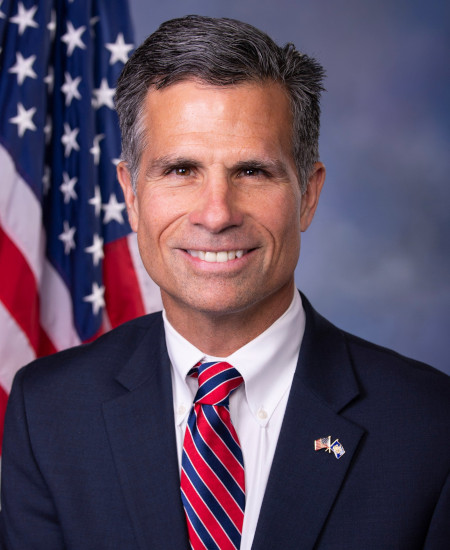
Rep. Daniel Meuser
Sponsored bills
Maddy summaryThis bill expands Health Savings Account (HSA) eligibility to cover more health plans and health care sharing ministries, allowing individuals with these plans to contribute to HSAs. It significantly increases annual HSA contribution limits to $10,800 for individuals and $29,500 for families (up from $3,850/$7,750), effective 2024. The bill also permits HSA funds to pay for periodic provider fees and health care sharing ministry costs (including administrative fees), and reduces penalties for non-qualified distributions to 10%. These changes directly affect HSA account holders who use non-traditional health coverage or share medical expenses through ministries.
Maddy summaryThis bill creates a presumption that minerals from the Democratic Republic of Congo (DRC) containing cobalt and lithium, mined with child or forced labor, cannot be imported into the United States. It requires the U.S. government to develop an enforcement strategy to identify and block such imports, including monitoring supply chains and working with international partners. The bill mandates diplomatic efforts to address child and forced labor in the DRC's mining sector and establishes sanctions against foreign entities that facilitate or engage in such labor practices. The focus is on minerals critical for electric vehicles and electronics, which are heavily sourced from the DRC and processed in China, with specific attention to Chinese mining companies like China Molybdenum that dominate the DRC's cobalt sector.
Maddy summaryThis bill prohibits Medicare from paying for certain custom-fitted or custom-fabricated orthotic and prosthetic devices delivered via "drop shipment" (direct shipping without in-person training from a qualified provider). It directly affects Medicare beneficiaries who need these devices, ensuring they receive necessary in-person fitting and training. The bill also expands which healthcare professionals (including physical therapists, occupational therapists, orthotists, and prosthetists) can prescribe these devices and updates definitions to clarify terms like "orthoses" and "prostheses." Final regulations implementing these changes must be issued within one year of the bill's enactment.
Maddy summaryThe ARC Act of 2023 establishes a national program to address peripheral artery disease (PAD), which disproportionately affects minority populations and leads to avoidable amputations. The bill requires Medicare and Medicaid to cover PAD screening tests (such as ankle-brachial index testing) for at-risk beneficiaries without cost-sharing, including people 65+ or those with diabetes, smoking history, or other risk factors. It authorizes $6 million annually for a CDC-led education program to inform healthcare providers and the public about PAD prevention and treatment. The bill also creates quality measures to encourage alternative treatments to amputation and establishes a pilot program to test amputation prevention services at healthcare facilities. These provisions aim to reduce amputation rates and improve outcomes for millions of Americans with PAD.
Maddy summaryThe Leveling the Playing Field 2.0 Act (HR 3882) updates U.S. trade law to better address international trade practices that disadvantage American businesses. It establishes special rules for handling multiple investigations of the same merchandise (called "successive investigations"), requiring the Commerce Department to consider previous injury determinations when making new findings. The bill also creates mechanisms to address market distortions from foreign government subsidies, including currency undervaluation, and strengthens procedures to prevent duty evasion through certification requirements for importers. These changes primarily affect foreign exporters of goods subject to U.S. antidumping and countervailing duty investigations, as well as U.S. importers of those goods.
Maddy summaryThis bill amends the Social Security Act to require U.S. passport revocation for individuals with child support arrears exceeding $2,500, replacing previous options to restrict or limit passports. It directly affects parents who owe significant unpaid child support, specifically those with arrears above this threshold. The key mechanism removes "restrict" or "limit" as enforcement options and mandates that the individual be notified before any passport revocation occurs. The change streamlines enforcement by making revocation the sole action permitted for qualifying cases.
Maddy summaryThe PASTEUR Act establishes a new subscription payment model to incentivize development of new antimicrobial drugs for resistant infections. It creates a Committee on Critical Need Antimicrobials and a Subscription Contract Office to manage payments based on specific drug characteristics like treating multi-drug resistant infections, novel mechanisms of action, and oral administration. Under this model, the government would pay drug developers up to $3 billion over 10 years for qualifying drugs, with payments tied to requirements like ensuring drug availability, reporting resistance data, and developing appropriate use plans. The bill aims to address the lack of new antimicrobial drugs by changing the funding model to reward drugs that meet specific clinical and public health needs.
Maddy summaryHR 2474, the "Strengthening Medicare for Patients and Providers Act," changes how Medicare pays physicians for services. It replaces the previous two-part payment system (used through 2025) with a single annual payment rate update starting in 2024. This update will be based on the Medicare Economic Index (MEI), which tracks costs for medical providers. The change directly affects Medicare-certified doctors and clinics who receive payments under the physician fee schedule.
Maddy summaryThis bill would require Medicare to cover FDA-approved blood tests that screen for multiple cancers simultaneously (like breast, lung, or colorectal cancer) for beneficiaries. It directly affects Medicare recipients aged 65+ who could access these new screenings once per year, without prior authorization. The key provision adds "multi-cancer early detection screening tests" to Medicare's covered services under Part B, defining them as blood tests analyzing cell-free DNA, while maintaining existing coverage for standard screenings like mammograms. The bill does not change current coverage for individual cancer screenings but ensures Medicare keeps pace with new medical technology.