

Maddy summaryHRES 189 is a procedural resolution censuring Representative Al Green (D-TX) for disrupting a joint session of Congress on March 4, 2025, when he interrupted the President's address. The resolution states his conduct breached proper decorum, leading to his removal by the Sergeant at Arms. It mandates Green to appear in the House chamber for the public pronouncement of censure, with the resolution to be read aloud by the Speaker. This is a formal disciplinary action by the House, not a policy change affecting constituents or legislation.
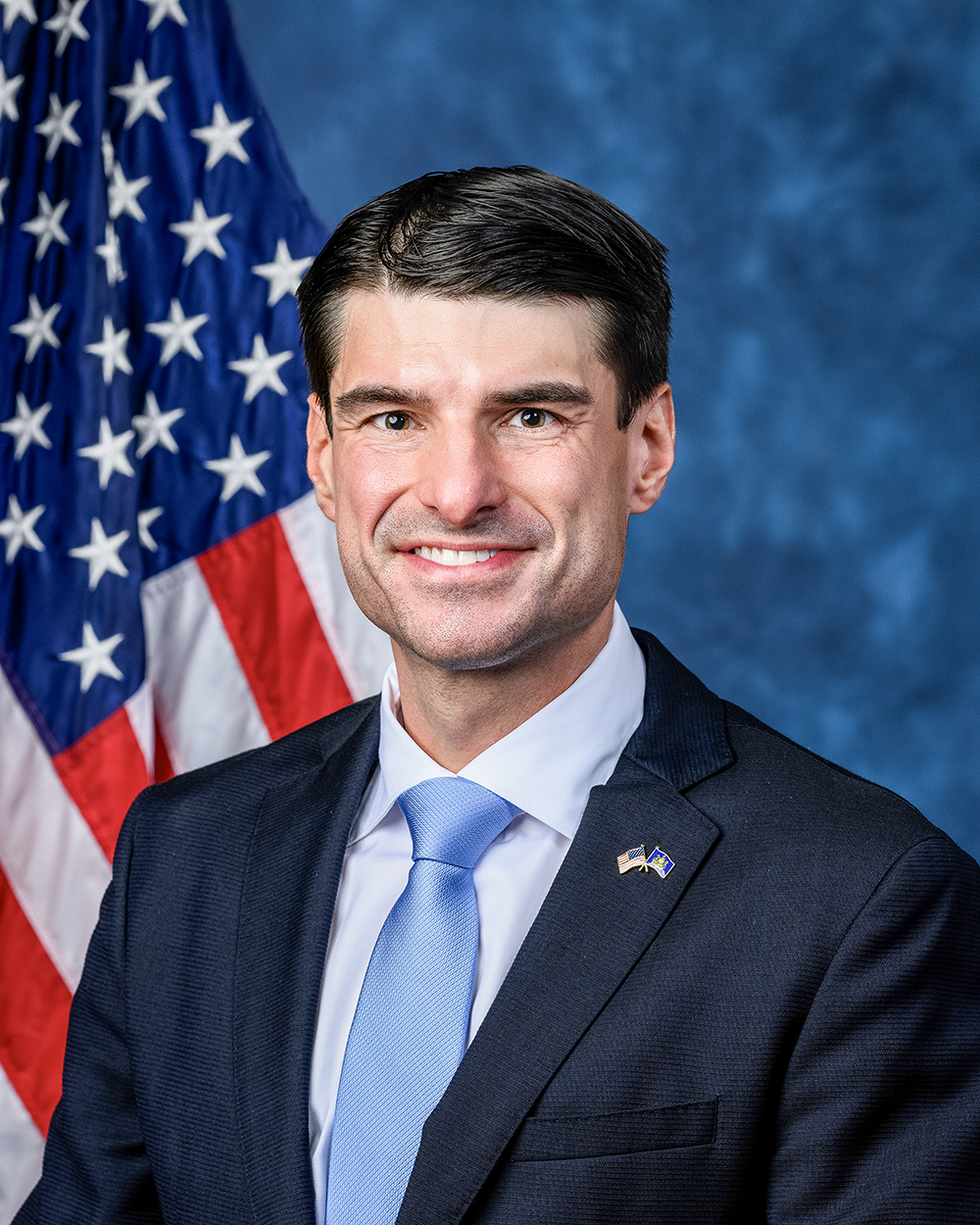
Rep. Robert P. Bresnahan, Jr.
Sponsored bills
Maddy summaryThis bill ensures that U.S. Border Patrol agents and Customs and Border Protection (CBP) officers who remain on duty during a government shutdown receive their salaries. It appropriates funds from the Treasury for fiscal year 2025 to cover their pay during any shutdown period beginning after the bill's enactment. The provision specifically applies to CBP personnel who are not furloughed under standard shutdown protocols. It directly affects federal workers in CBP’s Border Patrol and Office of Field Operations during government funding gaps.
Maddy summaryThis bill creates a process for establishing Medicare payment rates for pediatric-specific medical devices. It requires the Medicare program (via the Secretary of Health and Human Services) to set national payment rates (called "relative value units") for qualifying pediatric technologies upon manufacturer request, starting in 2026. A "qualifying pediatric technology" is defined as a covered medical device that is FDA-approved/cleared, has a temporary HCPCS code, and is either predominantly used for pediatric procedures or specifically designed for children. Manufacturers must submit detailed data with their requests, and the timeline for setting rates depends on when the request is received (by May 1 for same-year implementation). The bill does not mandate coverage but ensures payment mechanisms exist for these devices once approved.
Maddy summaryThis bill ensures military personnel, civilian Defense workers, and supporting contractors continue receiving pay during government funding gaps in fiscal year 2025. It provides temporary funding from existing Treasury reserves to cover salaries for active-duty troops, reservists, Defense civilians, and contractors supporting military operations until Congress passes a full budget or by January 1, 2026. The measure directly affects all active-duty service members, reserve components, and their civilian/contractor support staff across the military. It does not create new policies but guarantees uninterrupted pay during budget implementation delays.
Maddy summaryHR 1889, the *Cutting Red Tape on Child Care Providers Act of 2025*, prohibits states from creating regulatory barriers that restrict home-based child care providers from preparing fresh fruits and vegetables through simple methods like washing, peeling, or cutting. This directly affects home and family-based child care centers - serving roughly one-quarter of families, especially low-income, rural, and shift-work families - who face declining options due to complex food regulations. The bill amends the Child Care and Development Block Grant Act of 1990 to explicitly ban state restrictions on "simple food preparation" of minimally processed produce. It aims to reduce bureaucratic hurdles that currently make serving fresh food harder than offering pre-packaged snacks, without changing nutritional standards.
Maddy summaryThis bill establishes a federal pilot program to increase wages for child care workers through competitive grants to states and tribes. It requires grant recipients to use funds directly to supplement wages for eligible workers in licensed child care centers or home-based settings, paid quarterly, with up to 10% of funds allowed for administrative costs. The program must track impacts on worker retention, well-being, care quality, and affordability, and report results to Congress within two years. It targets low-wage workers in underserved areas, including those serving infants, toddlers, children with disabilities, or during nontraditional hours.
Maddy summaryHR 1827, the Child Care Availability and Affordability Act, increases tax benefits for families with child care needs and employers providing child care. It raises the employer child care credit from 25% to 50% of expenses with a maximum credit of $500,000 (up from $150,000), and creates a new household and dependent care credit allowing families to claim up to 50% of eligible child care expenses, with the credit amount reduced as income increases, up to $8,000 for multiple children. The bill directly affects working parents with children under 13 or dependents needing care, as well as employers offering child care benefits. Key provisions include expanded credit amounts, new definitions for qualifying care, and special rules for small businesses.
Maddy summaryThe PAW Act of 2025 allows taxpayers to treat certain veterinary expenses as medical care costs for federal tax purposes. It specifically covers full costs for service animals (as defined in federal regulations) and up to $1,000 annually for veterinary care plus $1,000 for pet health insurance for regular pets. These limits adjust annually for inflation based on the cost-of-living index. The bill applies to taxpayers, their spouses, or dependents who have qualifying service animals or pets, effective after the law's enactment.
Federal Firearms Licensee Protection Act of 2025 This bill modifies criminal penalties for an offense involving the theft of a firearm from a licensed importer, manufacturer, or dealer, or from their business premises. Specifically, the bill does the following: increases from 10 to 20 years the maximum prison term, and creates a 3- or 5-year mandatory minimum prison term for an offense that occurs during the commission of a burglary or robbery. An attempt to commit an offense is subject to the same penalties as a substantive offense.
Maddy summaryHR 1383 extends the Secure Rural Schools program, which provides payments to counties and states with federal land (like national forests) to support local schools and services. It reauthorizes these payments through fiscal year 2026, adding specific rules to ensure counties don’t receive duplicate payments for 2024 and 2025. The bill also extends related authorities for special projects on federal land and county fund expenditures through 2028-2029. This directly affects rural communities adjacent to federal lands that rely on these payments for education and infrastructure.