Maddy summaryThe PREPARE Act establishes a new pre-disaster mitigation loan program for small businesses through the Small Business Administration (SBA). It authorizes $25 million annually from 2024 to 2028 to provide loans of up to $500,000 per business, enabling small businesses to fund projects that protect their property and operations from disaster damage (e.g., flood barriers or structural reinforcements). The SBA must conduct targeted outreach to businesses in economically distressed areas, offer technical assistance, and require borrowers to maintain insurance during loan terms. Annual reports will track program outcomes, including project types, cost savings avoided, and regional impacts, to evaluate effectiveness.
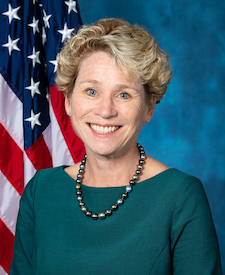
Rep. Chrissy Houlahan
Sponsored bills
Performing Artist Tax Parity Act of 2023 This bill modifies the above-the-line tax deduction for the expenses of performing artists (including commissions paid to managers or agents) to provide for a phaseout of such deduction for taxpayers whose adjusted gross income exceeds $100,000 ($200,000 for joint return filers). The $100,000 phaseout threshold is adjusted for inflation annually for taxable years beginning after 2023.
Maddy summaryThis bill prohibits the use of federal funds to develop or deploy autonomous weapons systems that lack meaningful human control for nuclear weapon launches or target selection. It directly affects federal agencies, particularly the Department of Defense, by banning spending on such systems for nuclear purposes. The key provision requires human oversight over target selection and launch decisions, aligning with existing U.S. policy and international law requiring human control in nuclear command. The bill does not ban autonomous systems generally but specifically restricts their use in nuclear contexts where human judgment is mandated.
Maddy summaryHR 2370, the Access to AEDs Act, authorizes $25 million in federal funding (2024-2028) to help public elementary and secondary schools improve access to automated external defibrillators (AEDs) and CPR training. The bill directs the Secretary of Health and Human Services to award grants to school districts and partners for developing AED programs, training staff and students, purchasing and maintaining AEDs, and creating cardiac emergency response plans. It specifically targets schools to address sudden cardiac arrest (SCA), which is a leading cause of death among student athletes and youth, with 90% of SCA victims dying without immediate CPR and defibrillation. The law requires grantees to report on their activities and establishes a clearinghouse to collect data on school AED access and costs.
Maddy summaryHR 2849 creates a tax credit for U.S. manufacturers producing rare earth magnets. The credit offers $20 per kilogram for magnets made with domestically sourced materials, or $30 per kilogram if at least 90% of the rare earth components are produced in the U.S. The credit phases out over time, reducing to 70% in 2033, 35% in 2034-2035, and ending after 2035. To qualify, manufacturers must not use materials from non-allied foreign nations and must produce magnets as part of their regular business operations.
Maddy summary# Summary of the National Apprenticeship Act of 2023 This proposed legislation establishes a comprehensive framework to modernize and expand apprenticeship programs in the United States, creating a National Apprenticeship System designed to address current workforce needs and increase opportunities for underrepresented populations. ## Key Provisions ### System Framework - Establishes clear quality standards for apprenticeship, pre-apprenticeship, and youth apprenticeship programs - Requires programs to meet specific criteria including: - Minimum 2,000 hours of on-the-job learning (with flexibility for some occupations) - Structured related instruction (minimum 144 hours per year for time-based programs) - Progressive wage scales - Safety training and equipment - Equal opportunity for participation ### Program Types - **Apprenticeship Programs**: Time-based, competency-based, or hybrid models for full-time workers - **Pre-apprenticeship Programs**: Designed to prepare individuals without meeting minimum qualifications for apprenticeship - **Youth Apprenticeship Programs**: For high school students, integrating academic and work-based learning ### Diversity & Inclusion Requirements - Requires programs to actively recruit and support nontraditional apprenticeship populations: - Women, minorities, individuals with disabilities - Long-term unemployed - Individuals impacted by the criminal or juvenile justice system - Foster and former foster youth - Individuals with barriers to employment ### Registration & Oversight - Requires formal registration of programs with a registration agency - Mandates annual performance data collection and reporting - Establishes procedures for program review, technical assistance, and deregistration ### Grant Program (Title II) - Authorizes $4 billion over five years ($400M-$800M annually) for competitive grants - Funds will support: - Creation and expansion of apprenticeship programs in high-demand sectors - Encouraging employer participation, particularly with small- and medium-sized businesses - Supporting intermediaries (national and local) - Strengthening educational alignment with secondary and postsecondary systems ### Evaluation Requirements - Mandates independent evaluations of grant programs - Requires collection of disaggregated data by program type and demographic factors - Focuses on measuring outcomes including: - Program completion rates - Employment rates in related fields - Wage growth - Increased participation of underrepresented groups ### Conforming Amendments - Repeals outdated sections of the American Competitiveness and Workforce Improvement Act of 1998 - Amends the Immigration and Nationality Act to align with the new apprenticeship system This legislation represents a significant investment in workforce development, aiming to create a more inclusive, high-quality apprenticeship system that responds to 21st-century labor market needs while expanding opportunities for historically underrepresented groups.

Fostering Innovation in Global Development Assistance Act of 2023 or the FIGDA Act of 2023 This bill addresses innovation in U.S. development assistance. For example, the bill authorizes or provides statutory authority for the United States Agency for International Development (USAID) to appoint a chief innovation officer; employ innovation fellows to expand the use of innovation, technology, and research with respect to USAID development assistance authorities; provide flexible funding to support expanded use of innovation; and participate in the Global Innovation Fund and designate a USAID employee to serve on the fund's board as a representative of the United States. The bill also requires USAID to establish a program to integrate proven and rigorously demonstrated innovations into USAID programming and operating budgets.
Maddy summaryHR 1788, the "Goldie’s Act," strengthens USDA enforcement of the Animal Welfare Act. It requires annual inspections of all regulated animal businesses (like dealers, research facilities, and exhibitors) and mandates immediate, humane confiscation of animals suffering due to violations, while prohibiting owners from destroying animals during this process. The bill increases civil penalties to $10,000 per violation, requires hearing panels including veterinarians, and mandates that penalties consider business size and violation severity. It also requires USDA to share violation records with local animal control within 24 hours.
Maddy summaryThe Military Family Nutrition Act of 2023 amends the Food and Nutrition Act to exclude a military member's basic housing allowance (BAH) from income calculations when determining eligibility for nutrition assistance programs like SNAP. This change directly affects military families who receive BAH as part of their housing benefit but currently have that allowance counted as income, potentially disqualifying them from food assistance. The key provision adds a specific exclusion for BAH paid to or on behalf of uniformed service members under Title 37, U.S. Code. As a result, military families will have their housing costs subtracted from their income for program eligibility, making it easier for them to qualify for nutrition support.
Maddy summaryHR 2808, the Arnold Daniel Palmer Commemorative Coin Act, authorizes the U.S. Mint to produce three commemorative coins in 2029 honoring golfer Arnold Palmer: $5 gold coins (50,000 max), $1 silver coins (400,000 max), and half-dollar clad coins (750,000 max). The bill requires coin designs to feature Palmer's image and includes surcharges ($35 for gold, $10 for silver, $5 for half-dollar) that fund the Arnold & Winnie Palmer Foundation. All surcharge revenue must support the Foundation's work in youth health, character development through golf, and nature wellness programs. The coins are legal tender but will only be issued in 2029, with all funds covering minting costs before surcharges are directed to the Foundation.