

Maddy summaryThe INFANT Tax Credit Act creates two new tax credits to support domestic infant formula manufacturing in the U.S. It offers a 25% tax credit for businesses investing in new or upgraded manufacturing facilities (for companies with annual revenue under $750 million) and a $1.50 per pound credit for each pound of infant formula manufactured and sold domestically (for companies with revenue under $500 million). The bill requires the Secretary of Agriculture to submit annual reports to Congress on facility numbers, barriers to accessing rural development funding, and community impacts. These provisions directly affect U.S. infant formula manufacturers meeting revenue thresholds, aiming to boost domestic production capacity.
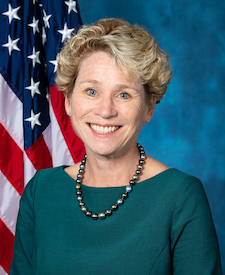
Rep. Chrissy Houlahan
Sponsored bills
Maddy summaryThis bill extends the Army Secretary's authority to partner with non-profits for financial support at military memorials and museums highlighting women's military service. It updates the 2021 National Defense Authorization Act by extending the expiration date from 2021 to 2025 and reducing the annual funding cap from $3 million to $1 million. The key change allows continued funding for maintaining these facilities through non-profit partnerships, directly affecting memorials focused on women's military contributions. The bill makes no new policy changes beyond adjusting the timeline and funding limit for existing authority.
Maddy summaryThis bill increases military pay rates for all service members across pay grades and years of service, effective January 1, 2025, with specific rate adjustments detailed in the legislation. It expands eligibility for the basic needs allowance to 200% of current rates and authorizes $1.2 billion for housing allowances in fiscal year 2025. The bill also improves child care access by requiring competitive pay for military child care staff, reducing fees for children of child care employees, and mandating regular reports on child care services. Additionally, it enhances health care access by waiving referral requirements for certain services in military medical facilities and establishes a permanent program to support military spouses' employment.
Maddy summaryThis bill (HR 2365, Public Law 118-66) directs the U.S. Department of Health and Human Services (HHS) to establish the National Parkinson’s Project. It requires HHS to create and update a coordinated national plan for preventing, diagnosing, treating, and researching Parkinson’s disease and related disorders (including multiple system atrophy and progressive supranuclear palsy), while coordinating federal research and care efforts across agencies like the NIH, CDC, and VA. The law mandates annual progress assessments, an advisory council with patient advocates and diverse experts, and annual reports to Congress on federal Parkinson’s programs and recommendations for improvement. It affects federal agencies managing Parkinson’s-related programs and aims to improve care coordination and research efficiency for patients and caregivers, with the law sunsetting in 2035.
Maddy summaryThis bill expands Post-9/11 GI Bill benefits to National Guard members who perform specific full-time duty. It amends eligibility rules to include service on "full-time National Guard duty" (as defined in Title 32) and "active duty" (as defined in Title 32), which previously did not count toward full benefits. The change applies retroactively to service since September 11, 2001, and takes effect one year after enactment. This directly affects National Guard members serving in these specific full-time roles, granting them parity with other veterans for educational benefits.
Maddy summaryHCONRES 115 is a procedural resolution calling for a joint session of Congress in Philadelphia, Pennsylvania, on July 2, 2026. It directs both the House and Senate to convene together at Independence National Historical Park to commemorate the 250th anniversary (semiquincentennial) of the Declaration of Independence. The resolution does not create new laws or affect any specific group; it solely schedules a ceremonial event honoring Philadelphia's historical role as the site where the Declaration was approved. This is a non-binding commemorative measure focused on marking a historical milestone.
Maddy summaryHR 8821, the HOPE with Fertility Services Act, requires group health plans and health insurance issuers that cover obstetrical services to provide comprehensive coverage for infertility treatments and fertility preservation when medical treatments (like cancer therapy) cause or risk iatrogenic infertility. It defines infertility broadly and mandates coverage for procedures like IVF, egg freezing, and ovulation induction, while allowing standard cost-sharing but prohibiting insurers from discouraging or penalizing these services. Insurers must annually submit analyses of their coverage rules for these treatments to the Secretary of Labor for 5 years after enactment, with potential civil penalties for noncompliance. The law applies to all applicable plans starting January 1, 2026.
Maddy summaryThis resolution recognizes June 19, 2024, as Juneteenth Independence Day, acknowledging its historical significance as the anniversary of the end of slavery in the U.S. (specifically referencing Union soldiers' announcement in Galveston, Texas, on June 19, 1865). It does not create new policy but formally encourages all Americans to observe the day through ceremonies and educational activities. The resolution emphasizes Juneteenth's role in honoring African American freedom and its importance to U.S. history and cultural heritage. It follows the 2022 law that established Juneteenth as a federal holiday, focusing solely on symbolic recognition and annual observance.
Maddy summaryHRES 1298 is a symbolic resolution designating the second Friday of June as "National Service and Conservation Corps Day." It recognizes over 150 Service and Conservation Corps programs that provide education, workforce training, and community service opportunities to approximately 22,000 young adults and post-9/11 veterans annually. The resolution urges citizens to acknowledge these corps' contributions and supports their continuation under existing law, without creating new funding or policy changes. It is purely commemorative, highlighting the corps' work in conservation, disaster response, and community projects like park maintenance and climate resilience efforts.
Maddy summaryHRES 1296 is a non-binding resolution expressing the U.S. House of Representatives' support for designating June 12, 2024, as "Women Veterans Appreciation Day." It symbolically recognizes the service of women veterans, highlighting their historical contributions and current representation (17% of active-duty military as of 2021). The resolution does not create new laws or funding but aims to honor women veterans' sacrifices and growing presence in the military. It references the 1948 Women’s Armed Services Integration Act and notes women veterans comprise about 10% of the total veteran population.