

Maddy summaryHRES 202 is a resolution that formally censures Representative Lauren Boebert (R-CO) for her March 7, 2025, comments about Representative Al Green (D-TX), in which she referred to him as "shaking his pimp cane." The resolution states these remarks were disparaging, derogatory, and racist, breaching House decorum. If passed, the resolution requires Boebert to appear in the House chamber for the public reading of the censure by the Speaker. This procedural action serves as a formal reprimand from the House, not a change to law.
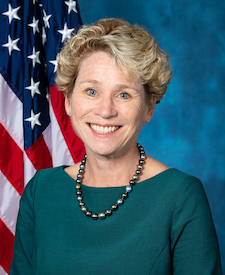
Rep. Chrissy Houlahan
Sponsored bills
Maddy summaryThis bill adjusts probationary periods for certain federal employees who were involuntarily separated between January 20, 2025, and January 20, 2029. It allows eligible employees (those separated while on probation in an Executive agency) to count their prior service time toward a new probationary period when rehired into a similar position with their former agency. Specifically, the new probation period equals the original required duration minus the time already served in their previous federal role. The law expires on January 20, 2029, and applies only to appointments matching the employee’s prior position.
Maddy summaryThe Infant Formula Made in America Act of 2025 creates two tax credits to incentivize domestic infant formula production. It offers a 30% investment credit for manufacturers who build or expand facilities to make U.S.-made infant formula (with a total credit cap of $750 million), plus a $2 per pound production credit for formula sold in the U.S. (capped at 18 million pounds annually). The credits are limited to manufacturers with global revenue under $750 million and require at least 50% of formula produced with the investment credit to be sold within the U.S. within one year. The bill includes recapture provisions if manufacturers fail to meet these requirements, and applies to facilities starting construction after the bill's enactment.
Maddy summaryHR 1990, the American Innovation and R&D Competitiveness Act of 2025, amends tax rules for businesses to make research and development (R&D) costs more flexible. It allows companies to deduct R&D expenses immediately as business costs (instead of capitalizing them) or to spread these costs over a minimum 60-month period. The bill clarifies which R&D expenses qualify, excludes land improvements and mineral exploration costs, and ensures companies can claim R&D tax credits without conflict with expense treatment. This directly affects businesses that conduct R&D, changing how they account for these costs on tax returns starting for 2022 taxable years.
Maddy summaryThe State Strategic Stockpile Act of 2025 reauthorizes a federal program that provides funding to states for maintaining emergency medical supply stockpiles. It extends the funding period through fiscal year 2030 and adds requirements for states to coordinate with health officials and share best practices through state consortia. The bill mandates that states receiving funds must collaborate with healthcare and emergency management entities within their jurisdiction. This directly affects state health departments and emergency management agencies that administer medical stockpiles under the program.
Maddy summaryHR 1909 reauthorizes federal funding and updates programs to reduce maternal deaths. It requires maternal mortality review committees to include obstetricians/gynecologists and improves death certificate reporting by coordinating with death certifiers. The bill mandates the CDC to share annual best practices for preventing maternal mortality with hospitals, state health groups, and perinatal programs. It also increases annual funding from $58 million to $100 million for these initiatives, covering fiscal years 2025 through 2029. The law directly affects hospitals, state health agencies, and maternal health programs receiving these federal funds.
Maddy summaryThis bill ensures military personnel, civilian Defense workers, and supporting contractors continue receiving pay during government funding gaps in fiscal year 2025. It provides temporary funding from existing Treasury reserves to cover salaries for active-duty troops, reservists, Defense civilians, and contractors supporting military operations until Congress passes a full budget or by January 1, 2026. The measure directly affects all active-duty service members, reserve components, and their civilian/contractor support staff across the military. It does not create new policies but guarantees uninterrupted pay during budget implementation delays.
Maddy summaryThis bill strengthens the Voting Rights Act of 1965 by clarifying how to prove voting discrimination and expanding requirements for preclearance of voting changes. It establishes new standards for determining when voting practices dilute minority voting strength or deny/abridge voting rights, requiring plaintiffs to show specific conditions for vote dilution claims and including factors like historical discrimination and racial polarization in court analyses. The bill modifies the criteria for determining which states and political subdivisions must seek preclearance for voting changes, and adds new transparency requirements for jurisdictions to publicly disclose changes to voting qualifications, polling locations, and election districts. It directly affects states and local governments that implement voting policies, particularly those with a history of voting rights violations or that make changes to voting qualifications, procedures, or district boundaries. The bill aims to prevent discriminatory voting practices by providing clearer standards for courts and requiring greater transparency in voting rule changes.
Maddy summaryThe Richard L. Trumka Protecting the Right to Organize Act of 2025 strengthens workers' organizing rights by making it an unfair labor practice for employers to threaten permanent replacement of striking workers, discriminate against workers who support unions, or require employees to attend employer campaigns unrelated to their job duties. It expands the definition of "employee" to make it harder for companies to classify workers as independent contractors and requires employers to post notices about workers' rights in conspicuous locations. The bill establishes a new electronic voting system for union elections, creates a 90-day bargaining period before mediation can be requested, and increases penalties for violations of labor laws. These changes are intended to make it easier for workers to form unions and negotiate better wages and working conditions.
Maddy summaryHR 1827, the Child Care Availability and Affordability Act, increases tax benefits for families with child care needs and employers providing child care. It raises the employer child care credit from 25% to 50% of expenses with a maximum credit of $500,000 (up from $150,000), and creates a new household and dependent care credit allowing families to claim up to 50% of eligible child care expenses, with the credit amount reduced as income increases, up to $8,000 for multiple children. The bill directly affects working parents with children under 13 or dependents needing care, as well as employers offering child care benefits. Key provisions include expanded credit amounts, new definitions for qualifying care, and special rules for small businesses.