

Maddy summaryThis bill authorizes $10 million annually (2026-2030) for the National Science Foundation to fund grants supporting mathematical and statistical modeling education in K-12 schools. It requires funded projects to focus on engaging students from groups historically underrepresented in STEM, using real-world data and computational tools, and addressing transitions like middle school to high school. The bill also allocates $1 million to fund a National Academies study on best practices for integrating these skills across curricula. These efforts aim to address a projected STEM workforce shortage by better preparing students for data-driven careers in fields like technology, healthcare, and engineering.
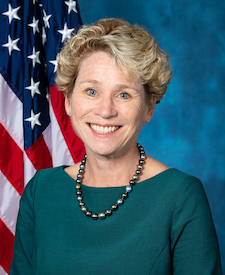
Rep. Chrissy Houlahan
Sponsored bills
Maddy summaryThe Paycheck Fairness Act strengthens equal pay protections by expanding the definition of "sex" to include pregnancy, childbirth, sexual orientation, gender identity, and sex characteristics. It modifies employer defenses for pay disparities to require proof that any pay difference is job-related, not based on sex, and accounts for the entire pay gap. The bill prohibits employers from asking about salary history, enhances penalties for violations, and requires employers with 100+ employees to collect and report detailed pay data by race, sex, and job category. It also establishes training programs for employers on eliminating pay bias and creates a National Equal Pay Enforcement Task Force to coordinate enforcement efforts. This legislation directly affects employers, particularly those with 100+ employees, and aims to address pay disparities impacting women, people of color, and other underrepresented groups.
Maddy summaryH.J. Res. 80 would declare the Equal Rights Amendment (ERA) part of the U.S. Constitution, asserting it has been ratified by 38 states (three-fourths of the states) despite the original 1972 deadline. If passed, this resolution would formally establish the ERA as a constitutional amendment, requiring all federal and state laws to align with its gender equality protections. The bill does not create new laws but confirms the ERA's status as part of the Constitution, affecting how laws are interpreted and enforced. It is a procedural step to resolve the legal dispute over the ERA's validity after decades of debate.
Maddy summaryHR 1376, the Healthy Poultry Assistance and Indemnification Act of 2025, provides compensation to poultry growers and layer facility owners whose operations were prohibited within USDA-designated "control areas" due to animal health restrictions. It directly affects poultry farmers raising birds bred for meat or eggs (like chickens, turkeys, or ducks), excluding doves and pigeons. The bill requires the Secretary to pay compensation equal to the average income from the farm's five most recent flocks multiplied by the number of prohibited flocks, minus any prior state compensation received, with payments due within 60 days of a claim. This mechanism ensures financial support for farmers impacted by USDA-mandated restrictions without requiring judicial review of payment amounts.
Maddy summaryH.J. Res. 77 is a joint resolution establishing U.S. policy to not recognize Russia’s territorial claims over Ukrainian regions occupied by force, including Crimea, Donetsk, Luhansk, Zaporizhzhia, and Kherson. It affirms Ukraine’s sovereignty and borders as defined in 1991 - the internationally recognized boundaries established after Ukraine’s independence. The resolution requires the U.S. government to avoid any actions implying recognition of Russia’s occupation, aligning with the principle that illegal acts (like invasion) cannot create legal rights. This policy statement guides U.S. diplomatic and foreign policy efforts toward Ukraine and Russia.
Maddy summaryThis bill (HR 2199) prevents private health insurance plans from discriminating against patients with end-stage kidney disease (ESRD) who require dialysis. It amends the Social Security Act to prohibit plans from treating dialysis coverage differently than other medical services or applying network restrictions that disproportionately harm ESRD patients. The law clarifies that plans cannot deny or limit benefits for dialysis based on a patient’s diagnosis, while preserving a plan’s right to choose which dialysis providers are in their network. It directly affects ESRD patients and their private health insurance coverage, ensuring dialysis is treated equally with other covered medical services. The bill does not require plans to include specific dialysis providers but stops them from unfairly restricting access to necessary care.
Maddy summaryThis bill delays two Medicare billing deadlines for ground ambulance services from 2025 to 2028. It amends the Social Security Act to extend the timeline for implementing specific billing rules under Section 1834(l). The change directly affects Medicare ambulance providers by postponing compliance deadlines for billing requirements. No new services or funding are created - only a technical extension of existing timelines.
Maddy summaryThe Air America Act of 2025 authorizes one-time payments of $40,000 to individuals who worked for Air America or its affiliated companies for at least five years during 1950-1976, or to their surviving spouses, children, or dependents. Additional payments of $8,000 per full year beyond five years are allowed. The program is capped at $60 million total funding, with claims required within two years of final regulations. Payments are a single lump sum with no ongoing benefits, and the bill explicitly states it does not create new entitlements beyond this one-time award.
Maddy summaryHR 2200 requires the Coast Guard to retain enlisted members who have completed 18-20 years of service but are otherwise scheduled for separation or discharge. It directly affects Regular Coast Guard enlisted members and Reserve members serving in active status with 18-19 years of service (or 19-20 years) who face involuntary separation or denied reenlistment. The bill mandates retention until the member reaches 20 years of service or for up to two years (for 18-19 years) or one year (for 19-20 years) after their scheduled separation date, whichever comes first. This applies to members not separated for physical disability or cause, ensuring they can complete their service to qualify for retirement benefits.
This bill treats Kenya, Mali, Burkina Faso, and Chad as combat zones for purposes of determining eligibility for certain federal tax benefits available to members of the U.S. Armed Forces. (Conditions apply.) Specifically, under the bill, a qualified hazardous duty area is treated as a combat zone for purposes of determining the filing status of an individual whose spouse is missing in action; excluding compensation received by a member of the Armed Forces serving in a combat zone from gross income and wages subject to withholding; forgiving the income tax liability of a member of the Armed Forces who dies in a combat zone; certain estate tax rules applicable to a member of the Armed Forces who dies in a combat zone or as a result of an injury, wound, or disease suffered while in a combat zone; the exemption from the federal excise tax imposed on certain telephone services for telephone calls originating from a combat zone by a member of the Armed Forces; and postponing certain federal tax deadlines (e.g., filing a tax return, paying taxes, and claiming a tax refund) for a member of the Armed Forces serving in a combat zone. The bill defines a qualified hazardous duty area as Kenya, Mali, Burkina Faso, and Chad if any member of the U.S. Armed Forces is entitled to special pay (e.g., hostile fire pay and imminent danger pay) for services performed in such locations.