

Maddy summaryThis bill updates securities laws to expand exemptions for retirement plans used by charities and educational institutions. It specifically modifies definitions in the Investment Company Act, Securities Act, and Securities Exchange Act to include 403(b) plans meeting certain conditions - such as being subject to ERISA, having employer fiduciary oversight, or being governmental plans. These changes reduce regulatory hurdles for organizations offering these plans, making it easier to administer retirement benefits for their employees. The bill directly affects charities, schools, and other non-profits that sponsor 403(b) retirement plans.
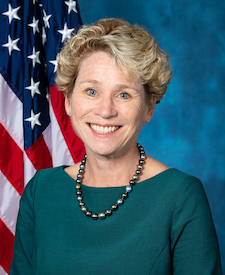
Rep. Chrissy Houlahan
Sponsored bills
Maddy summaryHRES 906 would change House rules to require a 60% vote of members present and voting to censure, disapprove, or remove any House member, delegate, or resident commissioner from committee assignments. Currently, a simple majority (50%+1) could trigger these actions, but this bill raises the threshold to a supermajority. The change applies directly to all voting members of the House and affects disciplinary procedures for members. This is a procedural rule change that makes it harder to take formal disciplinary actions against House members.
Maddy summaryThis bill expands Medicare coverage to include genetic counseling services provided by licensed or certified genetic counselors, effective January 1, 2027. It defines "covered genetic counseling services" as those furnished by qualified counselors under state law or certification, with payments set at 80% of the lesser of the actual charge or 85% of the physician fee schedule. Medicare beneficiaries seeking genetic counseling will gain access to these services through covered providers, while preventing balance billing for these specific services. The bill does not restrict physicians from billing for similar services under existing Medicare rules.
Maddy summaryHR 6181, the John Lewis Every Child Deserves a Family Act, prohibits child welfare agencies receiving federal funds from discriminating against children, youth, or prospective foster/adoptive parents based on religion, sex (including sexual orientation and gender identity), or marital status. It directly affects LGBTQ youth in foster care - overrepresented at 30% of the system - who face higher risks of trauma, group home placements, and suicide attempts compared to non-LGBTQ peers. Key provisions require agencies to collect data on sexual orientation and gender identity, establish a National Resource Center for LGBTQ youth support, provide cultural competency training, and eliminate discriminatory practices. The law aims to improve safety, permanency, and placement stability by expanding access to family-based care and ensuring equitable services for all children in the system.
Maddy summaryHR 6036 ensures veterans who served in female cultural support teams (FCS) during 2010-2021 receive proper military records and veterans benefits. The bill requires the military to add FCS service to individual records and count it toward retirement pay, while treating this service as "engagement in combat" for disability claims. Veterans can now submit supplemental claims for service-connected disabilities like PTSD or brain injuries, with the VA improving claim processing and outreach. It also mandates a study to identify other veterans with similar unrecorded service and a report on covered claims by gender and record status. This directly affects women who served in FCS teams but were previously excluded from combat-related benefits.
Maddy summaryThe Housing Financial Literacy Act of 2025 modifies mortgage insurance premiums for first-time homebuyers who complete approved financial literacy counseling programs. It requires that such counseling be completed before signing a mortgage application or sales agreement. The bill reduces the mortgage insurance premium by 25 basis points (0.25%) below the standard rate established by the Secretary of Housing and Urban Development. This change directly affects first-time homebuyers who participate in qualifying housing counseling programs.
Maddy summaryThe Global Respect Act (HR 6151) requires the U.S. President to publicly list foreign officials responsible for severe human rights violations against LGBTQI individuals, including torture, prolonged detention, or violence based on sexual orientation or gender identity. It mandates denying visas and entry to listed individuals and requires annual reports on the list's updates and impacts. The bill also directs the State Department to track global violence against LGBTQI people and update annual human rights reports to include discrimination based on sexual orientation or gender identity. These provisions directly affect foreign government officials and entities implicated in such abuses, aiming to increase accountability through U.S. visa restrictions.
Maddy summaryThe Biomanufacturing Excellence Act of 2025 establishes a National Biopharmaceutical Manufacturing Center of Excellence under the National Institute of Standards and Technology (NIST). It authorizes $120 million in funding for fiscal year 2026 to competitively award a grant to eligible entities - such as public-private partnerships, universities, or consortia - to create this center. The center will advance biopharmaceutical manufacturing technology, strengthen U.S. supply chains for medicines, and develop workforce training programs, with a focus on products critical to national security, health, and economic security. It requires annual progress reports to Congress and mandates the center to collaborate with manufacturers, research institutions, and educational partners to scale innovative production methods.
Maddy summaryHR 6056, the International Human Rights Defense Act of 2025, establishes a permanent Special Envoy at the State Department to lead U.S. foreign policy efforts addressing discrimination and violence against LGBTQI+ people globally. The bill requires the U.S. government to develop and update a biannual global strategy to prevent criminalization and violence against LGBTQI+ individuals, mandate detailed reporting on such abuses in annual country reports, and ensure all U.S. foreign assistance programs include inclusive nondiscrimination policies. This legislation directly affects U.S. foreign policy implementation, federal agencies receiving funding, and LGBTQI+ communities facing persecution worldwide. The bill aims to coordinate U.S. government efforts across departments and with international partners to advance LGBTQI+ rights globally through concrete policy mechanisms.
Maddy summaryThe Defense Biotechnology Strategy Act (HR 6009) requires the U.S. Department of Defense (DoD) to create a comprehensive strategy within one year of enactment, detailing how biotechnology will support national security. The strategy must address specific areas including developing commercial biomanufacturing facilities for defense-critical products, updating military specifications to use biotech-based items, establishing advance market commitments for biotech products, integrating biotechnology into military exercises, and enhancing international cooperation with NATO allies on biotechnology procurement and research. This bill directly affects DoD operations, defense contractors, and U.S. partnerships with NATO countries. It mandates concrete planning steps but does not create new funding or alter existing laws.