

Maddy summaryHR 3788, "Hammers' Law," amends a section of U.S. law (46 U.S.C. § 30307) that sets liability limits for certain accidents. It expands the scope from "commercial aviation accidents" to also include "cruise ship voyages," directly affecting victims and operators of cruise ships meeting specific criteria. The bill defines a "cruise ship" as one carrying at least 250 passengers with sleeping accommodations on U.S.-embarking voyages (excluding coastwise travel), and clarifies "nonpecuniary damages" as compensation for loss of care, comfort, and companionship. This change applies existing liability rules for aviation accidents to similar incidents on qualifying cruise ships.
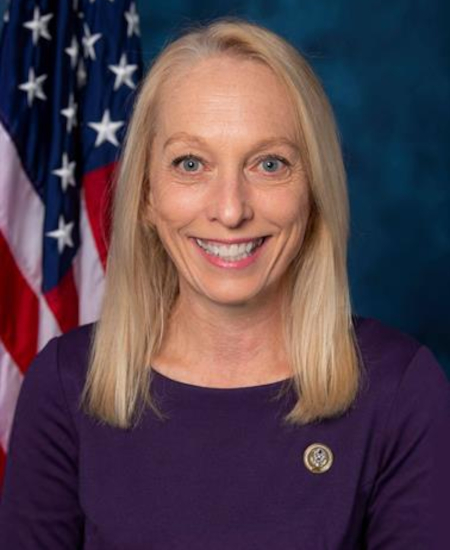
Rep. Mary Gay Scanlon
Sponsored bills
Maddy summaryThis bill removes a barrier for college students seeking food assistance by amending the SNAP program rules. It directly affects students enrolled at least half-time in recognized colleges or training programs, who were previously automatically ineligible unless they met separate requirements. The key change eliminates the prior restriction (in section 6(e)) that barred most higher education students from SNAP, allowing them to qualify under the new provision in section 3(m)(5)(F). The changes take effect January 2, 2024.
Maddy summaryThe Closing the Meal Gap Act of 2023 amends the Food and Nutrition Act to update how SNAP (Supplemental Nutrition Assistance Program) benefits are calculated. It replaces the "thrifty food plan" with a "low-cost food plan" based on a specific 4-person family diet, requiring the government to reevaluate this plan by 2029 and every 5 years after. The bill also updates medical expense deductions, eliminates time limits on benefits, and allows Puerto Rico to join SNAP with specific transition requirements. These changes directly affect SNAP recipients, particularly in Puerto Rico, Hawaii, and Alaska, by adjusting benefit calculations to better reflect current food costs.
Maddy summaryHRES 459 is a resolution expressing the House of Representatives' support for designating June 2, 2023, as "National Gun Violence Awareness Day" and June 2023 as "National Gun Violence Awareness Month." It encourages the public to wear orange, promote gun safety awareness, and discuss community safety measures during this time, particularly highlighting the summer months when gun violence often increases. The resolution references statistics on gun violence deaths and pays tribute to victims like Hadiya Pendleton, but does not create new laws or impose requirements.
Ensuring Quality Access to Legal Defense Act of 2023 or the EQUAL Defense Act of 2023 This bill establishes and modifies certain programs that support the delivery of public defense services (i.e., legal services for criminal defendants who cannot afford counsel). Specifically, the bill directs the Department of Justice (DOJ) to award grants to state and local governments, tribal organizations, and public defender offices for public defense. A grant recipient must use the grant to establish a data collection process, develop workload limits, and satisfy specified compensation requirements (e.g., pay parity between public defenders and prosecutors). The bill also directs DOJ to award grants to nonprofits and government organizations to train public defenders, court-appointed attorneys, and contract attorneys. Additionally, a state that receives Edward Byrne Memorial Justice Assistance Grant program funds must annually submit to DOJ information related to the legal representation of defendants in criminal cases. Finally, it reauthorizes through FY2027 the student loan repayment program for prosecutors and public defenders and otherwise revises the program, including by increasing the maximum benefit amount.
Maddy summaryHR 3713 creates federal grants to fund comprehensive school-based mental health programs for students in grades K-12, including those in Bureau of Indian Education schools. It requires partnerships between schools and community mental health providers to deliver trauma-informed, culturally appropriate services addressing suicide risk, grief, violence, and trauma exposure. The bill authorizes $300 million annually (2024-2027) for these programs, mandating privacy protections under HIPAA and FERPA, and requires annual reporting on program effectiveness.
Secure Testing Resources Instead of Prosecuting Act or the STRIP Act This bill exempts the possession, sale, or purchase of fentanyl drug testing equipment, including test strips, from criminal penalties under the Controlled Substances Act.
Maddy summaryThis bill makes the adoption tax credit refundable, meaning adoptive parents who claim the credit can receive a cash refund even if they owe no federal income tax. Currently, the credit is non-refundable, so any excess credit beyond taxes owed is lost. The bill redesignates the credit in tax code (from section 23 to 36C), adds new requirements for third-party affidavits to verify adoptions, and applies to tax returns filed for 2024 and later. It directly affects adoptive parents who qualify for the credit but have no tax liability.
Maddy summaryThis bill creates a new tax credit for expenses related to "qualified access technology for the blind" under the Internal Revenue Code. It allows taxpayers to claim a credit of up to $2,000 per year (adjusted for inflation) for costs paid for hardware, software, or IT that converts visual information into formats usable by blind individuals, covering the taxpayer, their spouse, or a dependent who is blind. The credit is limited to $2,000 over any three consecutive tax years per blind individual and expires after 2028. It directly affects blind individuals and their families who purchase qualifying assistive technology. The credit cannot be claimed for expenses already covered by other tax deductions or credits.
Maddy summaryThis bill amends the Older Americans Act to better serve LGBTQI older adults (defined as lesbian, gay, bisexual, transgender, queer, intersex individuals, and those living with HIV) by adding specific definitions and creating new support structures. It establishes an Office of LGBTQI Inclusion within the Administration on Aging, led by a Director and Assistant Director, to coordinate services, advocate for this community, and collect data on their challenges. The bill also creates a National Resource Center on LGBTQI Aging to provide training and resources to organizations serving LGBTQI older adults and requires data collection on discrimination against them in long-term care settings. These changes aim to improve access to culturally competent services and address the unique needs of LGBTQI older adults through concrete policy updates.