

Minor League Baseball Relief Act This bill establishes a program for the relief of certain minor league baseball clubs and independent professional baseball clubs that experienced large business losses. The bill provides funding for the Small Business Administration to make grants to such clubs that experienced decreases in gross revenue in 2020 of at least 75%, as measured against revenues in 2019 (or, if revenues were negatively affected by a natural disaster or weather disruption in 2019, by the average of revenues over the prior three-year period). The source of funding for the grants shall be funds appropriated under enacted COVID-19 relief legislation that have not been obligated and are no longer being used to carry out activities authorized under those laws. Grant amounts provided to any club may not exceed $10 million.
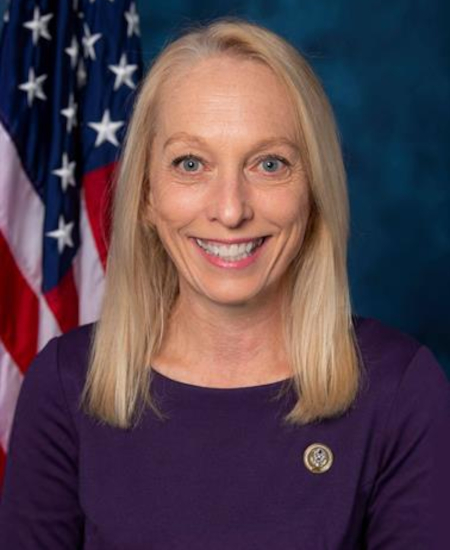
Rep. Mary Gay Scanlon
Sponsored bills
Ending Platform Monopolies Act This bill prohibits large online platforms, as designated by the Department of Justice or Federal Trade Commission, from offering certain products or services from another line of business that is owned or controlled by the platform. Specifically, such platforms are prohibited from owning or controlling another line of business that (1) uses the platform to sell products or services, (2) offers a product or service that the platform requires a business user to purchase or use as a condition for access to the platform, or (3) gives rise to a conflict of interest. Under the bill, a conflict of interest occurs when a platform operator's ownership or control of another line of business creates an incentive and the ability for the platform to provide an advantage to the platform's own products or services over those of a competitor on the platform, or exclude or disadvantage the products or services of a competitor on the platform. For example, under the bill, Amazon.com, Inc. may be prohibited from offering for sale on Amazon.com privately labeled products or services (e.g., Amazon Essentials, AmazonBasics, etc.) if designated as a large online platform. Finally, the bill prohibits a director, officer, employee, or agent of a platform from simultaneously serving in the same or a similar role with a formerly affiliated entity.
Platform Competition and Opportunity Act of 2021 This bill generally prohibits operators of covered platforms from acquiring the stock or other share capital or the assets of another person engaged in commerce or in any activity affecting commerce. Covered platforms are online platforms that (1) have at least 50 million U.S.-based monthly active users or at least 100,000 U.S.-based monthly active business users, (2) are owned or controlled by a person with net annual sales or a market capitalization greater than $600 billion, and (3) are critical trading partners for the sale or provision of any product or service offered on or directly related to the platform. The Federal Trade Commission or the Department of Justice must designate whether an entity is a covered platform, and both must carry out enforcement activities. The bill provides for any person (other than a foreign state and any instrumentality thereof) who is injured by an activity forbidden under the bill to recover triple damages. (A foreign state may only recover actual damages.) Further, the bill specifies the U.S. Court of Appeals for the District of Columbia Circuit as the judicial venue for a covered platform's appeals related to (1) the designation as a covered platform, (2) other administrative and enforcement proceedings, or (3) a final order issued in any district court.
Augmenting Compatibility and Competition by Enabling Service Switching Act of 2021 or the ACCESS Act of 2021 This bill requires large online platforms (e.g., YouTube, Salesforce) to facilitate consumers and businesses switching from one platform to another. Specifically, the platforms must maintain interfaces that (1) securely transfer user data to other platforms (i.e., portability), and (2) allow other platforms to connect and communicate with their systems (i.e., interoperability). The bill provides the Federal Trade Commission (FTC) and the Department of Justice with the authority to designate specific platforms to which these requirements apply. After a platform is designated, the FTC must issue standards of interoperability specific to the platform. A platform may not change its interoperability interface without petitioning the FTC, and the platform must provide to competing businesses documentation for accessing the interface. Further, the FTC must establish a technical committee to assist with the implementation of these requirements. The bill provides the FTC with authority to enforce these requirements including through recovery of civil penalties and injunctive relief.
Justice for Juveniles Act This bill exempts juvenile prisoners (i.e., inmates who are under 22 years of age) from various requirements of the inmate grievance procedure, including the requirement to exhaust administrative remedies before filing a federal lawsuit regarding the condition of their confinement.
School Infrastructure Modernization Act of 2021 This bill allows rehabilitation expenditures for public school buildings to qualify for the rehabilitation tax credit during a specified five-year period.
Cultivating Opportunity and Recovery from the Pandemic through Service Act or the CORPS Act This bill makes several changes to AmeriCorps programs during the COVID-19 health emergency. Specifically, the bill: increases living allowance payments to program participants; increases educational awards for program participants; relaxes program requirements, including reducing the age requirement for AmeriCorps Seniors to 45 and older; creates a pilot program to allow state commissions to directly place individuals in approved AmeriCorps programs; and allows for targeted AmeriCorps grants to fund recovery projects in communities disproportionately affected by COVID-19. The bill also excludes AmeriCorps living allowance payments and educational awards from taxable income for program participants.
Mentoring to Succeed Act of 2021 This bill requires the Department of Education to award grants to entities such as educational agencies, schools, and local governments to establish, expand, or support school-based mentoring programs that assist at-risk students in developing cognitive skills and promoting social-emotional learning to prepare them for success in high school, postsecondary education, and the workforce.
Vanessa Guillén Military Justice Improvement and Increasing Prevention Act This bill modifies the process and policy related to the disposition of charges and convening of courts-martial for certain sexual assault cases and other specified offenses under the Uniform Code of Military Justice (UCMJ). Among other elements, the bill provides that the determinations on the preferral, disposition, and referral of charges for specified offenses under the UCMJ must be made by a commissioned officer of the Armed Forces who is designated as a court-martial convening authority (in grade O-6 or higher) and who is available for detail as trial counsel, has significant trial experience, and is outside the chain of command of the member subject to the charges.
Presumptive Benefits for War Fighters Exposed to Burn Pits and Other Toxins Act of 2021 This bill establishes a presumption of service-connection for specified diseases associated with exposure to burn pits (an area used for burning solid waste in open air without equipment) and other toxins by veterans who were awarded specified medals on or after August 2, 1990. Under a presumption of service-connection, specific conditions diagnosed in certain veterans are presumed to have been caused by the circumstances of their military service. Health care benefits and disability compensation may then be awarded. Under the bill, if the Department of Veterans Affairs (VA) receives a written petition to add a disease to the list, the VA must request a determination by the National Academies of Sciences, Engineering, and Medicine with respect to whether there is a positive association between the exposure of humans to a covered toxin and the occurrence of the disease in humans. The bill makes disability or death of certain employees from specified diseases compensable as a work injury. Specifically, such employees are those who were employees of the Department of State, the Department of Defense, or an element of the intelligence community on or after August 2, 1990, and carried out job responsibilities for at least 30 days during a contingency operation.