This bill posthumously provides for the award of a Congressional Gold Medal in commemoration of the 13 service members who died on August 26, 2021, while stationed at Hamid Karzai International Airport in Afghanistan.
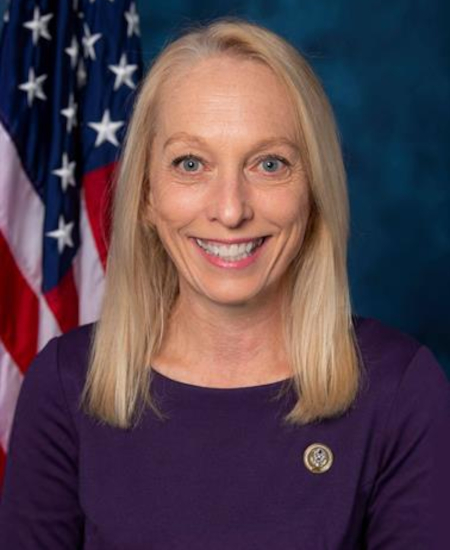
Rep. Mary Gay Scanlon
Sponsored bills
Get Foreign Money Out of U.S. Elections Act This bill imposes prohibitions and requirements related to campaign contributions and expenditures from foreign sources. For example, the bill bans campaign contributions and expenditures by domestic business entities that are controlled, influenced, or owned by foreign nationals.
African American History Act This bill authorizes the National Museum of African American History and Culture to carry out educational programs and related activities. Such activities include developing and making available accurate, relevant, and accessible resources to promote the understanding of African American history; and expanding the collection acquisition and collection access processes, including conservation and digitization. The museum may also develop and maintain on its website content designated for educators, students, and families to improve their awareness and understanding of African American history.
Homeless Children and Youth Act of 2021 This bill modifies definitions relating to homeless individuals and homeless children or youth as used by the Department of Housing and Urban Development (HUD) to verify eligibility for HUD homeless assistance programs, including the Continuum of Care program. Specifically, the bill aligns these terms with the definitions of homeless used to verify eligibility for other federal assistance programs. The definitions are also amended to increase access to federal homeless programs by homeless children, youth, and families. Additionally, the community-wide homeless management information system shall be made available to the public on HUD's website.
Protecting Our Democracy Act This bill addresses issues involving (1) abuses of presidential power; (2) checks and balances, accountability, and transparency; and (3) election integrity and security. Specifically, regarding abuses of presidential power, the bill requires the Department of Justice (DOJ) and the President to submit to Congress specified materials relating to certain pardons, prohibits presidential self-pardons, suspends the statute of limitations for federal offenses committed by a sitting President or Vice President, prohibits the acceptance of foreign or domestic emoluments, and sets forth provisions regarding Office of Government Ethics and Office of Special Counsel jurisdiction and enforcement authority. To address checks and balances, accountability, and transparency, the bill authorizes specified actions to enforce congressional subpoenas, imposes limits on presidential declarations of emergencies, requires DOJ to maintain a log of specified communications between it and the White House, requires cause for removal of inspectors general, increases whistleblower protections, and requires a candidate for President or Vice President to provide copies of tax returns for the 10 most recent taxable years to the Federal Election Commission. To address election integrity and security, the bill requires federal campaign reporting of foreign contacts, makes various changes to requirements concerning foreign donations to political campaigns and candidates and foreign contributions to online electioneering communications, prohibits distribution of materially deceptive audio or visual media prior to an election (i.e., deepfakes), and establishes a program to support states and localities transition to ranked choice voting systems.

Protecting Community Television Act This bill revises the definition of a franchise fee that is paid by a cable operator or cable subscriber to encompass only a tax, fee, or other monetary assessment that is imposed by a franchising authority or other governmental entity.
Humane Cosmetics Act of 2021 This bill generally prohibits animal testing in the evaluation of cosmetic products, and it prohibits the sale or transport of cosmetics developed using animal testing, subject to civil penalties. These prohibitions begin one year after enactment. The bill specifies exceptions to these prohibitions, including if such animal testing (1) is conducted outside the United States to comply with a foreign regulatory authority; (2) is pursuant to a specified finding that there are no nonanimal alternatives to test the safety of a potentially dangerous cosmetic product or ingredient; (3) is of a product or ingredient for a drug or device subject to regulation by the Food and Drug Administration (FDA); or (4) is required for a noncosmetic purpose pursuant to a state, federal, or foreign regulatory authority. Further, no animal-testing evidence may be used to establish the safety of a cosmetic product or ingredient that is regulated by the FDA after the effective date of this bill, subject to limited exceptions.
EDUCATORS for America Act This bill provides resources to support the recruitment, retention, and preparation of educators. These resources include, among others, expanding the Teacher Quality Partnership program to include training and professional development opportunities for principals and other school leaders, updating the Augustus F. Hawkins Centers of Excellence program to support underrepresented candidates in educator preparation programs, and revising the Teacher Education Assistance for College and Higher Education (TEACH) grant program to raise the maximum amount for TEACH grants. The bill also directs the Department of Education to carry out a program to provide loan credits to eligible educator borrowers enrolled in income-contingent or income-based repayment plans.
Radiation Exposure Compensation Act Amendments of 2021 This bill expands two programs that compensate individuals who were exposed to radiation during certain nuclear testing or uranium mining and subsequently developed medical conditions, including cancers. First, the bill expands and extends a program that compensates individuals who were exposed to radiation from atmospheric nuclear testing or other sources and subsequently developed specified cancers. Under current law, this program compensates individuals who were present in a designated geographic area during a period of nuclear testing and certain individuals employed in uranium mining. The bill expands the designated areas to include Colorado, Idaho, Montana, New Mexico, and Guam and additional areas in Arizona, Nevada, and Utah; makes more individuals who worked in uranium mining eligible for the program; increases the amount of compensation awarded to and provides medical benefits for eligible claimants; and extends for 19 years following the bill's enactment the fund that supports this program and the statute of limitations for filing claims (currently, the program terminates on July 10, 2022). Second, the bill makes certain individuals employed in uranium mines or mills eligible for a program that compensates workers, including Department of Energy employees and contractors, for illnesses caused by occupational exposure to radiation and hazardous substances during development and testing of the nation's nuclear weapons stockpile. The bill also establishes a grant program in the National Institute of Environmental Health Sciences for institutions of higher education to study the epidemiological impacts of uranium mining and milling among individuals without occupational exposure.
This resolution sets forth rules for consideration of H.R. 5314 (addressing issues involving abuses of presidential power, checks and balances, and election integrity and security); S. 1605 (designating the National Pulse Memorial in Orlando, Florida); and S. 610 (addressing the behavioral health and well-being of health care professionals).