

Congressional Accountability Act Enhancement Act This bill extends the liability of Members of Congress for employment discrimination settlements and awards and expands certain employment protections for congressional employees. Current law requires that a Member who commits an act of harassment in violation of employment-based civil rights protections must reimburse the Treasury for amounts paid as settlements or awards resulting from the act. This bill also requires that Members reimburse the Treasury for amounts paid resulting from any unlawful discrimination and related retaliation. Additionally, the bill grants congressional employees a 10-day period to amend a filing alleging employment discrimination if the hearing officer determines the initial filing failed to state a claim for which relief could be granted. The bill also allows the Office of Employee Advocacy to continue to assist a congressional employee with investigations and proceedings related to a claim of workplace discrimination even after the employee begins federal court proceedings.
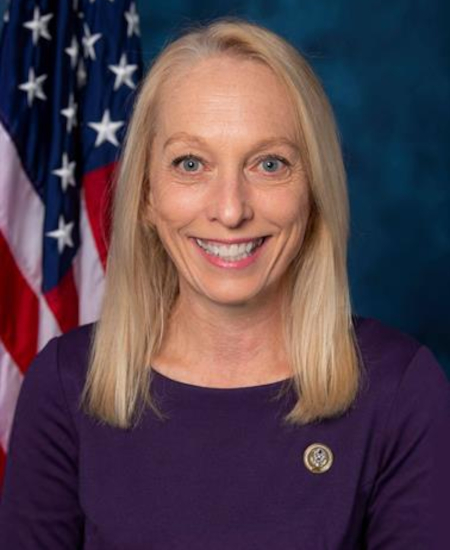
Rep. Mary Gay Scanlon
Sponsored bills
Pharmaceutical Research Transparency Act of 2022 This bill requires the disclosure of costs associated with clinical trials and pharmaceutical research and development. Specifically, the National Institutes of Health must create a publicly available repository of cost data from certain clinical trials that test the efficacy of drugs, biological products, and devices in human subjects. For each applicable trial, the registry must, among other information, include the total and per patient cost of the trial, as well as costs for personnel, health care services, and other categories of expenditures. Information must be added to the registry within one year of the trial's completion. The bill also requires drug manufacturers to include their research and development expenditures for drugs and biological products in annual disclosures made to the Securities and Exchange Commission.
Energy Security and Independence Act of 2022 This bill addresses domestic industrial base and manufacturing capabilities for specified energy-efficiency and renewable energy systems and technologies (e.g., electric transportation systems), including by establishing a program to provide financial assistance for the construction of new facilities that manufacture components of specified energy-efficiency and renewable energy systems and technologies (or to retool, retrofit, or expand such facilities).
Public Service Loan Forgiveness Payment Completion Fairness Act or the PSLF Payment Completion Fairness Act This bill removes the requirement that a borrower must be employed in a public service job at the time of loan forgiveness under the Public Service Loan Forgiveness (PSLF) program. Under the current PSLF program, the Department of Education must cancel the balance of interest and principal due on a borrower's Federal Direct Loans after the borrower makes 120 monthly loan payments while employed in a public service job and, at the time of loan forgiveness, the borrower is employed in a public service job. This bill removes the requirement that the borrower must be working in a public service job at the time of loan forgiveness.
This resolution expresses support for legislation to provide child care assistance to all working families that need it; make childcare affordable and available to meet various job schedules; guarantee that all families eligible for childcare will receive it; improve the quality of childcare; expand access to Head Start and preschool services; and provide sufficient federal, state, and local investment to ensure resources for both high-quality jobs and affordable childcare.
Promoting Permanency Through Kinship Families Act This bill revises the requirements for states with respect to foster care and adoption assistance to promote kinship placements.
Reporting Efficiently to Proper Officials in Response to Terrorism Act of 2021 or the REPORT Act This bill requires specified federal agencies to report to Congress concerning any act of terrorism that occurs in the United States. Whenever an act of terrorism occurs, the Department of Homeland Security (DHS), the Department of Justice (DOJ), the Federal Bureau of Investigation (FBI), and, as appropriate, the National Counterterrorism Center (NCC), must submit to the appropriate congressional committees, as specified by this bill, an unclassified report not later than one year after the completion of the investigation by the primary agency conducting the investigation concerning the terrorist act. Such report shall (1) include a statement of the facts of the act of terrorism that are known at the time of such report; (2) identify any gaps in homeland or national security that could be addressed to prevent future acts of terrorism; and (3) include any recommendations for additional measures that could be taken to improve homeland or national security, such as changes in law enforcement practices or changes in law. If DHS, DOJ, and the FBI or, as appropriate, the NCC, determines any information required to be reported could jeopardize an ongoing investigation or prosecution, such entities (1) may withhold from reporting such information, and (2) shall notify the appropriate congressional committees of that determination.
Ensuring Lasting Smiles Act This bill requires private health insurance plans to cover diagnosis and treatment of congenital anomalies and birth defects, such as reconstructive services and items. Coverage must include services and items that functionally improve, repair, or restore any body part that is medically necessary for normal bodily functions or appearance, as determined by the treating physician. Coverage limits and cost-sharing requirements for such services and items may not be more restrictive than those applicable to all medical and surgical benefits under the plan.
Training, Retention, And Investment Now for a Better America Act or the TRAIN Act This bill provides statutory authority for the Department of Labor's Strengthening Community Colleges Training Grants program, which awards competitive grants for community colleges to provide education or career training for jobs in high-demand industries.
Marijuana Opportunity Reinvestment and Expungement Act or the MORE Act This bill decriminalizes marijuana. Specifically, it removes marijuana from the list of scheduled substances under the Controlled Substances Act and eliminates criminal penalties for an individual who manufactures, distributes, or possesses marijuana. The bill also makes other changes, including the following: replaces statutory references to marijuana and marihuana with cannabis , requires the Bureau of Labor Statistics to regularly publish demographic data on cannabis business owners and employees, establishes a trust fund to support various programs and services for individuals and businesses in communities impacted by the war on drugs, imposes an excise tax on cannabis products produced in or imported into the United States and an occupational tax on cannabis production facilities and export warehouses, makes Small Business Administration loans and services available to entities that are cannabis-related legitimate businesses or service providers, prohibits the denial of federal public benefits to a person on the basis of certain cannabis-related conduct or convictions, prohibits the denial of benefits and protections under immigration laws on the basis of a cannabis-related event (e.g., conduct or a conviction), establishes a process to expunge convictions and conduct sentencing review hearings related to federal cannabis offenses, directs the Government Accountability Office to study the societal impact of state legalization of recreational cannabis, directs the National Highway Traffic Safety Administration to study methods for determining whether a driver is impaired by marijuana, directs the National Institute for Occupational Safety and Health to study the impact of state legalization of recreational cannabis on the workplace, and directs the Department of Education to study the impact of state legalization of recreational cannabis on schools and school-aged children.