Fresh Start Act of 2021 This bill authorizes the Department of Justice to award grants for states to implement automatic expungement laws (i.e., laws that provide for the automatic expungement or sealing of an individual's criminal records).
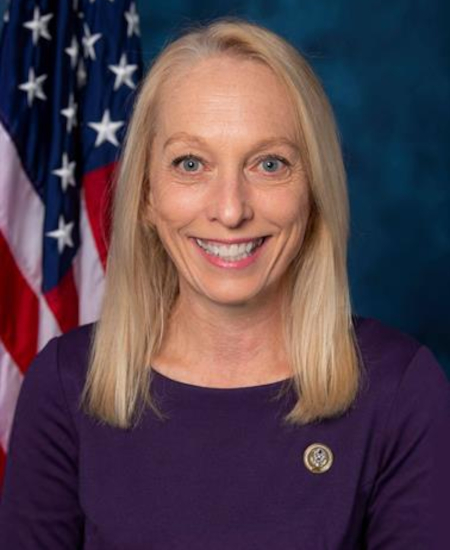
Rep. Mary Gay Scanlon
Sponsored bills
Social Security Fairness Act of 2021 This bill repeals provisions that reduce Social Security benefits for individuals who receive other benefits, such as a pension from a state or local government. The bill eliminates the government pension offset , which in various instances reduces Social Security benefits for spouses, widows, and widowers who also receive government pensions of their own. The bill also eliminates the windfall elimination provision , which in some instances reduces Social Security benefits for individuals who also receive a pension or disability benefit from an employer that did not withhold Social Security taxes. These changes are effective for benefits payable after December 2021.
Protect Reporters from Exploitative State Spying Act or the PRESS Act This bill prohibits the federal government from compelling journalists and providers of telecommunications services (e.g., phone and internet companies) to disclose certain protected information, except in limited circumstances such as to prevent terrorism or imminent violence. Specifically, the bill protects from disclosure any information identifying a source, as well as any records, contents of a communication, documents, or information obtained or created by journalists in the course of their work. Further, the bill protects specified third parties, such as telecommunications carriers or social media companies, from being compelled to provide testimony or any document consisting of a record, information, or other communication that is stored by the third party on behalf of a journalist.
Maddy summaryHRES 1358 is a symbolic House resolution designating the week of September 17-24, 2022, as "National Estuaries Week." It expresses congressional support for raising public awareness about the ecological and economic importance of estuaries, highlighting their role in supporting jobs, fisheries, coastal protection, and biodiversity. The resolution does not create new laws or funding but acknowledges estuaries' contributions to the U.S. economy (e.g., $351 billion in GDP) and their vulnerability to threats like pollution and sea-level rise. It aims to encourage continued efforts by government and community partners to protect and restore these vital ecosystems.
Improving Seniors' Timely Access to Care Act of 2022 This bill establishes several requirements and standards relating to prior authorization processes under Medicare Advantage (MA) plans. Specifically, MA plans must (1) establish an electronic prior authorization program that meets specified standards, including the ability to provide real-time decisions in response to requests for items and services that are routinely approved; (2) annually publish specified prior authorization information, including the percentage of requests approved and the average response time; and (3) meet other standards, as set by the Centers for Medicare & Medicaid Services, relating to the quality and timeliness of prior authorization determinations.
This resolution condemns Azerbaijan's September 2022 military attack on Armenia and Nagorno-Karabakh and calls for an end to all U.S. assistance to Azerbaijan.
Harriet Tubman Bicentennial Commemorative Coin Act This bill directs the Department of the Treasury to mint and issue 50,000 $5 gold coins, 400,000 $1 silver coins, and 750,000 half-dollar clad coins emblematic of the legacy of Harriet Tubman as an abolitionist. The Secretary may issue coins under this bill only during the period of January 1, 2024, through December 31, 2024. All surcharges received by Treasury from the sale of such coins must be paid equally to the National Underground Railroad Freedom Center in Cincinnati, Ohio, and The Harriet Tubman Home, Inc. in Auburn, New York, for the purpose of accomplishing and advancing their missions.
Assault Weapons Ban of 2022 This bill makes it a crime to knowingly import, sell, manufacture, transfer, or possess a semiautomatic assault weapon (SAW) or large capacity ammunition feeding device (LCAFD). The prohibition does not apply to a firearm that is (1) manually operated by bolt, pump, lever, or slide action, except for certain shotguns; (2) permanently inoperable; (3) an antique; (4) only capable of firing rimfire ammunition; or (5) a rifle or shotgun specifically identified by make and model. The bill also exempts from the prohibition the following, with respect to a SAW or LCAFD: importation, sale, manufacture, transfer, or possession related to certain law enforcement efforts, or authorized tests or experiments; importation, sale, transfer, or possession related to securing nuclear materials; and possession by a retired law enforcement officer. The bill permits continued possession, sale, or transfer of a grandfathered SAW, which must be securely stored. A licensed gun dealer must conduct a background check prior to the sale or transfer of a grandfathered SAW between private parties. The bill permits continued possession of, but prohibits sale or transfer of, a grandfathered LCAFD. Newly manufactured LCAFDs must display serial number identification. Newly manufactured SAWs and LCAFDs must display the date of manufacture. The bill also allows a state or local government to use Edward Byrne Memorial Justice Assistance Grant Program funds to compensate individuals who surrender a SAW or LCAFD under a buy-back program.

This resolution supports the designation of Public Radio Music Day. It also expresses deep appreciation for the role of public radio music stations in serving listeners, musicians, and hundreds of communities in the United States.
Billionaire Minimum Income Tax Act This bill imposes a minimum tax on individual taxpayers whose net worth for the taxable year exceeds $100 million. The tax is equal to 20% of the sum of a taxpayer's taxable income, plus net unrealized gains for the taxable year. The tax may not exceed 40% of the amount by which the taxpayer's net worth exceeds $100 million.