Designates the facility of the United States Postal Service located at 415 High Street in Freeport, Pennsylvania, as the "Corporal Joseph Rodney Chapman Post Office."
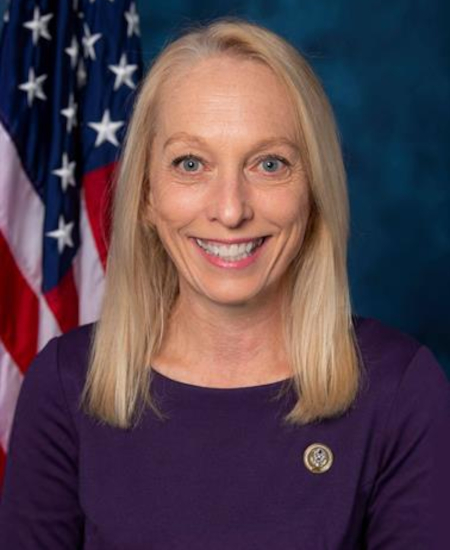
Rep. Mary Gay Scanlon
Sponsored bills
Lymphedema Treatment Act This bill provides for Medicare coverage of lymphedema compression treatment items. Specifically, the bill provides for coverage of standard and custom fitted gradient compression garments and other approved items that are prescribed by a physician or other specified health care professional to treat lymphedema.
Safeguarding America's Future and Environment Act or the SAFE Act The bill requires the development of an integrated national approach to help fish, wildlife, and plants adapt to extreme weather changes and climate change. Specifically, the bill requires the President to establish an interagency National Fish, Wildlife, and Plants Climate Adaptation Strategy Joint Implementation Working Group. The working group must adopt the 2013 National Fish, Wildlife, and Plants Climate Adaptation Strategy, which addresses the effects of extreme weather and climate change on fish, wildlife, and plants. After the Committee on Earth and Environmental Sciences releases a periodic scientific assessment required under the U.S. Global Change Research Program, the working group must use sound science to review and revise the strategy to incorporate new information and advances in the development of strategies to help fish, wildlife, and plants adapt. Each federal agency must integrate the strategy into agency plans, environmental reviews, and programs. The Department of the Interior must establish a National Climate Change and Wildlife Science Center to assess and develop scientific information, tools, strategies, and techniques to support the working group and other interested parties in addressing the effects of extreme weather and climate change. Interior must establish an Advisory Committee on Climate Change and Natural Resource Sciences to advise the working group.

Revitalizing the Economy of Coal Communities by Leveraging Local Activities and Investing More Act of 2021 or the RECLAIM Act of 2021 This bill revises requirements concerning the Abandoned Mine Reclamation Fund, including by expanding the eligible uses of the fund. Specifically, the bill allows the fund to be used to provide support for economic revitalization, diversification, and development in economically distressed mining communities through the reclamation and restoration of land and water resources adversely affected by abandoned coal mines. In addition, it requires specified amounts to be annually distributed from the fund through FY2026 to states and Indian tribes for reclaiming and restoring lands and waters so affected.
Surface Mining Control and Reclamation Act Amendments of 2021 This bill reauthorizes the Department of the Interior to collect fees on the production of coal through FY2036, expands the eligible uses of the Abandoned Mine Reclamation Fund, and revises requirements concerning the fund. Under current law, operators of active coal mines must pay such fees through FY2021. Revenue from the fees are deposited into the Abandoned Mine Reclamation Fund, which is used for the reclamation of abandoned coal mines. The bill authorizes Interior to reimburse states and tribal governments from the fund for the emergency restoration, reclamation, abatement, control, or prevention of adverse effects of coal mining practices. It also increases the minimum amount of funds from $3 million to $5 million that Interior must award to states and Indian tribes that have approved abandoned mine reclamation programs.
Maddy summaryHRES 1464 is a procedural resolution that sets the rules for the House to consider S. 4524, a bill that would prevent courts from enforcing certain nondisclosure and nondisparagement clauses in contracts related to sexual assault and harassment disputes. This resolution allows for one hour of debate equally divided between the committee chair and ranking minority member, and permits one motion to commit on the bill. It does not change the substance of S. 4524 but establishes the process for its consideration on the House floor. The resolution was introduced on November 14, 2022, with a deadline for consideration by November 18, 2022.
Funding Attorneys for Indigent Removal (FAIR) Proceedings Act This bill expands access to counsel for non-U.S. nationals ( aliens under federal law) in immigration proceedings and provides protections related to such proceedings. Such an individual shall have the privilege of being represented by counsel in any immigration proceeding, whereas currently this privilege is statutorily provided for only in removal proceedings. Similarly, the Department of Justice (DOJ) may provide counsel at government expense to individuals in any immigration proceeding, whereas currently DOJ is statutorily authorized to provide counsel only for removal proceedings and at no expense to the government. Under this bill, DOJ shall provide counsel to children and vulnerable individuals in such proceedings, at government expense if necessary. If DOJ fails to do so, certain limits on filing a motion to reopen removal proceedings (such as the time limit for filing) shall not apply, and the individual's removal shall be stayed upon the motion's filing. The bill establishes the Immigration Counsel Account to be used to provide counsel under this bill. A portion of certain immigration fees shall be deposited into the account. The Department of Homeland Security (DHS) shall provide each individual, generally at the beginning of proceedings, a complete copy of the individual's case file in DHS possession, unless the individual waives this right in writing. Failure to provide such documents shall delay the individual's removal proceeding. DHS shall facilitate for all detained individuals access to counsel and programs that inform such individuals of their immigration-related rights and obligations.
Prevent All Soring Tactics Act of 2022 or the PAST Act of 2022 This bill addresses the practice of soring horses. The soring of horses includes various actions taken on horses' limbs to produce higher gaits that may cause pain, distress, inflammation, or lameness. Specifically, the bill expands soring regulation and enforcement at horse shows, exhibitions, sales, and auctions, including by establishing a new system for inspecting horses for soring. In addition, the bill increases penalties for violations.
Norman Y. Mineta Japanese American Confinement Education Act This bill increases the authorization of appropriations for the Japanese American Confinement Sites (JACS) grant program, which supports the preservation of U.S. confinement sites that were used to detain Japanese Americans during World War II (i.e., internment camps). It also establishes a program within JACS to provide grants to Japanese American nonprofits to educate individuals about the historical significance of these events.
Asunción Valdivia Heat Illness and Fatality Prevention Act of 2022 This bill directs the Occupational Safety and Health Administration to promulgate a standard that requires employers to implement certain measures for protecting workers from heat stress and related illnesses or injuries. Heat stress refers to the load of heat that a person experiences due to sources of heat or heat retention (including metabolic heat, environmental factors, and clothing or personal protective equipment) or the presence of heat in a work setting. Further, if an employer cannot reduce exposure to heat stress below hazardous levels through engineering controls (e.g., heat shields and insulation) or personal protective equipment (e.g., heat reflective clothing), the employer must implement a program that mitigates such exposure through access to appropriate hydration and cool-down spaces, acclimatization policies, and periodic paid rest breaks. Additionally, the bill establishes requirements concerning judicial review, implementation, enforcement, recordkeeping, and whistle-blower protections related to the standard. The bill also requires the Department of Labor to include questions about heat-related illness and injury in the National Agricultural Workers Survey (an employment-based, random-sample survey of U.S. crop workers that collects demographic, employment, and health information).