

Commission to Study and Develop Reparation Proposals for African Americans Act This bill establishes the Commission to Study and Develop Reparation Proposals for African Americans. The commission must (1) compile documentary evidence of slavery in the United States; (2) study the role of the federal and state governments in supporting the institution of slavery; (3) analyze discriminatory laws and policies against freed African slaves and their descendants; and (4) recommend ways the United States may recognize and remedy the effects of slavery and discrimination on African Americans, including through a formal apology and compensation (i.e., reparations). The commission consists of individuals from civil society and reparations organizations and individuals appointed by the President and congressional leadership; Members of Congress and governmental employees may not serve on the commission. The commission may hold hearings, subpoena witnesses and records, and contract with other entities to conduct its work. The commission must submit its final report within 18 months of its first meeting.
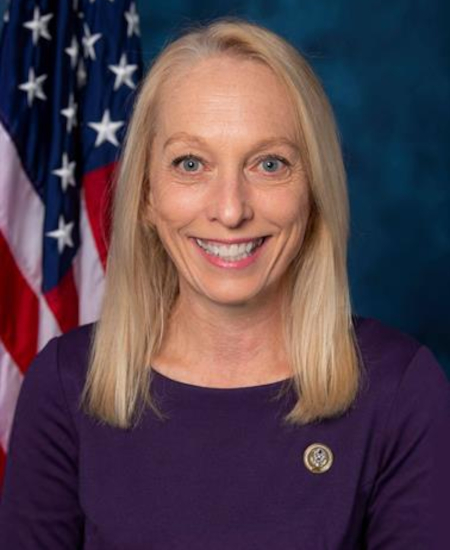
Rep. Mary Gay Scanlon
Sponsored bills
Faster Payments to Veterans' Survivors Act of 2022 This act modifies policies and procedures related to the payment of benefits under certain life insurance programs administered by the Department of Veterans Affairs (VA). If a primary beneficiary has not made a claim for payment within one year (currently two years) after the death of the insured under the National Service Life Insurance (NSLI) program or the United States Government Life Insurance (USGLI) program, the VA is authorized to make payment to another designated beneficiary as if the primary beneficiary had predeceased the insured. If no designated beneficiary makes a claim within two years (currently four years) after the death of the insured, the VA is authorized to make a payment to a person the VA deems to be equitably entitled to such benefit. The act also modifies the beneficiary designation process under NSLI and USGLI. Specifically, if a person does not designate a beneficiary for insurance, or if the designated beneficiary predeceases the insured person, the VA must determine the beneficiary in a specified order of succession. Additionally, the act requires the VA to improve its processes and procedures with respect to identifying, locating, and paying hard-to-find beneficiaries of life insurance policies, including by improving its website search tools.
This act designates the facility of the United States Postal Service located at 345 South Main Street in Butler, Pennsylvania, as the Andrew Gomer Williams Post Office Building.
This act designates the facility of the United States Postal Service located at 850 Walnut Street in McKeesport, Pennsylvania, as the First Sergeant Leonard A. Funk, Jr. Post Office Building.
21st Century President Act This act revises the definition of immediate family for purposes of a criminal offense involving a threat to kill, kidnap, or inflict bodily harm on a former President or a member of the immediate family of a former President. Specifically, it replaces gender-specific references to a former President's wife and widow with the gender-neutral terms spouse and surviving spouse .
Aviation Funding Stability Act of 20 21 This bill provides continuing appropriations to the Federal Aviation Administration (FAA) from the Airport and Airway Trust Fund if an appropriations bill for the FAA has not been enacted before a fiscal year begins or a joint resolution making continuing appropriations for the FAA is not in effect. The bill provides appropriations at the rate of operations that was provided for the prior fiscal year to continue programs, projects, and activities for which funds were provided in the preceding fiscal year.
Refugee Protection Act of 2022 This bill modifies provisions related to asylum seekers and addresses related issues. For example, the bill (1) eliminates the statutory time limit for applying for asylum (currently one year after arriving in the United States), (2) establishes stateless protected status for individuals who are not considered a national by any country under that country’s law, and (3) requires the goal for refugee admissions for any given fiscal year to be no fewer than 125,000.
Medicare for America Act of 2019 [ sic ] This bill establishes several health insurance programs and otherwise modifies certain requirements relating to health care coverage, costs, and services. In particular, the bill establishes a national health insurance program to be administered by the Department of Health and Human Services (HHS). Among other requirements, the program must (1) cover all U.S. residents; (2) cover specified items and services, including hospital services, prescription drugs, dental services, and home- and community-based long-term care; and (3) be fully implemented in 2026. HHS must also offer a transitional public health option that provides certain minimum coverage through health insurance exchanges in 2024 and 2025. The bill also makes a series of other changes to health care and tax provisions. For example, the bill (1) allows federal funds to be used for abortions; (2) sunsets a specified tax reform law that, among other things, repealed the penalty for failing to maintain minimum essential health coverage; and (3) prohibits excessive prices for prescription drugs and medical devices, as determined by a newly established federal regulatory board.
Expanding the Voluntary Opportunities for Translations in Elections Act or the Expanding the VOTE Act This bill expands access to voting materials for individuals with limited proficiency in the English language, including by establishing incentive grants for states and political subdivisions to provide translated voting materials. Additionally, the bill directs the Government Accountability Office to study the impact of (1) reducing the threshold requirement under Section 203 of the Voting Rights Act of 1965, and (2) expanding the definition of language minorities to include native speakers of additional languages.
American Choice and Innovation Online Act This bill prohibits certain large online platforms from engaging in specified acts, including giving preference to their own products on the platform, excluding or disadvantaging competing products from another business on the platform, or discriminating among similarly situated users. Further, a platform may not materially restrict or impede the capacity of a competing business user to access or interoperate with the same platform, operating system, or hardware or software features. The bill also restricts the platform's use of nonpublic data obtained from or generated on the platform and prohibits the platform from restricting access to platform data generated by the activity of a competing business user. The bill also provides additional restrictions related to installing or uninstalling software, search or ranking functionality, and retaliation for contact with law enforcement regarding actual or potential violations of law. The bill establishes affirmative defenses for the prohibited conduct. The Federal Trade Commission or the Department of Justice must designate whether an entity is a platform covered by the bill, and both must carry out enforcement activities. The bill also provides for civil penalties, injunctions, conflicts of interest, a private right of action, and the forfeit of profits for repeat offenders.