

Maddy summaryThe No Tax Breaks for Union Busting Act would deny tax deductions for employers who attempt to influence employees' decisions about union activities, including unfair labor practices like firing workers for organizing or using captive audience meetings. It targets expenses related to union-busting tactics, such as consulting fees and other costs used to sway workers' opinions about collective bargaining. Employers would need to report these expenses on tax returns and would no longer be able to deduct them from taxable income. The bill aims to prevent employers from using tax-deductible expenses to influence union elections, aligning with existing rules that deny tax deductions for political spending. It would apply to expenses incurred in taxable years beginning 240 days after enactment.
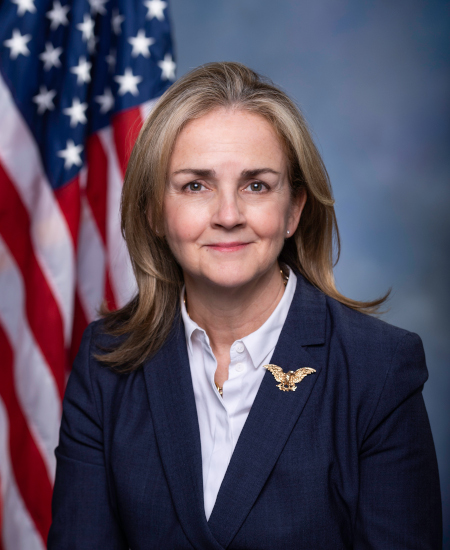
Rep. Madeleine Dean
Sponsored bills
Maddy summaryHR 5433, the Child Care Stabilization Act, provides $16 billion annually from 2024 to 2028 to stabilize the child care sector through grants administered by the Health and Human Services Secretary. It directly affects licensed child care providers by offering stable funding to cover operating costs, while supporting higher wages for early educators without raising family fees. Key provisions include expanding access to high-quality, affordable care - especially for infants/toddlers, rural communities, and children with disabilities - and addressing shortages in underserved areas. The funding builds on existing American Rescue Plan resources, aiming to strengthen the child care workforce and increase available options for working families.
Maddy summaryHR 5449, the "Stopping the Fraudulent Sales of Firearms Act," amends federal law to specifically prohibit fraudulent firearm transactions. It adds a new provision (922(a)(10)) making it illegal to import, manufacture, or sell firearms using false claims or promises, and also bans transmitting communications about such fraudulent deals via wire, radio, or TV. This directly affects firearm dealers, sellers, and others involved in transactions who use deceptive practices. The bill increases penalties for these specific fraudulent acts by adding them to the list of violations under existing enforcement provisions (924(a)(1)(B)).
Maddy summaryHR 5428, the No Tax Breaks for Union Busting (NTBUB) Act, prevents employers from deducting certain expenses related to influencing workers' decisions about union representation. It targets spending on tactics like anti-union meetings, workplace surveillance, or consultants during organizing campaigns, making these costs non-deductible for tax purposes. Employers must report such expenses on their tax returns, including details about the activities and amounts spent. The bill aims to remove tax incentives for employer interference in union elections, aligning with federal labor law protections for workers' collective bargaining rights.
Maddy summaryHRES 679 is a symbolic House resolution supporting the designation of September 10-16, 2023, as "Celebrate Community Week." It recognizes four international service organizations - Kiwanis International, Lions Clubs International, Optimist International, and Rotary International - for their community service efforts. The resolution encourages these groups to continue promoting community service, especially for youth, and applauds their annual projects addressing needs like youth development, health, education, and humanitarian challenges. It has no funding or policy changes; it simply expresses congressional support for their volunteer work.
Maddy summaryHRES 492 is a congressional resolution condemning the Iranian government's systematic persecution of the Baha'i minority, which directly affects Baha'is in Iran facing arrests, property confiscation, and imprisonment. The resolution specifically calls for Iran to immediately release Baha'is detained for their faith, end state-sponsored hate propaganda against them, and reverse discriminatory policies denying equal access to education, employment, and religious freedom. It urges the U.S. President and Secretary of State to demand Iran’s compliance with international human rights treaties and to use existing sanctions authorities (under the 2010 and 2012 Iran sanctions laws) against officials responsible for these abuses. The resolution does not impose new legal requirements but serves as a formal U.S. government statement of condemnation and a call for diplomatic and sanctions action.
Lead Endangers Animals Daily Act of 2023 or the LEAD Act of 2023 This bill directs the Department of the Interior to issue final regulations prohibiting the discharge of any firearm using ammunition other than nonlead ammunition on all lands and waters under the jurisdiction and control of the U.S. Fish and Wildlife Service. Interior must establish and annually update a list of nonlead ammunition. The prohibition does not apply to (1) a government official or agent who is carrying out a statutory duty unrelated to the management of wildlife; (2) a state, local, tribal, or federal law enforcement officer, or the agent of such an officer, who is carrying out a statutory duty; or (3) an active member of the U.S. military who is carrying out official duties. A person that knowingly violates the prohibition may be assessed a civil penalty by Interior of (1) no more than $500 for the first violation, and (2) no less than $1,000 or more than $5,000 for a second or subsequent violation.
Maddy summaryThe Housing for All Act of 2023 allocates significant federal funding to address housing shortages and homelessness, with key provisions including $45 billion for the Housing Trust Fund, $40 billion for the HOME Investment Partnerships Program, and 500,000 new housing vouchers in 2024 that will increase to 1 million annually by 2027. The bill directly affects low-income families, people with disabilities, elderly individuals, communities of color, and those experiencing homelessness by expanding rental assistance, supporting permanent housing solutions, and creating new programs like Safe Parking Programs and Eviction Protection Grants. It establishes a Racial Equity Commission to examine structural racism in housing and requires coordination between housing and behavioral health services through new grant programs. The legislation also includes $500 million for converting hotels and commercial spaces into permanent housing and $800 million for legal assistance to prevent evictions. These provisions aim to increase housing stability, reduce homelessness, and address racial disparities in housing access across the United States.
Maddy summaryThis bill requires the Comptroller General to submit a comprehensive report to Congress within one year of enactment, detailing the economic and social impacts of the fentanyl crisis. The report must cover effects on labor markets (by race/gender), industry sectors, federal tax revenue, healthcare programs (Medicare/Medicaid), housing instability, and state finances. It also mandates data on federally assisted rental housing access for people with drug convictions, underage fentanyl overdose deaths, and federal actions to support states. The bill does not create new policies or funding but directs data collection for congressional review.
Maddy summaryHR 4277, the Saving America’s Pollinators Act of 2023, would immediately cancel all registrations for neonicotinoid pesticides (including imidacloprid and clothianidin) and ban their sale, use, and future registration. This directly affects farmers and crop producers who currently use these pesticides on over 150 million acres of crops like corn and soybeans, where seed coatings are widely applied. The bill also ends exemptions for seed-treated pesticides and requires the Environmental Protection Agency to revoke tolerances for pesticide residues in food within six months. Additionally, it mandates the U.S. Fish and Wildlife Service’s newly established Center for Pollinator Conservation to monitor native bee populations and coordinate federal actions to reverse pollinator declines.