

Maddy summaryHRES 793 is a resolution passed by the U.S. House of Representatives calling on Hamas to immediately release all 199 hostages taken during Hamas' October 7, 2023 attack on Israel. The resolution condemns Hamas for the attack, the taking of hostages, and threats against hostages, while stating that holding hostages violates international humanitarian law under the Geneva Conventions. It demands the immediate release of all hostages and expresses sympathy for victims and their families. As a symbolic resolution, it does not create legal obligations but formally expresses the House's position.
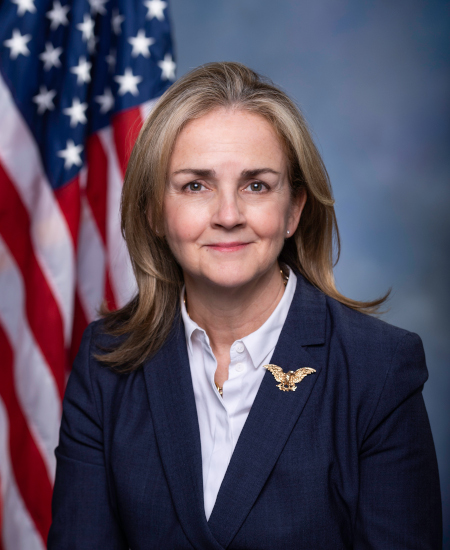
Rep. Madeleine Dean
Sponsored bills
Maddy summaryHRES 114 is a resolution proposing to expel Representative George Santos from the U.S. House of Representatives, citing constitutional authority under Article I, Section 5, Clause 2. It directly targets Santos, who was a sitting member of the House at the time of introduction. The resolution follows the House's constitutional power to expel members for misconduct, though it does not specify the alleged violations. This procedural resolution was referred to the Committee on Ethics for review.
Maddy summaryHR 6451, the Mental Health Justice Act of 2023, provides $250 million in federal grants to states, tribes, and localities to hire mental health professionals as first responders for specific emergencies. It directs these professionals to replace police in situations involving mental health crises, substance use, or intellectual/developmental disabilities - such as when a 911 caller describes a mental health emergency or a first responder identifies someone needing mental health support. The bill requires grantees to train responders in de-escalation techniques, link individuals to community-based services (not incarceration), and report on outcomes like reduced arrests or use of force. It also mandates data collection on demographics and prevents funneling people into institutional settings, with annual reports to Congress on program effectiveness.
Maddy summaryHCONRES 77 designates the week of November 13-19, 2023, as "National Caregiving Youth Week" to raise public awareness about children and adolescents under 18 who provide primary or secondary care for family members with health conditions like chronic illness, disability, or aging. It recognizes these young caregivers as an underserved group facing challenges balancing care duties with school, mental health, and well-being. The resolution encourages educators, health professionals, and policymakers to acknowledge their contributions and supports new federal research to better understand their needs. As a symbolic gesture, it does not create new laws, funding, or services but aims to foster national recognition of this population.
Maddy summaryThis resolution (HRES 872) reaffirms the U.S. commitment to transatlantic cooperation in combating antisemitism across Europe. It calls on European governments and the European Union to implement national strategies against antisemitism, standardize data collection on incidents, share best practices, and include Holocaust education in school curricula. The resolution specifically urges European countries to address rising antisemitic incidents documented by reports from ADL and Tel Aviv University, which show widespread antisemitic attitudes in multiple European nations. It does not create new laws but emphasizes collaboration to protect Jewish communities and counter online hate. The resolution directly affects European governments and Jewish communities in Europe through its recommendations for policy action.
Maddy summaryHR 3601, the Student Veteran Work Study Modernization Act, expands eligibility for a Veterans Affairs work-study allowance to veterans enrolled at least half-time in rehabilitation, education, or training programs - lowering the previous requirement from three-quarter-time. The bill establishes a five-year pilot program to test this change, requiring the VA to apply the same allowance rules to these veterans as to other participants, except for the enrollment threshold. It also mandates annual reports to Congress tracking participation numbers, four-year degree completion rates, and full-time VA employment outcomes for participants. The policy directly affects veterans seeking education benefits while balancing academic and personal responsibilities.
Maddy summaryHRES 853 is a symbolic resolution expressing support for designating November 5-11, 2023, as "Drowsy Driving Prevention Week." It does not create new laws or regulations but aims to raise public awareness about the dangers of drowsy driving, citing statistics showing it contributes to thousands of crashes and deaths annually. The resolution encourages people to adopt preventive measures, such as improving sleep habits and avoiding sleep-inducing medications. It directly affects no specific group but seeks to promote broader community awareness of drowsy driving risks.
Maddy summaryThis bill amends federal transit grant rules to encourage housing near transit by adding incentives for projects that support "pro-housing policies." It defines such policies as local actions removing regulatory barriers to housing construction, including reducing parking minimums, creating faster approval processes for multi-family housing, and eliminating height restrictions. Transit project applicants can earn an extra point in their grant rating if they submit evidence of these policies in areas near transit, with the Department of Transportation consulting the Housing Secretary to assess how the policies will increase housing supply. The bill directly affects state and local governments implementing these policies and transit project applicants seeking federal capital investment grants.
Maddy summaryThis bill (HR 366, Korean American VALOR Act) changes VA healthcare eligibility rules to include Korean American veterans who served with South Korea's military in Vietnam during specific periods. It directly affects Korean American individuals who served as part of the Republic of Korea's armed forces in Vietnam between January 1962 and May 1975 (or a period the VA later determines). The key provision adds a new eligibility category under VA law, allowing these individuals to access the same healthcare benefits as U.S. veterans under the same rules and conditions. This is a concrete policy change that removes a prior barrier to VA healthcare for this group.