

Strengthening the Vaccines for Children Program Act of 2021 This bill modifies vaccination programs and coverage for children under Medicaid and the Children's Health Insurance Program (CHIP). Specifically, the bill expands and otherwise modifies the Vaccines for Children Program, which provides free vaccinations to individuals 18 years of age or younger who are uninsured or underinsured (i.e., with limited or no insurance for vaccines), are eligible for Medicaid, or are American Indians or Alaskan Natives. The bill expands the program to include children enrolled in CHIP and temporarily provides for additional payments to incentivize provider participation. The Government Accountability Office must report on the related effects of the bill's changes. The bill also expands coverage under Medicaid and CHIP to include vaccine counseling and educational services for children and temporarily requires payments to be made at a rate that is no less than the rate under Medicare for equivalent services. It also temporarily increases the Federal Medical Assistance Percentage (i.e., federal matching rate) for states that conduct culturally appropriate outreach regarding the benefits of vaccinations for children.
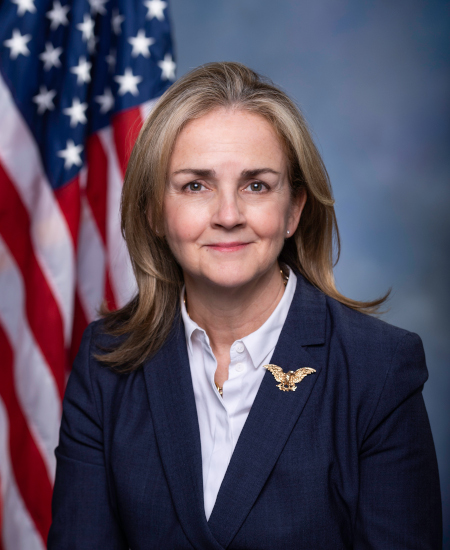
Rep. Madeleine Dean
Sponsored bills
Protecting Seniors Through Immunization Act of 2021 This bill specifies that certain deductible, coinsurance, initial coverage limit, and cost-sharing requirements that apply under the Medicare prescription drug benefit shall not apply with respect to vaccines that are recommended by the Advisory Committee on Immunization Practices of the Centers for Disease Control and Prevention. The Centers for Medicare & Medicaid Services must provide to Medicare beneficiaries specified information regarding (1) coverage of vaccines for seniors, and (2) access to recommended vaccines without cost-sharing.
Semiquincentennial Commemorative Coin Act This bill directs the Department of the Treasury to mint and issue $25.00 gold coins, $2.50 silver coins, 25 cent clad coins, and proof silver $2.50 coins in commemoration of the 250th anniversary of the establishment of the United States. The designs of the coins shall be emblematic of the semiquincentennial anniversary of the establishment of the United States of America and celebrate 250 years of our nation. On each coin there shall be a designation of the value of the coin; an inscription of the years 1776-2026; and inscriptions of the words Liberty , In God We Trust , United States of America , and E Pluribus Unum . Treasury may issue coins under this bill only during the period beginning on January 1, 2026, and ending on December 31, 2026. All sales of coins issued shall include a surcharge as prescribed by this bill. All surcharges received by Treasury from the sale of such coins shall be paid to the America 250 Foundation to fund the restoration, rehabilitation, and interpretation of units of the U.S. National Park System and its related areas, as a legacy of the semiquincentennial commemoration.
Global Health Security Act of 2021 This bill directs the United States to implement a strategy to strengthen global health security, including by requiring the President to create the Global Health Security Agenda Interagency Review Council to implement the Global Health Security Agenda. The agenda is an initiative launched by nearly 30 nations to address global infectious disease threats. The council's responsibilities include (1) providing policy recommendations on agenda-related goals, objectives, implementation, and other international efforts to strengthen pandemic preparedness and response; (2) helping federal agencies with implementation; and (3) reviewing the progress and challenges in achieving U.S. commitments, including assistance to help other countries meet agenda targets. The bill also directs the federal agencies involved with the agenda to prioritize its implementation and to take certain steps to achieve that goal. The President shall coordinate a strategy for responding to global health security emergencies and submit a report on the implementation of this strategy. Additionally, the Department of State should seek to enter into negotiations with donors, relevant United Nations agencies, and other multilateral stakeholders to establish a Fund for Global Health Security and Pandemic Preparedness that (1) closes gaps in global health security and pandemic preparedness; and (2) builds capacity in eligible partner countries related to global health security, infectious disease control, and pandemic preparedness. The fund should provide grants, technical assistance, and innovative funding mechanisms to achieve its purposes.
Safe Schools Improvement Act of 2021 This bill requires states to direct their local educational agencies (LEAs) to establish policies that prevent and prohibit bullying and harassment of elementary and secondary school students. In particular, these policies must prohibit bullying and harassment based on race, color, national origin, sex, sexual orientation, gender identity, disability, or religion. Further, LEAs must provide (1) students, parents, and educational professionals with annual notice of the conduct prohibited in their disciplinary policies; (2) students and parents with grievance procedures that target such conduct; and (3) the public with annual data on the incidence and frequency of that conduct at the school and LEA level. The Department of Education must conduct and report on an independent biennial evaluation of programs and policies to combat bullying and harassment in elementary and secondary schools. The National Center for Education Statistics must collect state data to determine the incidence and frequency of the conduct prohibited by LEA disciplinary policies.
Medicare Dental, Vision, and Hearing Benefit Act of 2021 This bill provides for Medicare coverage of dental, vision, and hearing care. Coverage includes (1) routine dental cleanings and exams, basic and major dental services, emergency dental care, and dentures; (2) routine eye exams, eyeglasses, and contact lenses; and (3) routine hearing exams, hearing aids, and exams for hearing aids. With respect to such care, the bill establishes special payment rules, limitations, and coinsurance requirements.
Animal Welfare Enforcement Improvement Act This bill revises the licensing process of the Department of Agriculture (USDA) for animal dealers and exhibitors to expand USDA's oversight and enforcement of animal welfare requirements. The bill also authorizes citizen suits to enforce the Animal Welfare Act. Dealers and exhibitors must apply to USDA for licenses or renewal licenses each year. In order to obtain the licenses or renewals, dealers and exhibitors must meet certain standards for the humane treatment of animals and pass inspections as specified by this bill. USDA may not issue or renew such licenses if the dealers or exhibitors have violated laws relating to animals or if the issuance of the licenses would facilitate the circumvention of state or local laws that prohibit the private ownership of certain animals. Further, USDA must suspend the licenses of dealers or exhibitors whose violations present a risk to animal welfare. USDA must revoke the licenses if the violations persist or if the licensees commit multiple violations. Dealers and exhibitors with suspended or revoked licenses may not be (1) granted another license, (2) granted another license through another person or entity, or (3) employed by another licensee to work with animals during the period of the suspension or revocation.
Pet Safety and Protection Act of 2021 This bill revises requirements concerning the sources of dogs and cats used by research facilities. Specifically, the bill revises the list of permissible sources of dogs and cats used by research facilities to include dogs and cats obtained (1) from a licensed dealer, (2) from a publicly owned and operated pound or shelter that meets specified requirements, (3) by donation from a person who bred and raised the dog or cat or owned it for not less than one year, or (4) from a research facility licensed by the Department of Agriculture. The requirements pertaining to sources apply to dogs and cats obtained through sales, donations, or offers. Monetary penalties are established for violations.
Making Essentials Available and Lawful (MEAL) Act of 2021 This bill repeals a lifetime ban that prohibits individuals convicted of certain offenses related to the possession, use, or distribution of a controlled substance from receiving Supplemental Nutrition Assistance Program (SNAP) benefits or assistance under programs funded by Temporary Assistance for Needy Families (TANF) block grants. Any state law that imposes conditions on eligibility for SNAP benefits or TANF assistance based on an individual's conviction of such an offense shall have no force or effect. In addition, individuals who are incarcerated and scheduled to be released within 30 days shall qualify as individual households for purposes of SNAP eligibility. Under current law, unless specifically excepted, individuals residing in institutions do not constitute a household.
Low-Income Water Customer Assistance Programs Act of 2021 This bill directs the Environmental Protection Agency (EPA) to establish grant programs to assist low-income households in maintaining access to drinking water and wastewater services. Specifically, the EPA must establish a program to assist such households with paying drinking water bills. States and community water systems may apply for grants. In addition, the EPA must establish a program to assist such households with paying wastewater utility bills. States may apply for grants for small community-serving wastewater facilities. Certain municipalities may apply for grants for (1) treatment works for municipal waste, or (2) municipal separate storm sewer systems.