Emmett Till Antilynching Act This bill makes lynching a federal hate crime offense. Specifically, the bill imposes criminal penalties—a fine, a prison term of up to 30 years, or both—on an individual who conspires to commit a hate crime offense that results in death or serious bodily injury or that includes kidnapping or an attempt to kidnap, aggravated sexual abuse or an attempt to commit aggravated sexual abuse, or an attempt to kill.
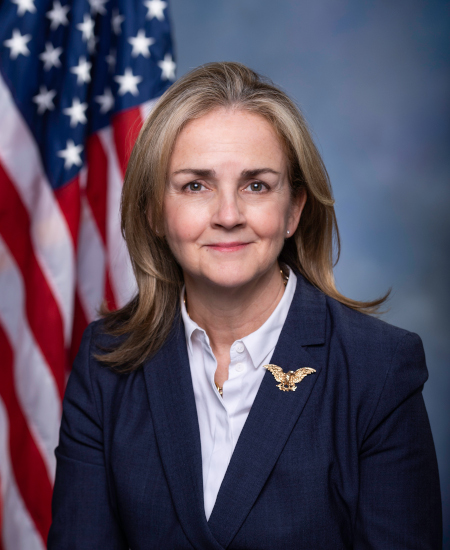
Rep. Madeleine Dean
Sponsored bills
PCAOB Whistleblower Protection Act of 2022 This bill establishes a whistleblower protection program at the Public Company Accounting Oversight Board (PCAOB). Specifically, individuals reporting information to the PCAOB regarding securities law violations relating to audits (1) are protected from retaliation by an employer, and (2) could be eligible for a monetary reward. The reward program applies to individuals who voluntarily report original information that results in the PCAOB imposing civil penalties exceeding $250,000.
Veterans Exposed to Toxic PFAS Act or the VET PFAS Act This bill provides eligibility for Department of Veterans Affairs (VA) hospital care and medical services to veterans and their family members (including those in utero) who have specified conditions and resided at a military installation where individuals were exposed to perfluoroalkyl and polyfluoroalkyl substances, commonly known as PFAS. PFAS are man-made and may have adverse human health effects. Hospital care and medical services may not be furnished for a condition that is found to have resulted from a cause other than the exposure to PFAS at a military installation. The VA may provide reimbursement for hospital care or medical services provided to a family member only after the family member or provider has exhausted all claims and remedies otherwise available for payment of such care. For disability compensation purposes, the bill establishes a presumption of service-connection for specified conditions in veterans who served at a military installation at which individuals were exposed to PFAS. Under a presumption of service-connection, specific conditions diagnosed in certain veterans are presumed to have been caused by the circumstances of their military service. Health care benefits and disability compensation may then be awarded.
Equitable Community Access to Pharmacist Services Act This bill expands Medicare coverage to permanently include services provided by a pharmacist, including incidental services and supplies, related to testing, drug regimens, and vaccines for COVID-19, influenza, and certain other illnesses. Specifically, the bill provides for continued coverage of pharmacist services relating to testing and vaccines for COVID-19 and influenza, as well as coverage of testing for respiratory syncytial virus and streptococcal pharyngitis (i.e., strep throat) and the initiation of drug regimens that are used to treat COVID-19, influenza, or strep throat. It also generally provides for coverage of pharmacist services during a public health emergency or to address health equity. A pharmacist, or the facility with which the pharmacist is contracted or employed, may present a claim for reimbursement of 85% (or 100% during a declared emergency) of the applicable amount. A pharmacist may not bill an individual for such a service other than for the applicable deductible or coinsurance amounts.

Growing, Recruiting, and Obtaining Workers in Specialized Instructional Support Personnel Services Act or the GROW SISPS Act This bill requires the Department of Education to award competitive grants to eligible partnerships (e.g., partnerships between institutions of higher education, local educational agencies, and organizations that provide credentialing for specialized instructional support personnel) for expanding or establishing programs to increase specialized instructional support personnel in schools.
Pigs in Gestation Stalls Act of 2022 or the PIGS Act of 2022 This bill prohibits certain methods of confining breeding pigs that restrict their movement and establishes a program to assist pig producers to comply with the prohibitions.
Creating a Respectful and Open World for Natural Hair Act of 2022 or the CROWN Act of 2022 This bill prohibits discrimination based on a person's hair texture or hairstyle if that style or texture is commonly associated with a particular race or national origin. Specifically, the bill prohibits this type of discrimination against those participating in federally assisted programs, housing programs, public accommodations, and employment. Persons shall not be deprived of equal rights under the law and shall not be subjected to prohibited practices based on their hair texture or style. The bill provides for enforcement procedures under the applicable laws.
Forced Arbitration Injustice Repeal Act of 2022 or the FAIR Act of 2022 This bill prohibits a predispute arbitration agreement from being valid or enforceable if it requires arbitration of an employment, consumer, antitrust, or civil rights dispute.
This resolution recognizes the important role of local nutrition programs supported through the Older Americans Act of 1965 in addressing senior hunger, malnutrition, and isolation.
Dr. Lorna Breen Health Care Provider Protection Act This bill establishes grants and requires other activities to improve mental and behavioral health among health care providers. Specifically, the Department of Health and Human Services (HHS) must award grants to hospitals, medical professional associations, and other health care entities for programs to promote mental health and resiliency among health care providers. In addition, HHS may award grants for relevant mental and behavioral health training for health care students, residents, or professionals. Additionally, HHS must conduct a campaign to (1) encourage health care providers to seek support and treatment for mental and behavioral health concerns, and (2) disseminate best practices to prevent suicide and improve mental health and resiliency among health care providers. HHS must also study and develop policy recommendations on improving mental and behavioral health among health care providers, removing barriers to accessing care and treatment, and identifying strategies to promote resiliency. Furthermore, the Government Accountability Office must report on the extent to which relevant federal grant programs address the prevalence and severity of mental health conditions and substance use disorders among health care providers.