

Tax Filing Simplification Act of 2022 This bill directs the Internal Revenue Service (IRS) to establish a free on-line tax preparation and filing service and allows taxpayers to access third-party provided tax return information and information held by the IRS. The bill prohibits the IRS from entering into any agreement that restricts its legal right to provide tax return preparation services or to provide tax return filing services. The bill requires the IRS to establish and operate programs to (1) facilitate claims for the child care and the earned income tax credits, (2) provide software for the preparation and filing of individual income tax returns for taxable years beginning after 2022, (3) allow taxpayers to download third-party provided return information and IRS-held information to their tax returns, and (4) allow taxpayers to elect to have their tax returns prepared by the IRS. The bill also requires verification of taxpayer identity and requires the IRS to conduct an outreach campaign to provide the public with information about this bill's programs and software.
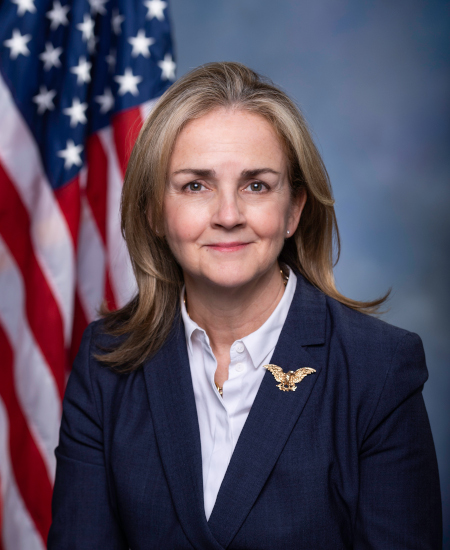
Rep. Madeleine Dean
Sponsored bills
This resolution expresses that the House of Representatives (1) demonstrates solidarity with and support for members of the community of Islam in the United States and throughout the world, (2) recognizes the importance of the Islamic faith, and (3) wishes Muslim Americans and Muslims around the world who observe Eid al-Adha a prosperous holiday.
Fair Manufactured Housing Lending Act This bill requires a manufactured or modular home retailer to comply with consumer mortgage protections, including those related to lending origination and conflicts of interest.
Stable Families Act of 2022 This bill permits the Department of Housing and Urban Development to award grants to state, local, territorial, and tribal governments to provide financial assistance and housing stabilization services to extremely low-income households.
Enhancing Mental Health and Suicide Prevention Through Campus Planning Act This bill requires the Department of Education to encourage institutions of higher education to develop and implement evidence-based comprehensive campus mental health and suicide prevention plans.
LGBTQ I+ Data Inclusion Act This bill addresses federal data collection of voluntary, self-disclosed information on sexual orientation, gender identity, and variations in sex characteristics. Specifically, the bill requires federal agencies that collect information through a survey for statistical purposes that includes demographic data (where subjects self-report information or a proxy provides information about the subject or responds for all persons in a household) to review existing data sets to determine which data sets do not include information about sexual orientation, gender identity, and variations in sex characteristics. Such agencies must assess needed changes in survey methods related to asking questions on such matters. Agencies that publish reports relying on survey demographic data must include information on sexual orientation, gender identity, and variations in sex characteristics. Agencies may waive this publication requirement on a case-by-case basis if the confidentiality of the information cannot be maintained or if adding such information to the survey would impair the agency's ability to preserve the utility, accuracy, or objectivity of the survey while also generating relevant evidence about the LGBTQI+ community. The Government Accountability Office must report to Congress on the implementation of this bill's requirements by agencies.
This resolution expresses support for the designation of Journeyman Lineworkers Recognition Day. (A journeyman lineworker is a person who builds and maintains electrical power systems.)
Break Free From Plastic Pollution Act of 2021 This bill sets forth requirements and incentives to reduce the production of a variety of products and materials, including plastics, and increase efforts to collect, recycle, or compost products and materials. The bill makes certain producers of products (e.g., packaging, paper, single-use products, beverage containers, or food service products) fiscally responsible for collecting, managing, and recycling or composting the products after consumer use. In addition, the bill establishes (1) minimum percentages of products that must be reused, recycled, or composted; and (2) an increasing percentage of recycled content that must be contained in beverage containers. Beginning on January 1, 2023, the bill phases out a variety of single-use products, such as plastic utensils. The bill also sets forth provisions to encourage the reduction of single-use products, including by establishing programs to refund consumers for returning beverage containers and by establishing a tax on carryout bags. The bill creates a temporary moratorium on new or expanded permits for certain facilities that manufacture plastics until regulations are updated to address pollution from the facilities. The Environmental Protection Agency (EPA) must publish guidelines for a national standardized labeling system for recycling and composting receptacles. Producers must include labels on their products that are easy to read and indicate whether the products are recyclable, compostable, or reusable. The EPA must also ensure that certain clothes washers have filtration units as required by this bill. Finally, the bill establishes limitations on the export of plastic waste to other countries.
Don't Block LGBTQ Act of 2022 This bill prohibits elementary schools, secondary schools, or public libraries that receive discount rates for telecommunications services under the universal service support program from blocking internet access to lesbian, gay, bisexual, transgender, or queer resources. The bill does not prohibit schools or libraries from blocking content that is obscene, child pornography, or harmful to minors.
Stop Anti-Abortion Disinformation Act or the SAD Act This bill prohibits advertisements that use deceptive or misleading statements related to the provision of abortion services. Abortion services include (1) surgical and non-surgical procedures to terminate a pregnancy, or (2) providing referrals for such procedures. The Federal Trade Commission must promulgate rules to implement the prohibition, and the bill provides for enforcement by the commission.