

Women and Minorities in STEM Booster Act of 2021 This bill requires the National Science Foundation to award competitive grants to enable eligible entities to carry out the activities specified below in order to increase the participation of women and underrepresented minorities in the fields of science, technology, engineering, and mathematics (STEM). An eligible entity that receives a grant shall use grant funds to carry out one or more of the following activities designed to increase the participation of women or minorities underrepresented in science and engineering, or both: online workshops, mentoring programs that partner STEM professionals with students, internships for undergraduate and graduate students in STEM fields, outreach programs providing elementary and secondary school students with opportunities to increase their exposure to STEM fields, and programs to increase the recruitment and retention of underrepresented faculty.
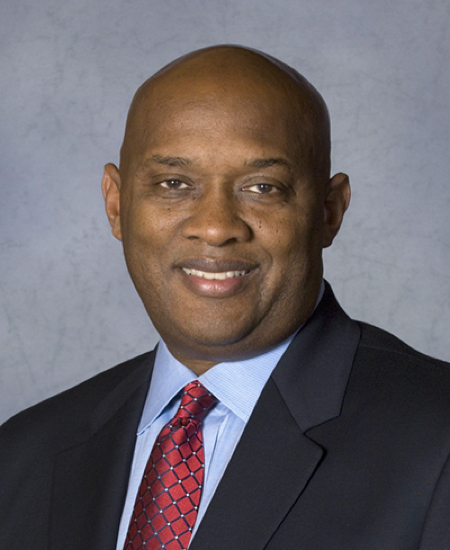
Rep. Dwight Evans
Sponsored bills
Better Opportunity and Outcomes for Socially Disadvantaged Talent Act of 2021 or the BOOST Act of 2021 This bill allows an exclusion from gross income, for income tax purposes, of 50% of any gain from the sale or exchange of a certified equity interest held for more than 3 years for corporations and partnerships in which a socially disadvantaged individual who is a U.S. citizen has an ownership interest.
America's Red Rock Wilderness Act This bill designates specified lands in the following areas of Utah as components of the National Wilderness Preservation System: (1) Great Basin, (2) Grand Staircase-Escalante, (3) Moab-La Sal Canyons, (4) Henry Mountains, (5) Glen Canyon, (6) San Juan-Anasazi, (7) Canyonlands Basin, (8) San Rafael Swell, and (9) Book Cliffs and Uinta Basin. The bill sets forth administrative requirements for (1) the exchange of state-owned lands within such areas, (2) federal reservation of water rights, (3) measurement of setbacks for roads with adjacent wilderness, (4) authorized livestock grazing, and (5) withdrawal of such lands from disposition under certain public land laws.
National Infrastructure Bank Act of 2021 This bill creates the National Infrastructure Bank to facilitate the long-term financing of infrastructure projects. Specifically, the bank must provide loans to public and private entities for financing, developing, or operating eligible infrastructure projects. An eligible project must have a public sponsor as well as local, regional, or national significance. The bill treats the bank as a government corporation exempt from tax and treats contributions to the bank as charitable contributions. The bill also provides for criteria and preferences for deciding whether to provide a loan, such as whether a project promotes job creation or provides environmental benefits. Projects that receive a loan must (1) pay all laborers and mechanics locally prevailing wages, and (2) use only certain U.S.-produced construction materials unless a waiver is secured from the bank. The bank shall issue stock and may also issue bonds and maintain a discount line of credit with the Federal Reserve System. The bank must apply for a national bank charter and, once chartered, accept deposits from individuals, corporations, and public entities and pay interest on those deposits. The bill imposes requirements related to the bank's operation, such as minimum reserve requirements and requirements for handling loan losses. In addition, the bank must facilitate the organization of at least seven regional economic accelerator planning groups to, among other activities, identify infrastructure needs and priorities. Within five years, the Government Accountability Office must report on the bank's activities.
Medicare Dental, Vision, and Hearing Benefit Act of 2021 This bill provides for Medicare coverage of dental, vision, and hearing care. Coverage includes (1) routine dental cleanings and exams, basic and major dental services, emergency dental care, and dentures; (2) routine eye exams, eyeglasses, and contact lenses; and (3) routine hearing exams, hearing aids, and exams for hearing aids. With respect to such care, the bill establishes special payment rules, limitations, and coinsurance requirements.
Safe Schools Improvement Act of 2021 This bill requires states to direct their local educational agencies (LEAs) to establish policies that prevent and prohibit bullying and harassment of elementary and secondary school students. In particular, these policies must prohibit bullying and harassment based on race, color, national origin, sex, sexual orientation, gender identity, disability, or religion. Further, LEAs must provide (1) students, parents, and educational professionals with annual notice of the conduct prohibited in their disciplinary policies; (2) students and parents with grievance procedures that target such conduct; and (3) the public with annual data on the incidence and frequency of that conduct at the school and LEA level. The Department of Education must conduct and report on an independent biennial evaluation of programs and policies to combat bullying and harassment in elementary and secondary schools. The National Center for Education Statistics must collect state data to determine the incidence and frequency of the conduct prohibited by LEA disciplinary policies.
Connecting Youth to Jobs Act This bill establishes and provides funding through FY2031 for grant programs to address barriers to youth employment. The bill also excludes certain youth employment income from Supplemental Nutrition Assistance Program (SNAP) eligibility determinations. Specifically, the bill requires the Department of Labor to provide formula grants to states and local areas, and competitive grants to community-based organizations and other eligible entities, to assist in carrying out subsidized public employment programs for youth with barriers to employment. Funding to states and local areas must be used for programs that lead eligible youth to unsubsidized full-time employment or to attainment of at least one recognized postsecondary credential. Grants to eligible entities must be used to match youth with employment barriers to subsidized employment programs funded by the bill and to provide hands-on work experience. The Government Accountability Office must evaluate and report on the activities funded by the bill. The bill also excludes from SNAP income eligibility determinations any income earned by a household member who is younger than 22 years old, is an elementary or secondary school student, and lives with a parent.
Pet Safety and Protection Act of 2021 This bill revises requirements concerning the sources of dogs and cats used by research facilities. Specifically, the bill revises the list of permissible sources of dogs and cats used by research facilities to include dogs and cats obtained (1) from a licensed dealer, (2) from a publicly owned and operated pound or shelter that meets specified requirements, (3) by donation from a person who bred and raised the dog or cat or owned it for not less than one year, or (4) from a research facility licensed by the Department of Agriculture. The requirements pertaining to sources apply to dogs and cats obtained through sales, donations, or offers. Monetary penalties are established for violations.
Student Food Security Act of 2021 This bill expands the Supplemental Nutrition Assistance Program (SNAP) and establishes programs to address food insecurity among college students. Specifically, the bill permanently modifies the eligibility requirements to allow additional college students to receive SNAP benefits, and it establishes a demonstration program to allow college students to use SNAP benefits on college campuses instead of meal plans. The bill also advances implementation of certain data-sharing agreements and notifications to help students who apply for federal financial aid to also apply for and receive other federal means-tested benefits (e.g., Section 8 tenant-based housing assistance, Medicaid, and Supplemental Security Income). In addition, the bill (1) requires questions about food and housing insecurity to be incorporated into the National Postsecondary Student Aid Study, and (2) establishes a grant program to support research and address incidences of food and housing insecurity among college students.
Making Essentials Available and Lawful (MEAL) Act of 2021 This bill repeals a lifetime ban that prohibits individuals convicted of certain offenses related to the possession, use, or distribution of a controlled substance from receiving Supplemental Nutrition Assistance Program (SNAP) benefits or assistance under programs funded by Temporary Assistance for Needy Families (TANF) block grants. Any state law that imposes conditions on eligibility for SNAP benefits or TANF assistance based on an individual's conviction of such an offense shall have no force or effect. In addition, individuals who are incarcerated and scheduled to be released within 30 days shall qualify as individual households for purposes of SNAP eligibility. Under current law, unless specifically excepted, individuals residing in institutions do not constitute a household.