

Clean Water Standards for PFAS Act of 2021 This bill directs the Environmental Protection Agency (EPA) to develop requirements and incentives to limit the discharge of perfluoroalkyl and polyfluoroalkyl substances (PFAS) into certain waters of the United States. PFAS are man-made and may have adverse human health effects. A variety of products contain the compounds, such as nonstick cookware or weatherproof clothing. Within two years, the EPA must publish water quality criteria for each measurable perfluoroalkyl substance, polyfluoroalkyl substance, and class of PFAS. The water quality criteria must determine how much of these substances can be present in water before it is likely to harm human health. Within four years, the EPA must publish a final rule that establishes, for each priority industry category specified in the bill, effluent limitations guidelines and standards for the discharge of each measurable perfluoroalkyl substance, polyfluoroalkyl substance, and class of PFAS. Under the Clean Water Act, effluent limitations restrict the quantities, rates, and concentrations of chemical, physical, biological, and other constituents which are discharged from point sources (e.g., a discernible source such as a pipe) into navigable waters, the ocean, or other specified waters. In addition, the EPA must award grants to owners and operators of publicly owned treatment works for implementing the effluent limitations guidelines and standards.
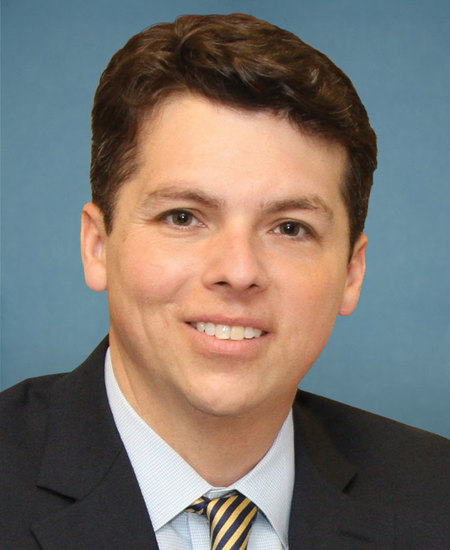
Rep. Brendan F. Boyle
Sponsored bills
Buy Green Act of 2021 This bill provides for federal procurement of clean energy products. Specifically, the bill establishes a Clean Energy Fund at the Department of Energy (DOE) and authorizes DOE to transfer amounts from the fund to federal agencies for clean energy-related purchases. The bill creates a grant program for state, local, and tribal governments to make such purchases. The bill (1) provides grants to electrify the federal vehicle fleet, to states and municipalities to electrify public transit and school buses, and to design, build, and retrofit buildings to be more energy efficient; and (2) establishes a grant program for U.S. companies to invest in clean energy manufacturing by retrofitting or building facilities that produce clean energy products. The bill (1) establishes specified labor protections applicable to projects funded by grants in this bill and for manufacturers of specified products; and (2) directs 40% of state, local, and tribal grant funding for grants provided by this bill to purchases that benefit frontline, disadvantaged, and vulnerable communities that have been environmentally neglected. The bill establishes within DOE a Green Procurement Oversight Advisory Board. The Government Accountability Office shall conduct oversight of the use of funds and publicly report on program efficacy each year.
Sustainable Investment Policies Act of 2021 This bill requires investment advisers to establish and follow a sustainable investment policy, including policies relating to the corporate governance practices, labor and human rights practices, and the environmental risks of the entities receiving investments.
Retirees Sustainable Investment Opportunities Act of 2021 This bill requires a retirement or employee benefit plan that is regulated under the Employee Retirement Income Security Act of 1974 to disclose whether it has adopted a sustainable investment policy. A sustainable investment policy must address considerations relating to corporate governance practices, labor and human rights practices, and the environmental risks posed by the entities receiving investments.
National Institutes of Clean Energy Act of 2021 This bill establishes the National Institutes of Clean Energy within the Department of Energy. The institute must invest in clean energy science, climate science, innovation, and research and development to reduce emissions and build climate resilience. In addition, the institute must support (1) clean energy research areas; (2) research and development projects focusing on the impacts of energy production in certain communities that have been disproportionately impacted by environmental injustices; and (3) research and development projects focused on impacts of clean energy and energy production on job loss, job creation, and workforce development, particularly in heavily unionized workforce sectors.
United States Army Rangers Veterans of World War II Congressional Gold Medal Act This bill provides for the award of a single Congressional Gold Medal to the U.S. Army Rangers Veterans of World War II in recognition of their dedicated service during World War II.
Veteran Education Empowerment Act This bill reauthorizes through FY2029 and otherwise revises a Department of Education (ED) grant program for student veteran centers. Specifically, ED must make grants to institutions of higher education (IHEs) or consortia of IHEs to establish, maintain, improve, or operate a student veteran center. A student veteran center is a dedicated space on a campus that provides students who are veterans or members of the Armed Forces with (1) a lounge or meeting space for themselves, their spouses or partners, their children, and veterans in the community; and (2) a centralized office for student veteran services that serves as a single point of contact to coordinate comprehensive support services for student veterans.
This resolution supports the designation of ALS Awareness Month. Amyotrophic lateral sclerosis (ALS) is a progressive neurodegenerative disease, also known as Lou Gehrig's disease, that affects nerve cells in the brain and spinal cord.
John Lewis Every Child Deserves a Family Act This bill prohibits discrimination on the basis of sexual orientation, gender identity, marital status, or religion in the provision of child welfare programs and services by entities receiving federal funding. The Department of Health and Human Services (HHS) must provide technical assistance to help states follow this requirement, including (1) guidance for bringing state laws into compliance, (2) developing training to increase cultural competency related to social identity, and (3) training for judges and attorneys involved in child welfare cases, among other supports. Additionally, HHS must establish the National Resource Center on Safety, Well-Being, Placement Stability, and Permanency for LGBTQ Children and Youth Involved with Child Welfare Services to provide training, technical assistance, and guidance to applicable state and local agencies and service providers. Further, the Religious Freedom Restoration Act may not be the basis for challenging the application or enforcement of this bill. The Government Accountability Office must study and report on states' compliance with the requirements of the bill no later than three years after enactment.
Dentist and Optometric Care Access Act of 2021 or the DOC Access Act of 20 21 This bill prohibits private health insurance plans from setting rates for items and services, except for dental cleanings, provided by a doctor of optometry, of dental surgery, or of dental medicine for which the plan does not pay a substantial amount. Additionally, an agreement between a plan and such a doctor for limited scope dental or vision benefits may last longer than two years only with the prior acceptance of the doctor for each term extension. Plans also may not restrict such a doctor's choice of laboratories or suppliers. Such doctors may elect to waive the application of the payment amount and choice of laboratories provisions of this bill. The bill establishes a private right of action for a person adversely affected by a violation of this bill. The bill does not supersede state laws regarding health insurers and dental or vision benefit plans.