

Patriotic Corporations of America Act of 2021 This bill establishes new requirements for federal contracts, including Department of Defense contracts, with respect to issues of labor, environmental sustainability, taxes, and private equity firms. Specifically, the bill prohibits an executive agency from awarding a contract unless the offeror, among other requirements pays employees wages that meet certain minimums; agrees to sign a neutrality agreement with respect to efforts to form a labor organization and an agreement not to hire replacement workers in any strike; submits to the agency an actionable plan to address natural disasters and health crises, including policies and plans for paid family and medical leave and for whistleblower protections; and submits to the agency an actionable plan to recruit and promote people of color, women, LGBTQ+ people, people with disabilities, and veterans. The bill sets forth additional provisions to assure that the offeror meets specified requirements with respect to the payment of environmental penalties, federal income tax liability and financial performance, and a controlling private equity firm meeting certain labor and environmental requirements. The bill establishes specified contract preferences (e.g., in favor of an offeror that does not outsource jobs outside the United States and that has a collective bargaining agreement with employees).
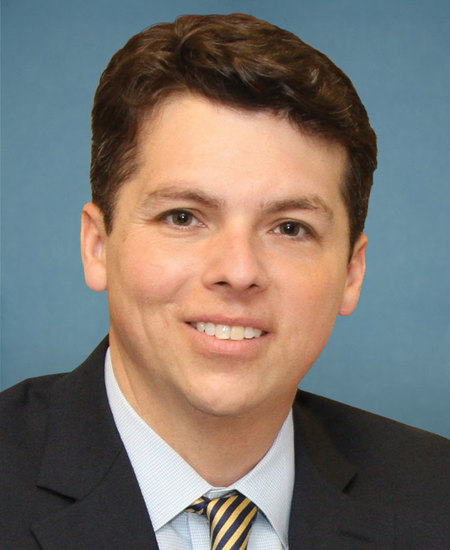
Rep. Brendan F. Boyle
Sponsored bills
Better Care Better Jobs Act This bill establishes programs and provides funds for state Medicaid programs to improve home- and community-based services (HCBS), such as home health care, personal care, case management, and rehabilitative services. Specifically, the bill provides funds for the Centers for Medicare & Medicaid Services to award planning grants, develop quality measures, and provide technical assistance to states regarding specified HCBS improvements, particularly with respect to access, utilization, and the associated workforce. The bill also increases the Federal Medical Assistance Percentage (i.e., federal matching rate) for HCBS in states that develop plans and meet specified benchmarks for improvements. The bill also makes permanent (1) the Money Follows the Person Rebalancing Demonstration Program (a grant program to help states increase the use of HCBS for long-term care and decrease the use of institutional care), and (2) certain provisions regarding Medicaid eligibility that protect against spousal impoverishment for recipients of HCBS.
Expanding Health Care Options for Early Retirees Act This bill establishes a Medicare buy-in option for certain qualifying first responders. Specifically, the bill allows first responders aged 50 to 64 to enroll in Medicare if they are retired or otherwise separated from service due to a disability. The Centers for Medicare & Medicaid Services (CMS) must determine enrollment periods and set premiums for the buy-in option established under the bill, in accordance with specified requirements. The CMS must also award grants to states and nonprofit organizations for outreach and enrollment activities relating to the buy-in option.
Therapeutic Fraud Prevention Act of 20 21 This bill prohibits commercial conversion therapy, which is a practice or treatment designed to change a person's sexual orientation or gender identity or otherwise change behaviors, thoughts, or expressions related to gender or sexual attraction. This prohibition does not apply to treatment that assists an individual undergoing a gender transition or facilitates identity exploration and development.
Promotion and Expansion of Private Employee Ownership Act of 2021 This bill expands tax incentives and federal assistance for employee stock ownership plans (ESOPs) that are sponsored by S corporations. The bill provides additional tax incentives for ESOPs by (1) extending to all domestic corporations, including S corporations, provisions allowing deferral of tax on gain from the sale of employer securities to an ESOP; and (2) allowing a tax deduction for 50% of the interest received by a bank on loans to S corporation-sponsored ESOPs for the purchase of employer securities. The Department of the Treasury must establish the S Corporation Employee Ownership Assistance Office to foster increased employee ownership of S corporations. The bill defines an ESOP business concern for purposes of the Small Business Act as a business concern that was eligible for a loan, preference, or other program under such Act before more than 49% of the business concern was acquired by an ESOP.
Unclaimed Savings Bond Act of 2021 This bill establishes requirements and procedures for the Department of the Treasury to transfer ownership of certain matured, unredeemed savings bonds and related records to states.
Vanessa Guillén Military Justice Improvement and Increasing Prevention Act This bill modifies the process and policy related to the disposition of charges and convening of courts-martial for certain sexual assault cases and other specified offenses under the Uniform Code of Military Justice (UCMJ). Among other elements, the bill provides that the determinations on the preferral, disposition, and referral of charges for specified offenses under the UCMJ must be made by a commissioned officer of the Armed Forces who is designated as a court-martial convening authority (in grade O-6 or higher) and who is available for detail as trial counsel, has significant trial experience, and is outside the chain of command of the member subject to the charges.
Telemental Health Care Access Act of 2021 This bill eliminates certain restrictions relating to Medicare coverage of mental health services that are provided through telehealth. Current law allows for coverage of such services regardless of the geographic location of the originating site (i.e., the location of the beneficiary) after the end of the COVID-19 public health emergency, as long as the beneficiary previously received in-person services and continues to receive in-person services at specified intervals. The bill eliminates these in-person requirements.
Ensuring Patient Access to Critical Breakthrough Products Act of 2021 This bill provides for Medicare coverage of medical devices that are approved under the Food and Drug Administration (FDA) Breakthrough Devices Program. (Under the program, manufacturers work with the FDA to expedite the review and approval of certain medical devices that provide for more effective treatment or diagnosis of life-threatening or irreversibly debilitating human diseases or conditions.) The bill allows designated medical breakthrough devices to be temporarily covered under Medicare during a four-year transitional period. The Centers for Medicare & Medicaid Services (CMS) must assign payment codes for such devices within three months of FDA approval. The CMS must also establish a process to allow for continued coverage after the transitional period has expired, taking into account any additional evidence or data the CMS deems necessary. The CMS must also provide for temporary and, where appropriate, permanent Medicare coverage of breakthrough devices for which there is no existing benefit category (i.e., classification).
Keeping Our Promises Act This bill expands the list of diseases that are provided a presumption of service-connection for veterans who served in the Republic of Vietnam between January 9, 1962, and May 7, 1975. The bill extends through September 30, 2030, the requirement for the Department of Veterans Affairs (VA) to make determinations and submissions related to the connection between herbicide exposure and occurrence of disease. Additionally, the VA is prohibited from taking the costs of compensation into account when determining the association between exposure to an herbicide agent and occurrence of a disease. The bill requires the VA to determine within 120 days (currently 60) whether a presumption of service-connection is warranted for diseases covered by a National Academy of Sciences report.